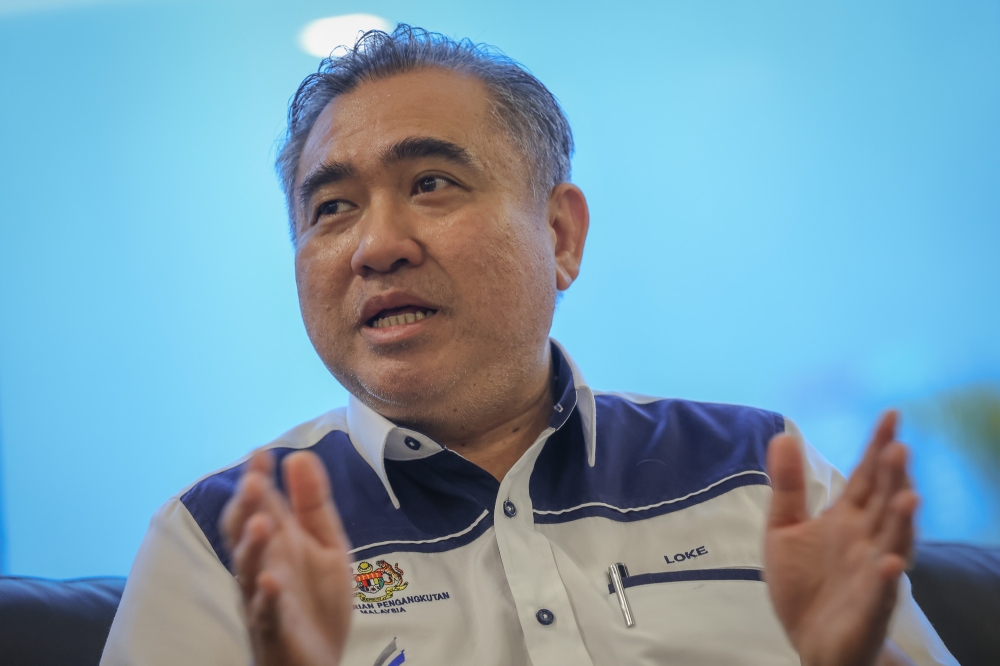
Malaysia’s political landscape remains in flux eight years after the collapse of the country’s decades-old political order — and Transport Minister Anthony Loke says the country is still navigating uncharted territories with no clear end in sight. The DAP secretary-general, speaking to Malay Mail in Kuala Lumpur on July 22, 2026, offered a candid assessment of the evolving alliance structures, the constraints of coalition governance, and what he believes ultimately determines the direction of Malaysian politics: the voters themselves.
Malaysia Has Not Found a Permanent Governance Model Since the Political Collapse of 2018
Malaysia is still in search of a lasting governance formula, according to Loke, who described the post-2018 political era as one defined by constant recalibration rather than settled arrangements.
“As I say, we are into uncharted territories right now,” Loke told Malay Mail. “After the collapse of the decades-old model in 2018, I think we are still trying to find a permanent model, a permanent model of governance in Malaysia.”
Since 2018, Malaysian politics has undergone multiple permutations — from the historic Pakatan Harapan victory that ended Barisan Nasional’s decades-long dominance, to subsequent government collapses, realignments, and the formation of the current Unity Government. Loke said political actors remain in continuous adjustment mode, working out arrangements they believe best strengthen their respective positions.
“From 2018 until now, we have experienced different permutations, different calibrations,” he said. “But as far as I’m concerned, I think it’s not going to end soon. So this will keep evolving.”
Serving Two Masters: Loke Balances DAP Party Leadership with Cabinet Collective Responsibility
The fluid political environment has placed Loke in a particularly delicate position: simultaneously leading DAP as secretary-general while serving as a Cabinet minister in a Unity Government that includes Barisan Nasional — a coalition once considered DAP’s primary political adversary.
Loke acknowledged that holding both roles creates tensions that must be carefully managed. As a minister, he is bound by the principle of collective Cabinet responsibility, which prohibits him from publicly criticising fellow Cabinet members, coalition partners, or government policy. Yet as DAP’s secretary-general, he carries the responsibility of articulating the party’s positions, which do not always align perfectly with the government’s decisions.
“As a secretary-general, of course I have to carry the position of the party, but at the same time I’m leading the Cabinet, so I have to carry that expression in the government. So I have to play that role in a very challenging way,” he said.
He was explicit about where the boundaries lie: “Being part of the government, say for example, I cannot criticise another Cabinet member or the parties that are within the coalition government — that will be out of line in terms of collective responsibility. Nor can I criticise the government’s policy, because I’m part of the government.”
At the same time, Loke confirmed that DAP as a party retains the ability to take positions critical of government actions — a distinction he described as a reality the party must simply face. Major decisions, he said, are brought before DAP’s Central Executive Committee (CEC) to ensure the party reaches a common position before any public stance is taken.
“Any major decision will be brought back to the Central Executive Committee for a common opinion or common position and a common decision,” he said.
Political Alliances Will Continue Shifting as Parties Pursue Electoral Interests
Loke made clear that the reconfiguration of political alliances is far from over, and that disappointment is sometimes an unavoidable by-product of electoral calculation.
He pointed to the divergent paths taken by Pakatan Harapan and Barisan Nasional — federal coalition partners — during state elections in Johor and Negeri Sembilan. In Johor, BN contested all 56 state seats independently, citing local political circumstances and grassroots sentiment. PH subsequently announced it too would contest all 56 seats. In Negeri Sembilan, BN initially remained open to a joint arrangement but eventually decided to contest independently after PH announced it would field candidates in all 36 seats.
“This is something which is disappointing, but it happens,” Loke said. “We have to, we just have to soldier on. We have to keep the faith alive.”
Despite the friction at the state level, Loke stopped short of suggesting the Unity Government at the federal level was under any immediate threat. Instead, he framed the shifting alliances as the natural consequence of political parties maximising their electoral function — a process he expects to continue indefinitely.
“Political parties and politicians will continue to calculate their function. They want to maximise their political function,” he said.
Voters Hold the Final Say on Malaysia’s Political Direction, Loke Affirms
Underlying Loke’s entire analysis is a consistent return to one point: that no matter how political parties calculate, manoeuvre, or realign, Malaysian voters retain the final authority over the country’s governance direction.
“I think political parties, different political actors will continue to search for a model which everyone of course would hope that they are in charge, they want to be in control,” Loke said. “I think the public has to realise what is at stake and we have to soldier on, but at the end of the day, it’s the choice of the voters.”
The observation carries particular weight heading into the next general election cycle. As parties across the political spectrum continue recalibrating their strategies — whether within unity government frameworks or in opposition — the electorate’s verdict will determine which governance model, if any, finally takes root in post-2018 Malaysia.
For now, Loke’s assessment is straightforward: the search continues, and the territory remains uncharted.