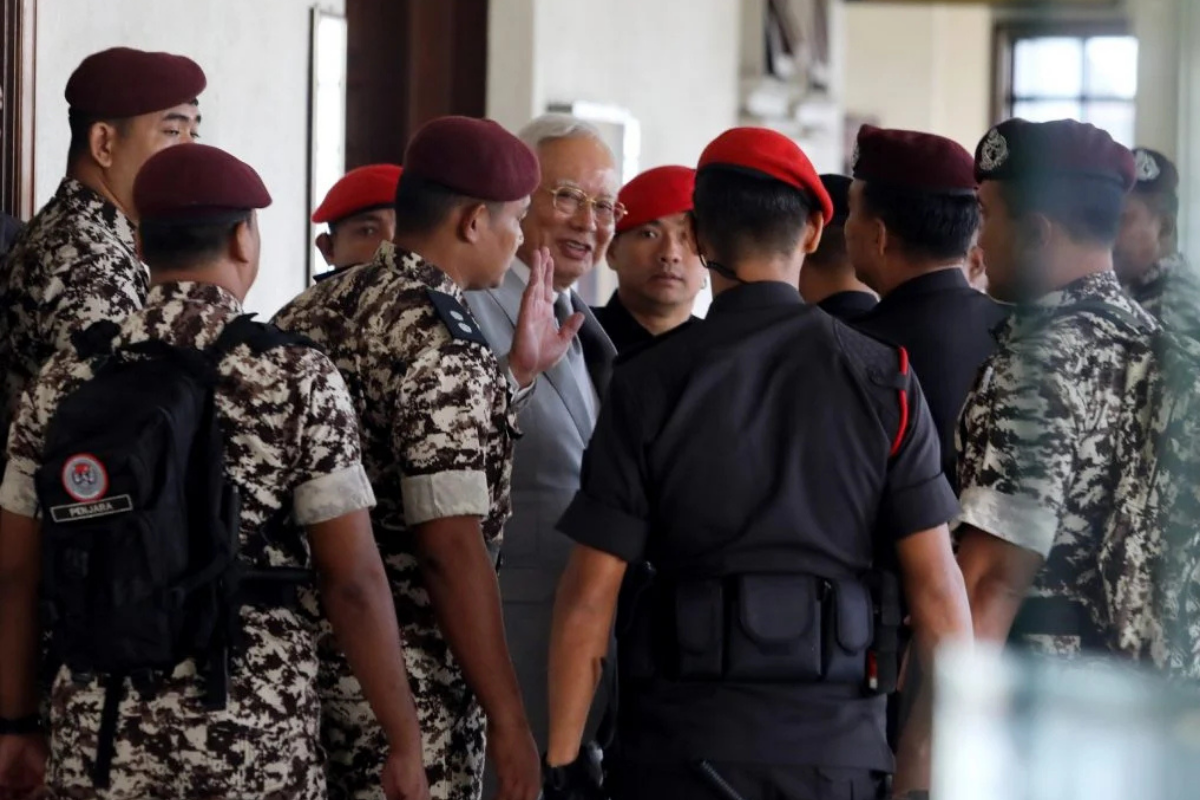
Former PM Najib Razak’s Judicial Review Application Dismissed in Kuala Lumpur
“Najib Razak House Arrest” On 22 December 2025, the Kuala Lumpur High Court dismissed the judicial review application filed by Datuk Seri Najib Razak, the former Prime Minister of Malaysia, who sought to serve the remainder of his sentence under house arrest. Following today’s ruling, Najib is required to continue serving his prison term at Kajang Prison in Selangor. The case had attracted national attention given its legal and political implications, particularly concerning the interpretation of royal pardons within the Malaysian constitutional framework.
Details of the Legal Proceedings and Courtroom Developments
Najib’s application was aimed at verifying whether an alleged addendum to the royal pardon issued by the 16th Yang di-Pertuan Agong, Sultan Abdullah, permitted house arrest as part of the conditional pardon. The judicial review named several high-ranking respondents, including the Home Minister, the Prisons Department director-general, the Attorney General, the Federal Territories Pardons Board for Kuala Lumpur, Labuan and Putrajaya, the Minister in the Prime Minister’s Department (Law and Institutional Reform), and the director-general of the Prime Minister’s Department Legal Affairs Division.
The timeline of legal events dates back to his conviction for misappropriating RM42 million from SRC International Sdn Bhd, where Najib was sentenced to 12 years imprisonment and fined RM210 million. His conviction was upheld by both the Court of Appeal and Federal Court. He began serving his sentence at Kajang Prison on 23 August 2022.
Najib applied for a royal pardon on 2 September 2022. The Pardons Board, after deliberations, reduced his sentence to six years and lowered the fine to RM50 million on 2 February 2024. The judicial review stemmed from Najib’s contention that a subsequent addendum to the original pardon allowed him to complete the remainder of his sentence under house arrest. Najib’s eldest son, Datuk Mohd Nizar Najib, submitted an affidavit on 5 December 2024, claiming Sultan Abdullah had disclosed the existence of such an addendum.

Legal Interpretation Confirmed by High Court and Implications on Royal Pardon Procedure
Justice Datuk Amarjeet Singh delivered the ruling after carefully reviewing submissions from Najib’s lead counsel, Tan Sri Muhammad Shafee Abdullah, and the senior federal counsel representing the respondents. In her judgment, the judge emphasised that Article 42 of the Federal Constitution mandates that any meeting involving a royal pardon must be chaired by the Yang di-Pertuan Agong in person. This is not a mere procedural formality but a constitutional requirement.
According to Justice Amarjeet Singh, the 61st Pardons Board meeting held on 29 January 2024, which was chaired by Sultan Abdullah, approved only the reduction of Najib’s prison sentence and fine. There was no record or decision permitting house arrest. The Attorney General, Tan Sri Mohd Dusuki Mokhtar, while not denying the existence of the purported house arrest addendum, had raised questions regarding its authenticity and legal validity.
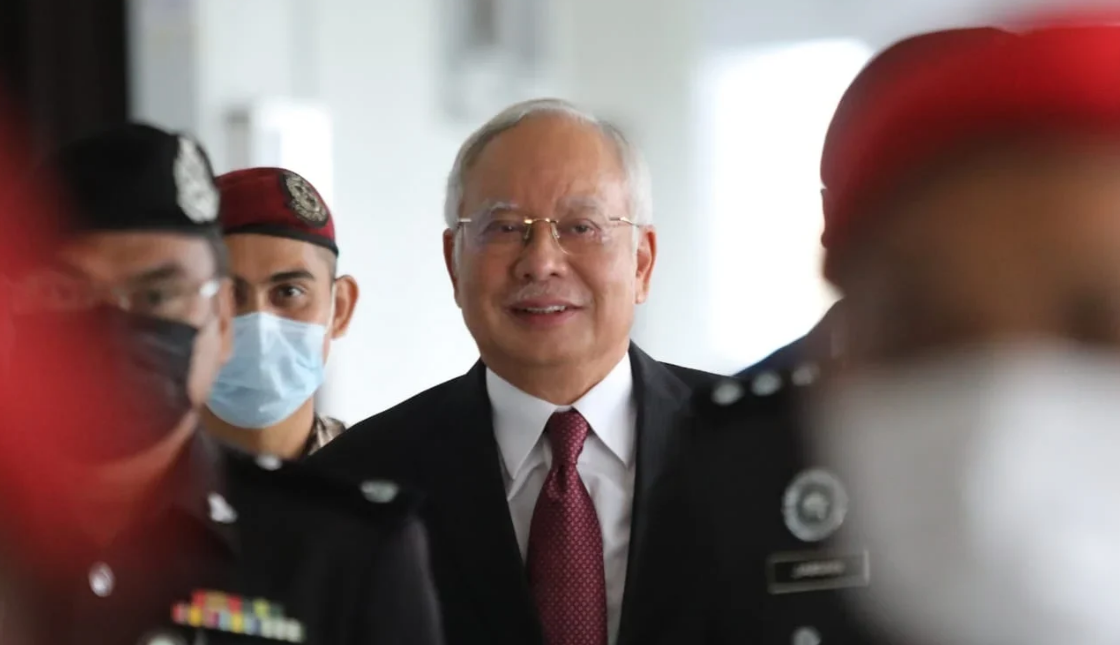
Public Reaction and Social Media Discussions Reflect Diverse Opinions
The dismissal of Najib’s judicial review has triggered varied responses across Malaysian social media platforms, with some echoing calls for full enforcement of judicial decisions, while others expressed scepticism about the pardon process. Public discourse indicates an ongoing debate around constitutional procedures for royal pardons and their implications for high-profile cases. Analysts within Malaysia’s legal community emphasise the importance of constitutional adherence in preserving legal integrity.
Potential Impact on Legal and Correctional Practices in Malaysia
In the short term, the High Court’s decision maintains the status quo concerning Najib’s incarceration, with no immediate changes to his prison conditions in Kajang. The ruling reaffirms constitutional practices surrounding the royal pardon process and may deter similar judicial review applications concerning addenda in pardons.
Looking ahead, this case could prompt the Pardons Board and relevant government agencies to ensure greater transparency and clear documentation in pardon-related matters. Moreover, the judgment underscores the importance of formal procedures in the administration of justice and corrections within Malaysia’s criminal justice system, potentially influencing future cases and corrections protocol.