
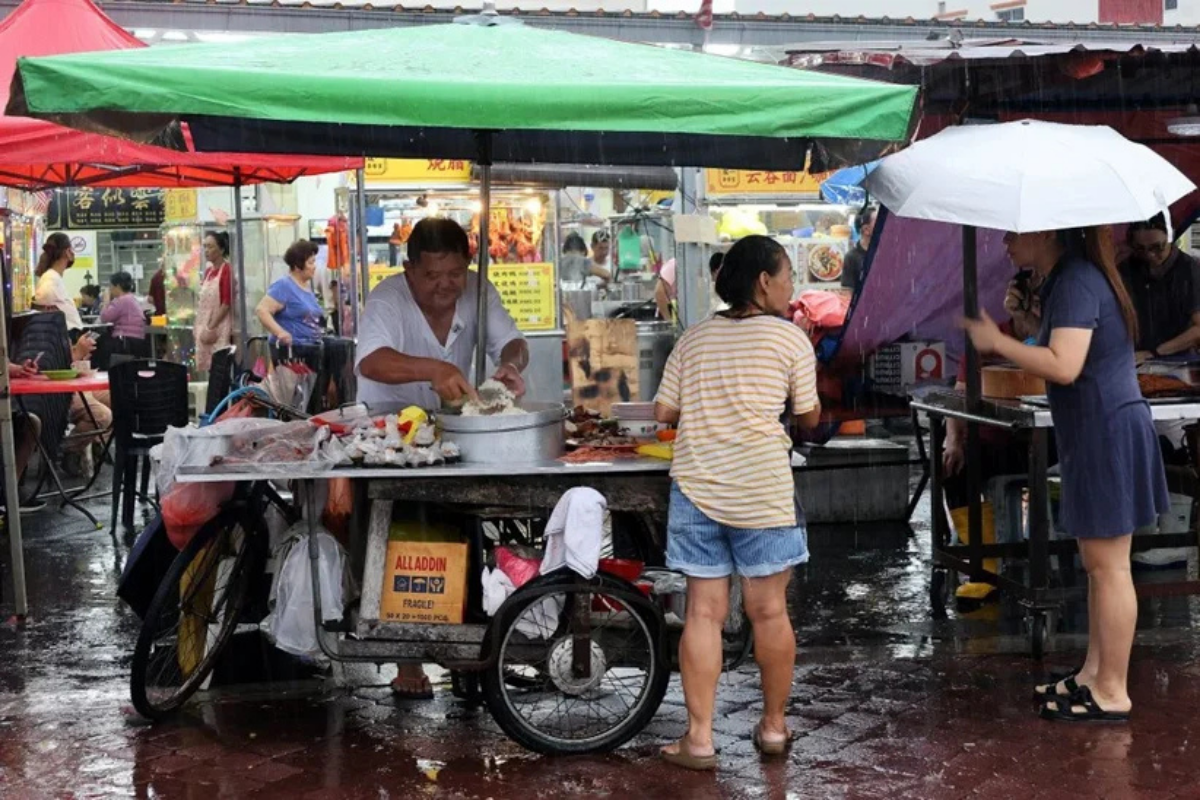
Long-standing chicken rice stall in Kajang continues to serve community at RM4 per pack
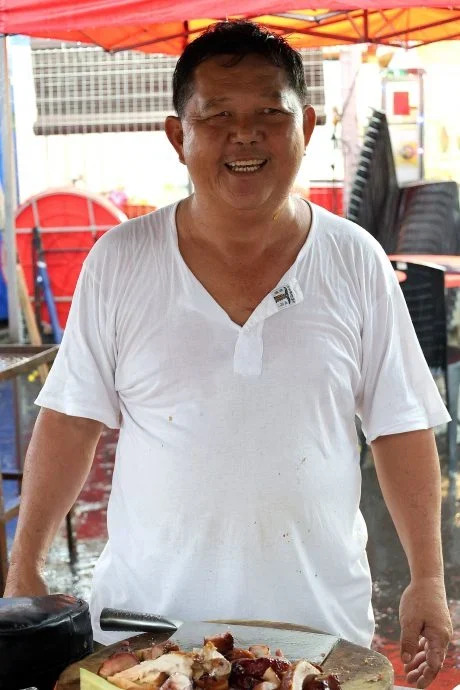
KAJANG, Selangor – For 37 years, a tricycle chicken rice stall without a formal name has been a familiar sight at the morning wet market near Cheras 11th Mile. Operated by Tan Leong Soon, in his 60s, the stall offers packets of chicken rice at a price point that remains remarkably affordable despite inflation and rising costs throughout Malaysia. Currently priced at RM4 per packet, Tan’s chicken rice has become a staple for villagers and regular commuters in Kajang. This longstanding business has persisted through decades of economic changes and local development without relocating or adopting a permanent storefront.
Customers frequent the market stall amid steady business and personalised service
Tan, who mostly operates the stall every day except Mondays or when engaged elsewhere, recalls that the initial selling price when he started the business in the mid-1980s was 60 sen per packet. Today, in view of material and ingredient price increases, the RM4 pricing has been maintained for three to four years and remains accessible to the local community. Despite the inflationary environment affecting operational costs annually, Tan emphasises the importance of sustaining prices at this level to maintain rapport and support within the neighbourhood.
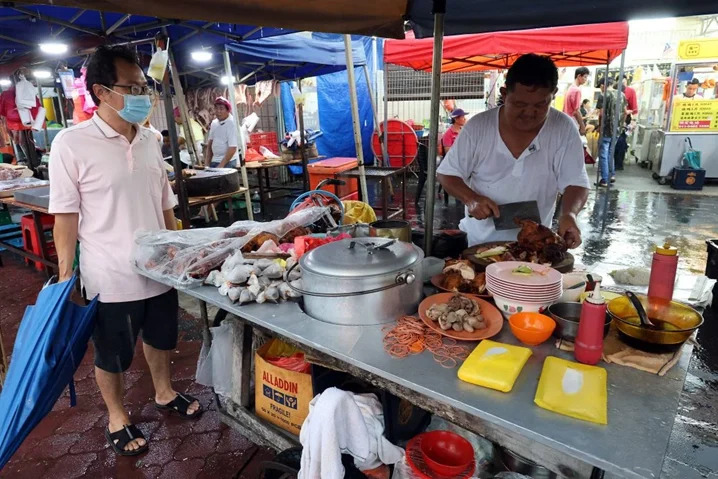
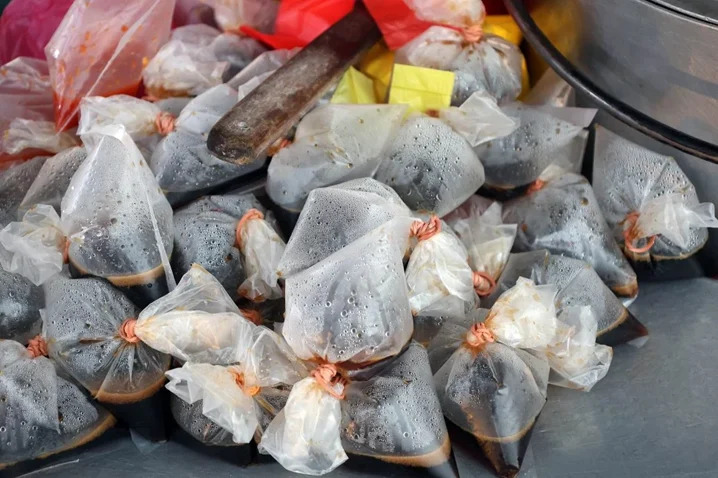
The stall’s offerings include not only chicken rice but also Char Siew rice sold at the same RM4 price, with drumstick chicken rice available for RM4.40, reflecting a commitment to fair pricing across menu items. Tan’s small-scale operation prioritises sufficient income for daily living expenses rather than maximising profit margins. This approach is appreciated by customers who rely on affordable meals amid fluctuating economic conditions.
Customer interactions frequently demonstrate a personalised and fast service model. Tan has acquired an in-depth knowledge of his regular patrons’ preferences, from specific chicken cuts to desired chilli sauce application. His efficient preparation—completing orders within approximately 15 seconds—allows for quick turnover even during busy morning hours. The sociable exchanges in multiple languages including Mandarin, Cantonese, Hokkien, Hakka, and Malay enhance accessibility for a diverse clientele. The majority of transactions are cash-based with customers often preparing exact change, streamlining service without QR code payments amid the growing e-wallet trend nationwide.
Weather conditions do not deter steady customer visits and community support
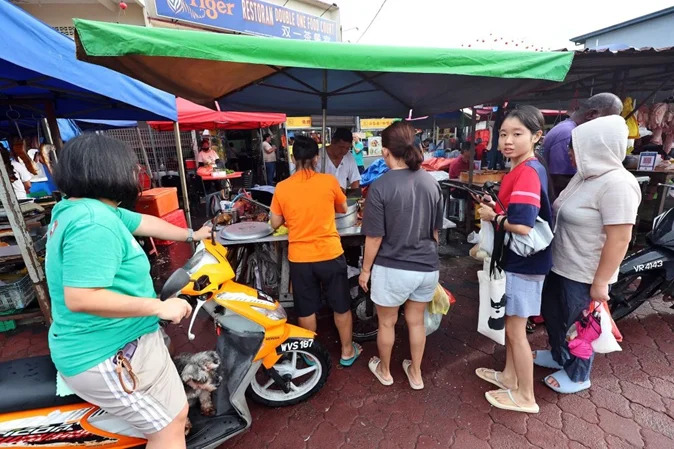
On a recent Saturday morning visit by a Sin Chew Daily reporter, rain intermittently affected the area but customers continued to visit the stall steadily after the weather subsided. Long-time patrons noted increased foot traffic during regular work and school days, sometimes resulting in queues needing to form. Despite being a mobile tricycle setup without a fixed location protection from weather elements, Tan’s customers have demonstrated loyalty that supports the viability of the business model.
Interviews with local customers reaffirm the stall’s reputation within the Cheras community. Madam Tong, who married into the area, stated that nearly everyone in the new village is familiar with the chicken rice stall, describing it as a shared nostalgic taste among villagers. Another customer, Mr. Pan, highlighted the challenge of finding RM4 chicken rice elsewhere and expressed support for the stall based on taste and value. Mr. Lee also emphasised the social benefit of maintaining low prices for villagers and indicated continued support even if future price adjustments were necessary due to inflation.
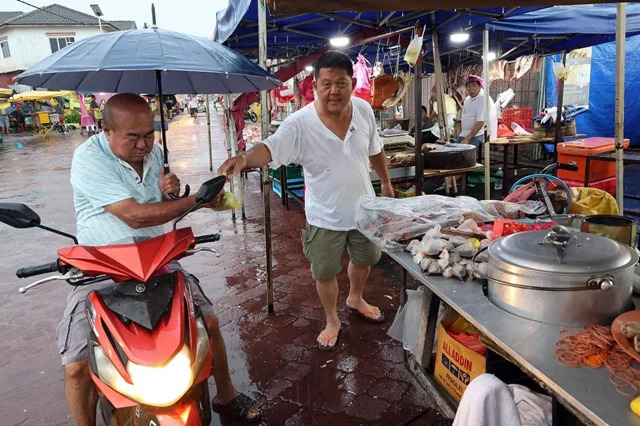
Operations remain independent with no permanent stall, reflecting flexible business approach
Tan attributed his decision not to open a permanent shop or coffee shop stall after nearly four decades to his multiple professional roles and the desire to retain operational autonomy. Temporary closures are possible when schedules necessitate, a flexibility that renting a fixed premise might restrict. This autonomy allows Tan to balance his chicken rice business alongside other engagements while maintaining pricing control without interference from rental obligations.
In terms of payment, the absence of e-wallet or QR code acceptance reflects both the nature of the clientele and the functionality needed to manage fast, cash transactions to match rapid service. Customers’ willingness to comply by preparing exact change facilitates service efficiency, contributing to the smooth running of the daily business amid rising material and labour costs that affect the food industry sector in Malaysia.
The stall’s model reflects economic realities and community interrelations in Kajang’s food sector
Overall, this chicken rice stall serves as an example of how small food businesses in Kajang and the wider Selangor region adjust to economic pressures while fostering strong community relationships. In an atmosphere where operational costs and inflation trend upward, such low-cost food options are rare yet highly valued. The stall’s endurance also highlights consumer willingness to support traditional, informal vendors who offer consistent product quality and personalised service despite changing market dynamics and technological payment shifts.
Public discussions in local social media channels reveal appreciation for the affordability and taste of the chicken rice, while some note that price remains only one factor among several determining food choices. The business’s ability to adapt service speed and product customisation maintains its competitiveness against larger fast-food chains, contributing to a unique local food culture in Kajang.
Price stability may be challenged but community support remains strong
Short-term impacts of continuing inflation on the chicken rice stall include potential slight price revisions, as indicated by Tan’s remarks about cost pressures expected in the coming year. While a price change could affect customer behaviour, historical experience shows the community’s willingness to accept reasonable revisions given transparent communication and sustained service standards.
In the long term, this model may reflect broader trends in Malaysia’s food service sector, where small vendors balance between maintaining affordability and coping with socioeconomic changes. The absence of fixed premise ownership may limit some operational security but offers adaptability. In addition, the stall’s reliance on cash payments suggests continuing importance of traditional transaction methods among certain demographics despite Malaysia’s digital payment expansion.
Location: Kajang
Date: 2025-12-16


