Ukraine’s large-scale drone offensive on Moscow during Russia’s parliamentary election final voting day has escalated tensions sharply, with Russia vowing revenge strikes on Kyiv even as exit polls confirmed United Russia’s expected victory. The simultaneous unfolding of electoral politics and active warfare underscores how deeply the conflict has become embedded in Russia’s domestic landscape — and how ordinary Russian citizens now live under conditions that blur the line between wartime and civilian life.
United Russia Holds Firm as Drones Strike the Capital on Election’s Final Day
Russia’s parliamentary elections — deciding all 450 seats in the lower house State Duma — concluded against a backdrop of drone fire, explosions, and rising smoke from one of Moscow’s key oil refineries. An exit poll published by the state-owned Russian Public Opinion Research Center (VCIOM) showed United Russia on course to win 49.4 percent of the vote, roughly matching its performance in the previous election. The Communist Party placed second at 14.2 percent, followed by the nationalist LDPR party at 10.7 percent.
VCIOM director Valery Fedorov noted that the exit poll did not yet include electronic voting or military ballots, adding: “For that reason I believe United Russia’s result will be higher, whilst that of the opposition parties will be lower.”
Former president Dmitry Medvedev, who chairs United Russia, said his party appeared to have “performed admirably,” and called on members to now put “the President’s decisions into practice,” according to state news agency RIA.
The Largest Drone Attack on Moscow Since 2022 Kills Two, Ignites Refinery
Ukraine launched what Moscow officials described as the largest drone offensive on the capital since Russia began its Ukraine offensive in February 2022. Moscow Mayor Sergei Sobyanin confirmed the attack involved approximately 1,600 drones in total, with around 450 aimed directly at Moscow.
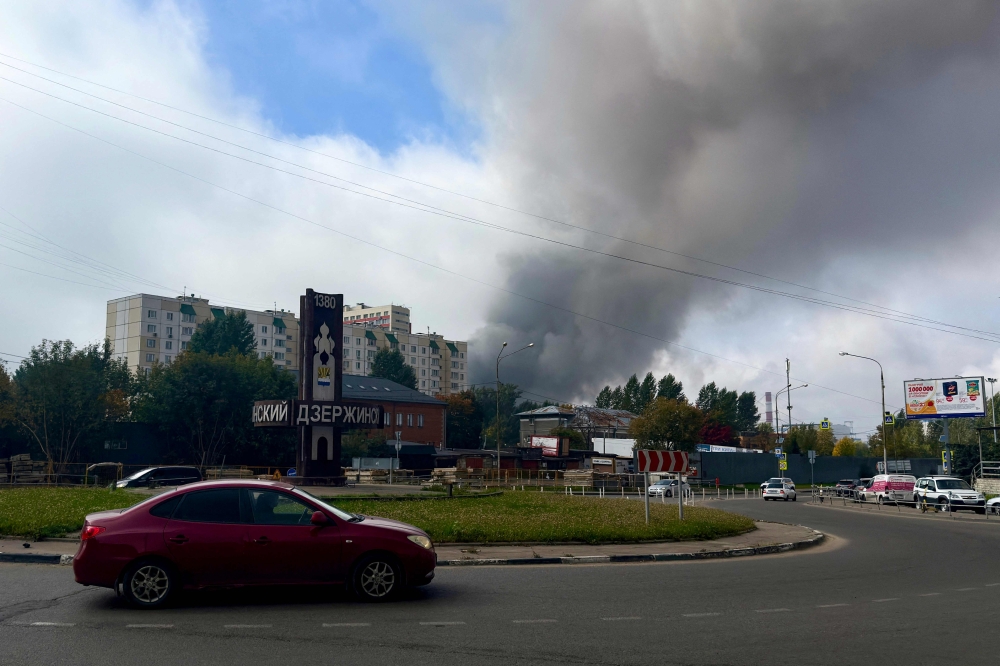
At least two people were killed — a 44-year-old woman and an elderly man — in two separate locations across the Moscow region, according to Moscow regional Governor Andrey Vorobyov. A drone strike on a 21-storey residential building triggered a fire that forced the evacuation of 400 residents. Separately, Gazprom Neft’s Moscow oil refinery sustained damage, with black smoke visible for kilometres.
Ukrainian President Volodymyr Zelensky praised the strikes publicly, stating on X: “Our long-range responses had a very significant impact in the Moscow region last night. One of Russia’s key oil industry facilities and the aggressor’s logistics facility were hit. These are billions of dollars that sustain the war machine.”
Russia’s Defence Ministry Pledges Intensified Strikes on Kyiv in Retaliation
Russia’s defence ministry responded to the attacks with a direct threat to escalate military operations against Ukraine’s capital. “In response to the Kyiv regime’s attacks on civilian targets within Russia, the Russian army will continue and intensify its high-accuracy strikes against military targets in Kyiv,” the ministry stated in an official release.
The ministry framed Ukraine’s drone campaign as a deliberate attempt to “disrupt the democratic will of Russian citizens” by targeting the country on the final day of its parliamentary vote. Ukraine has consistently targeted Russian infrastructure with drones throughout the war, in direct response to sustained Russian bombardment of Ukrainian cities and civilian facilities.
Cyberattacks and Sabotage Targeted Russia’s Electoral Infrastructure on Voting Day
Beyond the physical drone strikes, Russia’s Central Election Commission chair Ella Pamfilova confirmed that a coordinated wave of cyberattacks struck Russia’s election infrastructure during the final voting day. Pamfilova stated that “more than 1,000 waves of DDoS attacks” — distributed denial-of-service attacks designed to overwhelm systems with traffic until they cannot function — were recorded against election-related infrastructure.
She described the attacks as the work of “highly professional, well-coordinated groups using artificial intelligence tools,” though she did not publicly attribute responsibility to any specific actor. Pamfilova also warned on Saturday that saboteurs had physically severed communication lines in Russia’s far east in an apparent effort to disrupt voting there.
An Election Held Under the Shadow of War and Political Suppression
Russia’s 2026 parliamentary vote was the first since the Kremlin launched its Ukraine offensive, and it took place in a political environment stripped of meaningful opposition. President Vladimir Putin had urged Russians to participate, framing the vote as both a show of support for Russian troops and, in his words, “an answer to those who want to weaken Russia.”
The liberal Yabloko party, which had called for an end to the fighting, was barred from running its federal list by Russia’s Supreme Court, although individual candidates remained on regional ballots. All other competing parties publicly supported the war and Putin’s leadership.
Putin’s most prominent domestic political opponents have been driven into exile. His main rival, Alexei Navalny, died in an Arctic prison in February 2024. Navalny’s widow, Yulia Navalnaya, called on anti-war Russians to cast their ballots simultaneously at noon on Sunday — a protest tactic that drew significant crowds during the 2024 presidential election.
In Berlin and London, AFP reporters observed dozens of opposition supporters gathered outside Russian embassy buildings in demonstration against the vote. Official results and full turnout figures are expected to be released on Monday morning.
Frequently Asked Questions: Russia’s Election-Day Drone Attacks and Parliamentary Vote
What happened in Moscow during Russia’s parliamentary election? Ukraine launched a large-scale drone offensive involving approximately 1,600 drones on the final day of Russia’s parliamentary elections, with around 450 drones targeting Moscow directly. The attacks killed at least two people, damaged the Gazprom Neft Moscow oil refinery, and forced 400 residents to evacuate a 21-storey apartment building after a fire broke out.
What did Russia’s defence ministry say in response to the drone attacks? Russia’s defence ministry vowed to “continue and intensify” high-accuracy strikes on military targets in Kyiv in retaliation for what it called Ukrainian attacks on civilian targets inside Russia. The ministry also accused Ukraine of attempting to disrupt Russia’s parliamentary elections through the drone campaign.
What did the exit poll show about Russia’s parliamentary election results? An exit poll conducted by the state-owned VCIOM showed United Russia winning 49.4 percent of the vote, with the Communist Party at 14.2 percent and the LDPR at 10.7 percent. The results did not yet include electronic votes or military ballots, which VCIOM’s director said would likely increase United Russia’s final tally.
What was the scale of the cyberattacks on Russia’s election infrastructure? Russia’s Central Election Commission confirmed more than 1,000 waves of DDoS attacks against election infrastructure during the final voting day. Commission chair Ella Pamfilova described the attacks as the work of highly professional groups using artificial intelligence tools, and also noted that communication lines in Russia’s far east had been physically severed in a separate sabotage attempt.
How did Ukrainian President Zelensky respond to the drone strikes on Moscow? President Volodymyr Zelensky publicly praised the attacks, stating that “long-range responses had a very significant impact in the Moscow region” and that a key Russian oil industry facility and a logistics hub were struck. He framed the damage as removing billions of dollars from the resources sustaining Russia’s war effort.
Who was barred from participating in Russia’s 2026 parliamentary elections? The liberal Yabloko party, which had called for an end to the war in Ukraine, was barred from running its federal candidate list by Russia’s Supreme Court. All other parties competing in the election publicly supported the war and President Putin’s leadership. Opposition figures either remain in exile or, in the case of Alexei Navalny, have died in Russian custody.
When will official election results be announced? Russia’s first official results and full voter turnout figures are expected to be published on Monday morning following the close of the three-day voting period.
This article is based on reporting by AFP, published September 21, 2026.