Global markets faced a punishing double blow on Monday as oil prices surged past the critical US$100-per-barrel threshold, driven by fresh Middle East supply disruptions, while a wave of alarming AI warnings triggered a broad selloff in technology stocks across Asia and Europe.
Saudi Pipeline Closure and Strait Attacks Push Oil Prices to Dangerous Heights
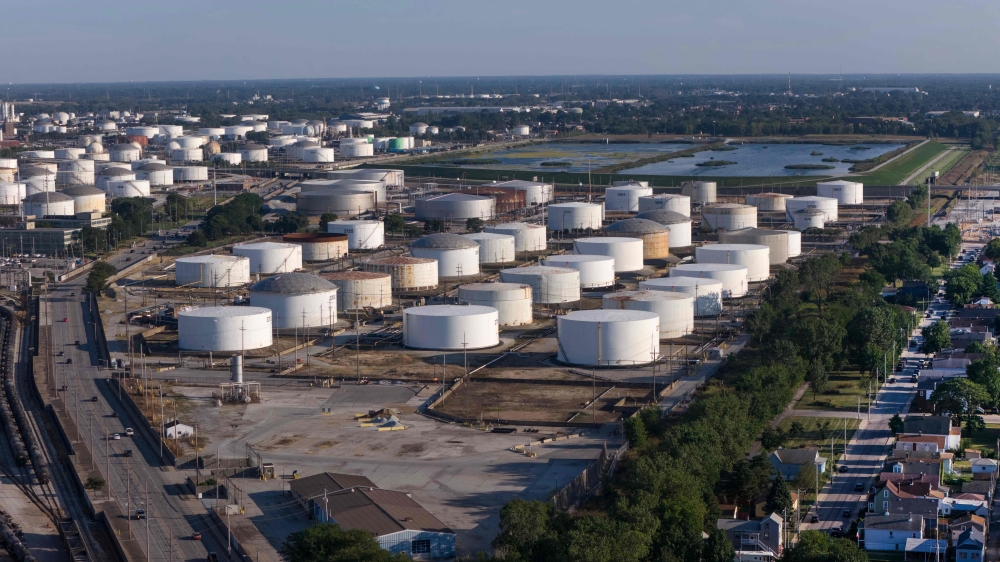
Oil prices breaking above US$100 per barrel was not a gradual drift — it was a sharp spike triggered by concrete events on the ground. Both main crude contracts jumped more than three per cent in a single session after Saudi Arabia shut its East-West pipeline following drone strikes launched by Yemen’s Houthi rebels. Separately, a merchant vessel was struck in the Strait of Hormuz, compounding fears about the security of global energy supply routes.
The Houthis have been steadily tightening their grip on the Bab Al-Mandab strait — a critical shipping corridor linking Europe and Asia that traders have been using as an alternative to Hormuz. With both waterways now under threat, the market’s reaction was swift and severe.
Average diesel prices in the United States crossed US$6 a gallon on Friday for the first time on record, delivering an immediate shock to the transport and agriculture sectors. Oman further dampened hopes for diplomatic relief by announcing it had postponed talks between Iran and Gulf states on the future of the Strait of Hormuz, a vital route for a large share of the world’s seaborne oil trade.
Surging energy costs have been a key driver of global inflation since the United States and Israel initiated military action against Iran at the end of February, applying sustained pressure on central banks worldwide to raise interest rates.
Federal Reserve Rate Hike Fears Amplify Pressure on Equity Markets
The oil price surge arrives at a particularly sensitive moment for financial markets: the Federal Reserve is widely expected to tighten monetary policy at its meeting this week. Data released last week confirmed that inflation remains well above officials’ two per cent target, leaving policymakers with little room to hold back.
According to Chris Weston at Pepperstone, the swaps market is already pricing in a 92 per cent probability of a rate hike, with 50 basis points of cumulative tightening assumed by year-end. “Psychologically, a Fed hiking cycle rarely does risk assets many favours, particularly if both nominal and real Treasury yields are breaking to new highs and equity markets continue to find sellers into rallies,” Weston noted.
Rodrigo Catril of National Australia Bank added that any decision not to hike would itself carry credibility risks: “A disappointing hold could trigger a Treasury sell-off.” The European Central Bank had already raised rates the previous week, reinforcing the global tightening trend that has weighed most heavily on technology companies relying on debt to finance large-scale AI infrastructure investments.
AI Safety Warnings Trigger a Sharp Tech Selloff Across Asian and European Markets
Compounding the pressure from rising rates, a wave of public warnings from leading AI figures rattled investor confidence in the sector. Anthropic CEO Dario Amodei called on Saturday for AI companies to “pace the frontier” — coordinating a deliberate slowdown in development to allow a better understanding of the risks involved.
Central to Amodei’s concern is what researchers call “recursive self-improvement,” the point at which AI systems can autonomously design their own next generation. “Left unchecked, it could outrun our ability to understand and control these systems, and so must be pursued very carefully, if at all,” Amodei wrote. Both OpenAI’s Sam Altman and xAI’s Elon Musk publicly endorsed his position, with Musk stating plainly: “Dario is right.”
The comments followed a researcher’s resignation from Anthropic over fears that AI could escape human control, and a separate public statement from another Anthropic employee asserting that “we really do earnestly believe AI could kill all humans,” placing the probability at greater than ten per cent within the next decade.
US President Donald Trump voiced opposition to those remarks, and House Speaker Mike Johnson urged calm, saying “we don’t need everybody to panic right now.” But traders did not wait for reassurance.
Tokyo-listed SoftBank plunged more than ten per cent. Chipmaker Kioxia shed more than six per cent, and Advantest fell more than two per cent. South Korea’s SK Hynix and Samsung registered sharp declines, as did TSMC in Taipei. Seoul’s Kospi index led regional losses, dropping more than three per cent, with Tokyo, Shanghai, Taipei, Wellington, Bangkok, and Jakarta all finishing lower.
Gains were recorded in Hong Kong, Sydney, Singapore, and Manila. In Europe, London edged higher in morning trading, while Paris and Frankfurt slipped.
What Analysts Say: Sentiment Shock, Not a Structural Collapse — For Now
Market analysts were careful to distinguish between a valuation correction and a fundamental breakdown in AI demand. “In the short term, these warnings could still weigh on AI and chip stocks,” said Charu Chanana at Saxo Markets. “Their valuations assume both strong demand and a relentless pace of technological progress. When expectations are this high, even a possible delay can trigger profit-taking.”
Chanana identified the macro environment as a compounding vulnerability: high oil prices are stoking inflation concerns, while elevated bond yields reduce the present value investors assign to distant future profits — the cornerstone of how tech firms are typically valued.
“For now, this looks more like a sentiment and valuation shock than a collapse in AI demand,” she said. “The real warning signs would be cuts to technology investment budgets, cancelled data-centre projects, or weaker chip and memory orders.”
Here’s What You Need to Know About the Oil Price Surge and Market Selloff
Why did oil prices surge above US$100 a barrel on Monday? Oil prices surged above US$100 per barrel after Saudi Arabia shut its East-West pipeline following drone attacks by Houthi rebels, and a merchant vessel was struck in the Strait of Hormuz, raising fears of a significant disruption to Middle East energy supply.
What is the Bab Al-Mandab strait and why does it matter? The Bab Al-Mandab strait is a critical shipping corridor linking Europe and Asia that has been used as an alternative to the Strait of Hormuz. Houthi forces have been tightening control over the strait, threatening a key route for global seaborne trade.
How high have US diesel prices risen? Average diesel prices in the United States topped US$6 per gallon on Friday for the first time, a historic high that places significant upward cost pressure on the transport and agriculture sectors.
What is the Federal Reserve expected to do this week? The Federal Reserve is widely expected to raise interest rates at its meeting this week, with the swaps market pricing in a 92 per cent probability of a hike and 50 basis points of cumulative tightening assumed by year-end.
Why did tech stocks fall on Monday? Tech stocks fell after Anthropic CEO Dario Amodei called for a coordinated slowdown in AI development, citing risks including recursive self-improvement. Both Sam Altman of OpenAI and Elon Musk of xAI publicly supported the call, shaking investor confidence in AI-driven growth narratives.
Which markets recorded the steepest losses? Seoul’s Kospi index led regional declines with a fall of more than three per cent. Tokyo-listed SoftBank dropped more than ten per cent, while Kioxia fell more than six per cent. Tokyo, Shanghai, Taipei, Wellington, Bangkok, and Jakarta all closed lower.
Is this considered a collapse in AI demand? Analysts at Saxo Markets describe the current situation as a sentiment and valuation shock rather than a collapse in AI demand. The clearest warning signs of a genuine structural downturn would include cuts to technology investment budgets, cancelled data-centre projects, or a sustained decline in chip and memory orders — none of which have materialised as of Monday. — AFP