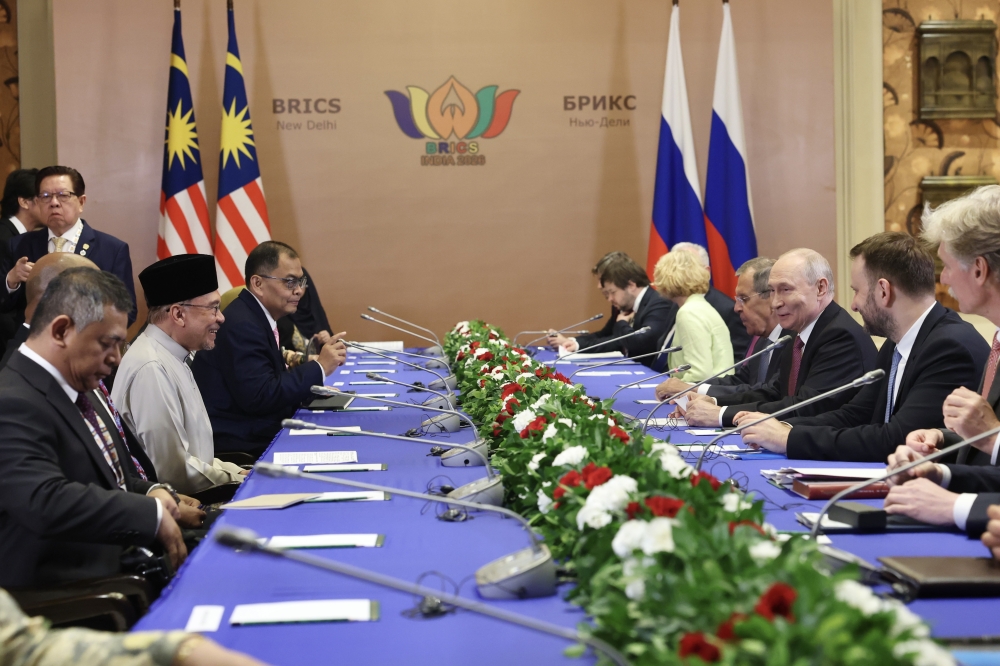
Malaysia and Russia are moving decisively to accelerate bilateral cooperation, with Prime Minister Datuk Seri Anwar Ibrahim and Russian President Vladimir Putin agreeing to establish a dedicated fast-track mechanism for implementing agreements between the two nations. The historic commitment, made on September 12, 2026, on the sidelines of the 18th BRICS Leaders’ Summit in New Delhi, signals a new chapter in Malaysia-Russia relations — one with direct implications for Malaysian businesses, workers, and communities connected to trade, energy, and aviation sectors.
A Bilateral Meeting That Puts Malaysian Economic Interests at the Centre
The Malaysia-Russia fast-track mechanism was the centrepiece of a 20-minute bilateral meeting between Prime Minister Anwar Ibrahim, who also serves as Finance Minister, and President Putin — the first bilateral session held by the Malaysian delegation at the New Delhi summit. Anwar proposed the creation of a special mechanism between Putrajaya and Moscow specifically designed to expedite the execution of all agreements reached between the two countries. Putin agreed to the proposal.
The meeting took place in New Delhi, where Anwar arrived on September 11, 2026, to attend the 18th BRICS Leaders’ Summit hosted by Indian Prime Minister Narendra Modi. Malaysia participates in the BRICS Leaders’ Summit in its capacity as a BRICS partner country, a status it has held since January 1, 2025.
Services and Trade Priorities That Directly Benefit Malaysian Communities
The discussions between the two leaders covered several practical areas of bilateral cooperation that carry tangible benefits for Malaysians across multiple industries.
Anwar and Putin discussed the expansion of Malaysian palm oil exports to Russia, a sector that supports hundreds of thousands of smallholders and plantation workers across peninsular Malaysia and Sabah and Sarawak. Accelerating palm oil trade with Russia opens a significant market for a commodity deeply embedded in the Malaysian economy.
The two leaders also discussed expediting direct flights between Malaysia and Russia, a development that would benefit Malaysian tourism operators, students, and business travellers who currently rely on connecting routes. Faster air connectivity strengthens people-to-people ties and reduces travel costs for ordinary Malaysians.
On the energy front, Anwar reaffirmed Malaysia’s appreciation for Russia’s support in energy cooperation. Petronas, Malaysia’s national energy company, has engaged with Russia’s Rosneft and other Russian companies to advance collaboration in the energy sector — a partnership with long-term implications for Malaysia’s energy security and the employment of Malaysian energy professionals.
Trade Growth Underscores the Importance of Stronger Malaysia-Russia Ties
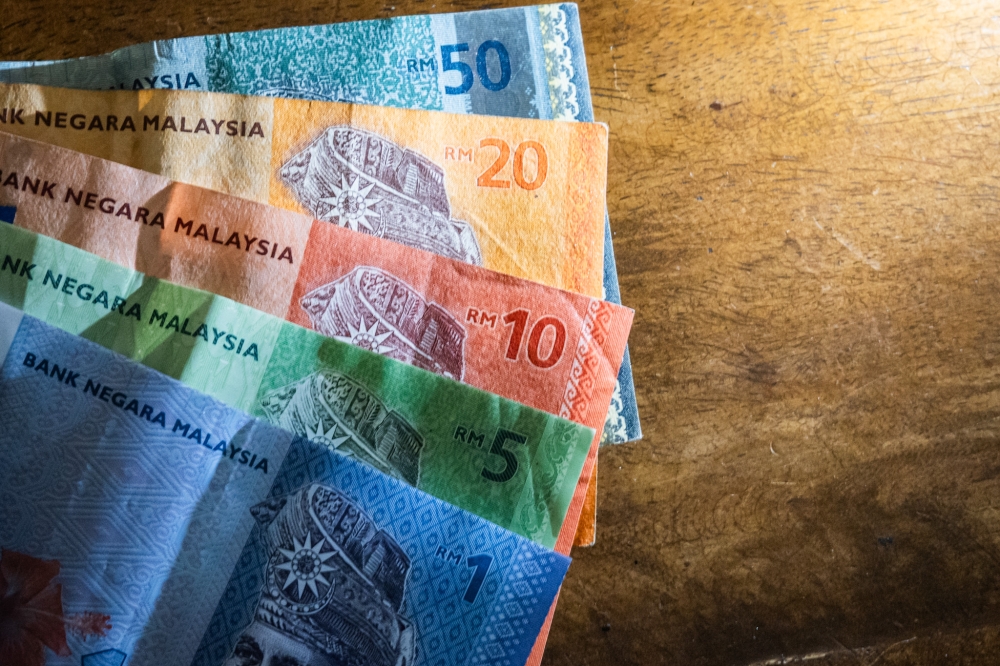
The scale of existing Malaysia-Russia trade makes the new fast-track mechanism especially significant for the broader community. Russia was Malaysia’s ninth-largest trading partner among European nations in 2025, with total bilateral trade valued at RM8.72 billion (approximately US$2.04 billion).
Russian news agency TASS quoted President Putin describing the 12.9 per cent growth in trade turnover between Russia and Malaysia in 2025 as “a solid pace,” adding: “Last year, trade turnover between our countries grew by 12.9 per cent. That is a good pace.”
Malaysia’s primary exports to Russia include electrical and electronic products, machinery, equipment and parts, and processed food — sectors that employ significant numbers of Malaysian workers. Principal imports from Russia consist of petroleum products, minerals, chemicals, and chemical-based products.
At the broader regional level, total ASEAN-Russia trade in 2024 amounted to US$18.1 billion, while Russian foreign direct investment in ASEAN totalled RM367.90 million (US$92.97 million), providing context for just how consequential deeper Malaysia-Russia ties could be for the region.
Engagement Across Education, Science, Technology, and Tourism Reinforces Community-Level Impact
Beyond trade and energy, President Putin emphasised that Russia attaches great importance to contacts with Malaysia in the fields of education, science, technology, and tourism. “During today’s conversation, we have the opportunity to discuss priority issues regarding our cooperation in all these areas,” Putin noted, according to TASS.
This dimension of Malaysia-Russia cooperation is particularly meaningful for Malaysian students pursuing education in Russia, researchers engaged in joint scientific programmes, and the tourism industry, which stands to benefit from easier access and stronger people-to-people links between the two nations. The King of Malaysia also renewed his personal invitation for Putin to visit Malaysia, conveyed through Prime Minister Anwar at the BRICS summit — a diplomatic signal of the warmth and depth of the bilateral relationship.
Here’s What You Need to Know About the Anwar-Putin Malaysia-Russia Agreement
What did Anwar and Putin agree to at the BRICS summit? Prime Minister Datuk Seri Anwar Ibrahim and President Vladimir Putin agreed on September 12, 2026, to establish a special mechanism between Putrajaya and Moscow to fast-track the implementation of all bilateral agreements between Malaysia and Russia.
Where did the Anwar-Putin meeting take place? The bilateral meeting took place on the sidelines of the 18th BRICS Leaders’ Summit in New Delhi, India, on September 12, 2026, hosted by Indian Prime Minister Narendra Modi.
How large is Malaysia-Russia trade and what is the growth rate? Total Malaysia-Russia trade in 2025 was valued at RM8.72 billion (US$2.04 billion), making Russia Malaysia’s ninth-largest trading partner among European nations. Trade turnover between the two countries grew by 12.9 per cent in 2025, a figure cited by President Putin as “a solid pace.”
What are Malaysia’s main exports and imports with Russia? Malaysia’s primary exports to Russia include electrical and electronic products, machinery, equipment and parts, and processed food. Malaysia’s principal imports from Russia consist of petroleum products, minerals, chemicals, and chemical-based products.
What role does Petronas play in Malaysia-Russia energy cooperation? Petronas, Malaysia’s national energy company, has engaged with Russia’s Rosneft and other Russian companies to advance collaboration in the energy sector, a partnership that Prime Minister Anwar reaffirmed during the bilateral meeting with Putin.
What is Malaysia’s status at the BRICS Leaders’ Summit? Malaysia participates in the BRICS Leaders’ Summit as a BRICS partner country, a status Malaysia has held since January 1, 2025.
Did Putin accept an invitation to visit Malaysia? Yes. The King of Malaysia renewed his personal invitation for President Putin to visit Malaysia, and the invitation was conveyed directly through Prime Minister Anwar Ibrahim at the 18th BRICS Leaders’ Summit in New Delhi on September 12, 2026.
The agreement reached between Prime Minister Anwar Ibrahim and President Putin in New Delhi represents a meaningful step forward for Malaysia-Russia relations — one that carries practical benefits for Malaysian businesses, workers in trade and energy sectors, students, and travellers. The establishment of a dedicated fast-track mechanism removes bureaucratic friction from bilateral cooperation and ensures that agreements between Putrajaya and Moscow translate into real outcomes for the people of both nations. Malaysians with interests in palm oil, energy, aviation, and education now have stronger institutional support backing their engagement with Russia.
Source: Bernama