The prospect of a Trump-Putin meeting at the China APEC summit has emerged as one of the most consequential diplomatic developments of late 2026 — and for millions of people watching the Russia-Ukraine conflict drag into its fifth year, the stakes could not be higher. Citizens, policymakers, and international observers have long sought a credible pathway toward de-escalation, yet high-level direct dialogue between Washington and Moscow has remained elusive. Now, US Secretary of State Marco Rubio has confirmed that such a meeting is actively being discussed, raising cautious optimism about the role America could play in mediating an end to the ongoing conflict.
A Diplomatic Opening Rooted in Realpolitik: The Rubio-Lavrov Conversation in Atlanta
The possibility of a Trump-Putin interaction took a concrete shape on the sidelines of the G20 foreign ministers’ meeting in Atlanta, Georgia, where Rubio spoke briefly with Russian Foreign Minister Sergei Lavrov on October 31, 2026.
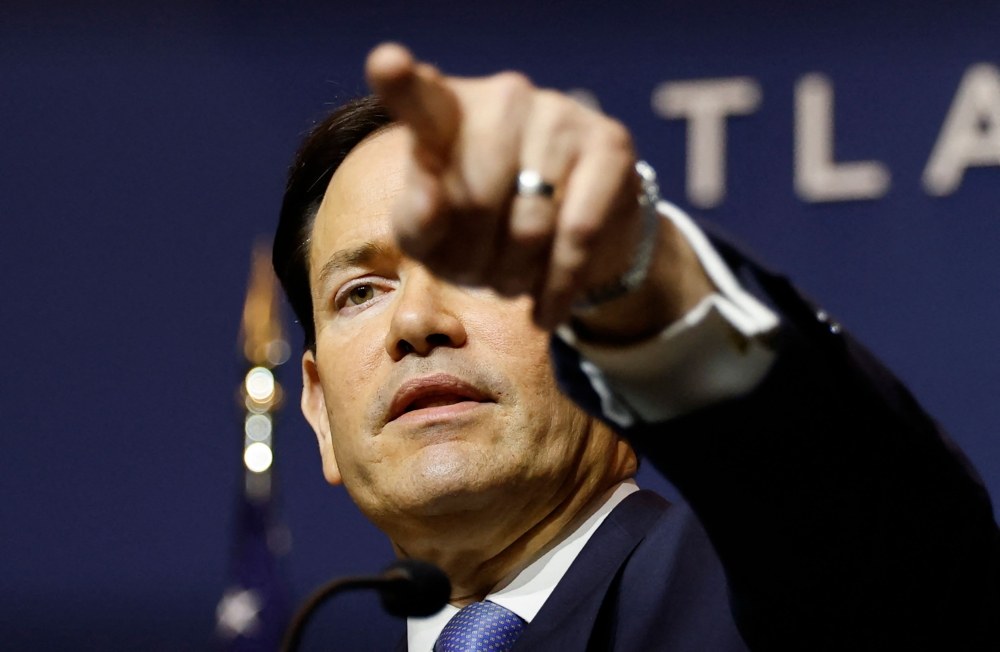
“We spoke just briefly about the opportunity for our leaders to potentially interact at APEC next month,” Rubio told reporters at a press conference, referring to the Asia-Pacific Economic Cooperation summit scheduled for mid-November in Shenzhen, China.
Rubio was careful to clarify that his exchange with Lavrov was not a formal bilateral meeting — yet the significance of even an informal conversation between the top diplomats of two nuclear powers was not lost on observers. Lavrov himself had told reporters a day earlier that both men had a “decent talk,” a characterization that underscored the thaw in US-Russia communications that has gradually materialized under the Trump administration.
The two-day G20 foreign ministers’ gathering brought together representatives from the world’s 20 major economies, including the United States, Russia, China, India, France, and Germany. The Atlanta meeting was designed to lay the groundwork for a December G20 leaders’ summit in Miami, to be hosted at President Trump’s Doral resort — an event that already carries its own diplomatic weight given that Trump has extended an invitation to Russian President Vladimir Putin to attend.
Lavrov’s Atlanta Presence Exposes Deep Fractures Among Western Allies
Lavrov’s participation in the Atlanta gathering served as a live demonstration of the tensions fracturing the Western alliance. Several European officials objected strongly to appearing alongside the Russian foreign minister, leading organizers to cancel the traditional group photo of G20 ministers — a symbolic breakdown that reflected the broader difficulty of maintaining a unified Western front toward Moscow.
Russia’s diplomatic isolation from most of the West dates to its full-scale invasion of Ukraine in February 2022, and European nations have largely maintained that posture. Lavrov’s presence at a high-profile multilateral forum on US soil was itself a signal of how dramatically the diplomatic landscape has shifted since Trump returned to the White House.
Despite European unease, Rubio defended the importance of keeping communication channels open with Moscow, citing both the ongoing war in Ukraine and Russia’s nuclear arsenal as reasons why dialogue cannot be abandoned.
“It is always important that the United States and Russia have communications at some level because of the danger of escalation in the future,” Rubio told reporters.
The Ukraine War Hangs Over Every Diplomatic Calculation
At the center of any potential Trump-Putin interaction at the APEC summit in Shenzhen is the unresolved conflict in Ukraine, now well into its fourth year of grinding warfare with enormous human and economic costs on all sides.
Rubio signaled clearly that the United States sees itself as a potential mediator, not merely an observer. “If we can play a role in mediating an end to that conflict, the United States is prepared to play that role,” he said. “And to play that role, we have to have the ability to communicate with both sides.”
Trump himself reinforced the inclusive nature of his diplomatic approach when he told reporters on October 31 that he would have “no problem” with inviting Ukrainian President Volodymyr Zelensky to the December G20 summit in Miami as well — a move that would place both the Russian and Ukrainian leaders under the same roof as the US president for the first time.
Whether any face-to-face engagement at the APEC summit in Shenzhen next month produces a substantive breakthrough remains uncertain. But the mere confirmation that Trump and Putin could interact in a multilateral setting in China represents a notable shift from months of diplomatic stalemate.
Here’s What You Need to Know About the Trump-Putin APEC Meeting
Has a Trump-Putin meeting at the APEC summit been officially confirmed? No formal meeting has been confirmed. US Secretary of State Marco Rubio stated on October 31, 2026 that he and Lavrov discussed “the opportunity for our leaders to potentially interact at APEC next month,” indicating talks are in early stages.
Where is the APEC summit being held and when? The 2026 APEC summit is scheduled to take place in Shenzhen, China, in mid-November 2026.
Did Rubio and Lavrov hold a formal bilateral meeting in Atlanta? No. Rubio explicitly stated at his press conference that he did not have a formal meeting with Lavrov; their conversation occurred informally on the sidelines of the G20 foreign ministers’ gathering.
Why did European nations object to Lavrov’s presence in Atlanta? European countries have largely shunned Russia diplomatically since its 2022 invasion of Ukraine. Several European officials objected to being photographed alongside Lavrov, resulting in the cancellation of the traditional G20 ministers’ group photo.
What is the US position on mediating the Russia-Ukraine conflict? Secretary Rubio stated directly: “If we can play a role in mediating an end to that conflict, the United States is prepared to play that role,” emphasizing that maintaining communication with both Russia and Ukraine is essential to any mediation effort.
Has Trump invited Putin to any other upcoming summits? Yes. Trump has invited Putin to the December G20 leaders’ summit in Miami, to be hosted at his Doral resort. Trump also said he would have “no problem” inviting Ukrainian President Zelensky to the same event.
What was Lavrov’s own characterization of his exchange with Rubio? Lavrov told reporters that the two men had a “decent talk,” a description he offered publicly before Rubio addressed the matter at his own press conference on October 31, 2026.
The trajectory of global diplomacy in the final months of 2026 will depend heavily on whether the informal signals exchanged in Atlanta translate into substantive engagement at the APEC summit in Shenzhen. For communities directly affected by the Russia-Ukraine conflict — and for citizens worldwide who bear the economic consequences of prolonged geopolitical instability — even the possibility of a Trump-Putin meeting represents a development worth watching closely. The next few weeks will reveal whether this diplomatic opening leads anywhere meaningful.