Diabetes Meal Planning under Malaysian Allied Health Professions Council Act 774 join Dr Julie Ng’s 100-day program to reverse diabetes through normal eating
(Kuala Lumpur, 2026 June 2) — Diabetes meal planning is often misunderstood as a life of bland food and constant hunger. But the truth is far more encouraging: the right approach to diabetes meal planning lets you keep your favourite hawker dishes, dine out with friends, and still see meaningful improvement in your condition.
The numbers tell a sobering story. According to the National Health and Morbidity Survey (NHMS) 2023 conducted by the Ministry of Health (Ministry of Health, MOH), 15.6% of adults in Malaysia have diabetes. That means approximately 3.55 million Malaysians aged 18 and above are living with the condition. In Singapore, the picture is equally urgent, with more than 400,000 people currently living with diabetes, a number projected to reach one million by 2050.
But here is what most people do not realise: the foundation of effective diabetes meal planning is not about eating less — it is about eating smarter. And the smartest approach is one that works within your existing lifestyle, not one that asks you to abandon it.
The single most important shift in diabetes meal planning is moving from “what to remove” to “how to arrange your plate.” When you master the order and proportion of what you eat — not just the ingredients — your body responds differently. Most people get this backward.
Why Most Diabetes Meal Planning Advice Fails People in Singapore and Malaysia
Many people with diabetes have tried following Western dietary guidelines at some point. The problem is that these recommendations often recommend ingredients like kale, quinoa, or sourdough bread — items that are either expensive, unavailable, or culturally unfamiliar in this region. Worse, they ignore the reality of daily life here: eating out is not an occasional treat; it is a way of life.
In Malaysia, food is deeply embedded in social culture. From teh tarik sessions at mamak stalls to festive feasts during Hari Raya and Chinese New Year, the pressure to eat and share meals is constant. A person who tries to follow a strict, restrictive diet in this environment will almost certainly give up within weeks. This is not a failure of willpower. It is a failure of the plan itself.
The key difference is that effective diabetes meal planning does not ask you to leave your culture behind. It meets you where you are — at the hawker centre, at the kopitiam, at the family dinner table — and gives you practical tools that actually work in those settings.
The MOH Quarter-Quarter-Half Method — A Visual Guide That Actually Works
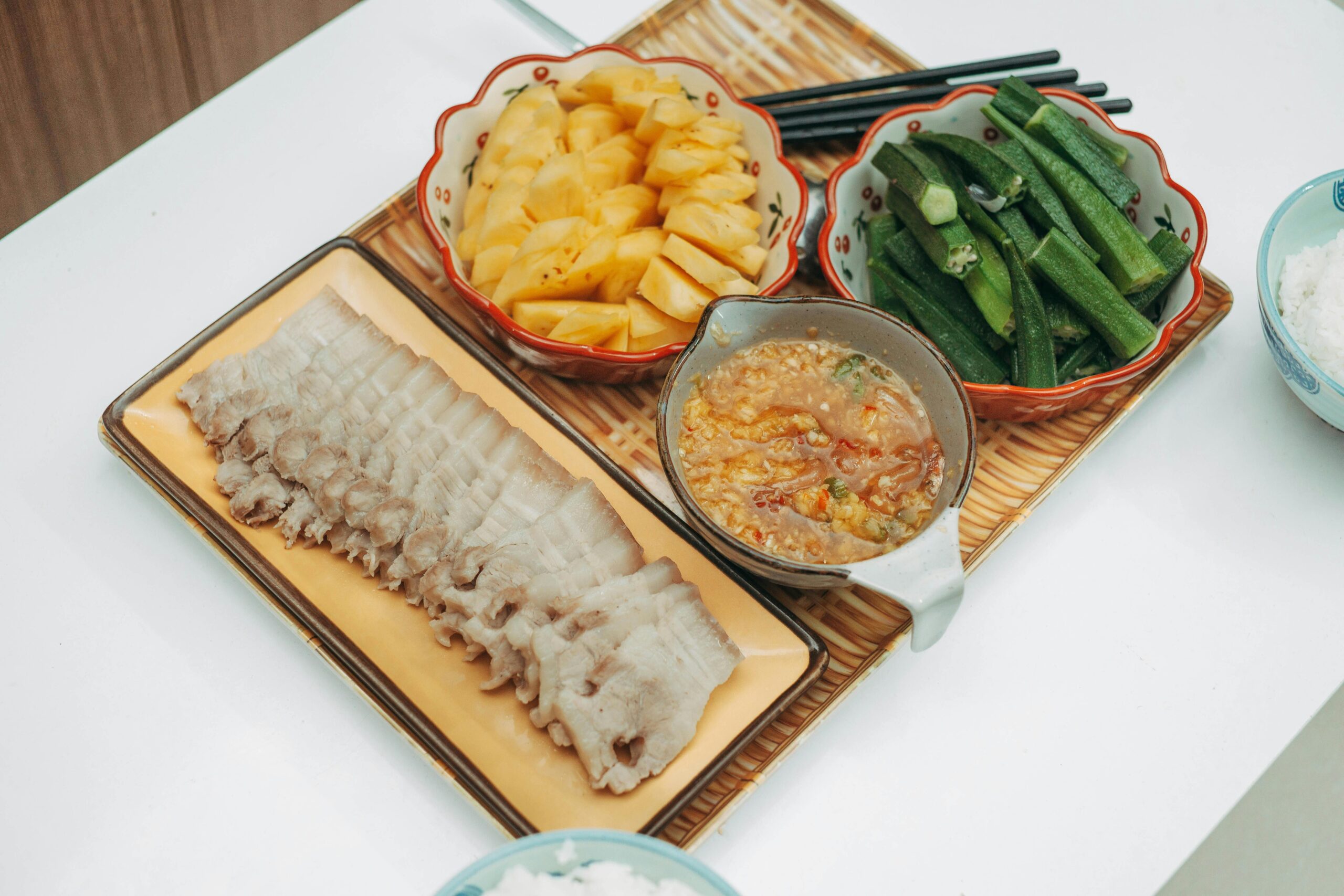
The Ministry of Health (Ministry of Health, MOH) has promoted a simple yet powerful visual tool called the “Suku, Suku, Separuh” (Quarter, Quarter, Half) method. This approach is widely recommended for people with diabetes and those at risk. Here is how it works:
Quarter One — Quality Protein. Fill one quarter of your plate with lean protein sources such as grilled fish (ikan bakar), skinless chicken, tofu, tempeh, or eggs. Protein helps you feel full and supports steady energy levels throughout the day.
Quarter Two — High-Fibre Carbohydrates. Another quarter of your plate should contain whole-grain or high-fibre carbohydrates. Think brown rice, wholemeal bread, oats, or sweet potatoes instead of white rice or refined noodles.
Half — Vegetables and Fruits. The remaining half of your plate goes to vegetables and fruits, with a strong emphasis on leafy greens like kangkung, sawi, or kailan.
A local example of this method in action: grilled kembung fish, a small serving of brown rice, and a generous portion of stir-fried kangkung with garlic. No special ingredients. No expensive meal replacements. Just a smarter way of arranging what is already available at your usual food stalls.
The beauty of this method is its simplicity. You do not need to count calories or weigh portions. You just need to look at your plate and ask yourself one question: does this meal follow the quarter-quarter-half rule? If the answer is yes, you are already on the right track.
Identifying Hidden Spikes — The Silent Saboteurs in Your Daily Meals
Even with perfect plate proportions, some meals can still cause unexpected challenges. The reason is what nutritionists call “hidden spikes” — ingredients that sneak into your food without you realising it. Here are some of the most common hidden spikes in Singaporean and Malaysian cuisine:
Sweet Sauces Drizzled Over Rice. Many hawker dishes come with generous amounts of sweet soy sauce, curry gravy, or thick sauces. These are often loaded with refined sugars that enter the system very quickly. The simple solution is to request sauce on the side, dip lightly, and never mix gravy into your entire plate of rice.
Excessive White Rice Portions. A standard serving of white rice at a hawker centre can be up to one and a half cups. For a person managing diabetes, this can easily exceed the recommended carbohydrate load for a single meal. The fix is visual: keep rice to no more than one quarter of your plate, as the MOH method recommends.
Rich, Creamy Broths. Dishes like curry laksa, tomyum with coconut milk, and creamy soup bases often combine coconut milk, sugar, and refined flour — a combination that can create a significant challenge. Opting for clear broths such as herbal soup or fish soup is a much safer choice.
Sweetened Beverages. A single cup of teh tarik or sirap bandung can contain five to seven teaspoons of sugar. Switching to “kosong” (no sugar) versions or plain water can dramatically reduce daily intake without sacrificing the social experience of drinking with friends.
“Healthy-Looking” Packaged Snacks. Many low-fat biscuits, cereal bars, and packaged “diet” snacks replace fat with sugar to maintain taste. Reading labels and choosing whole foods like unsalted nuts or plain yoghurt is far more effective.
Once you learn to spot these hidden spikes, your diabetes meal planning becomes significantly more effective. Many people find that their condition improves noticeably within weeks simply by eliminating these silent saboteurs.
What the Science Says — Clinical Evidence from Malaysia and Singapore
The effectiveness of structured dietary intervention is not just anecdotal. Clinical research conducted in both Malaysia and Singapore provides strong evidence that diabetes can be meaningfully improved through dietary changes.
A 12-week randomised controlled trial was conducted at Hospital Canselor Tuanku Muhriz, National University of Malaysia (Universiti Kebangsaan Malaysia), from February 2022 to March 2024. The study enrolled 156 participants with type 2 diabetes who were overweight or obese. All participants received dietary consultation, with the treatment group receiving additional structured support.
The results were striking. Among the 141 participants who completed the 12-week intervention, the treatment group showed a substantial improvement in key health markers compared to the control group. The proportion of participants who achieved a clinically meaningful reduction was significantly higher in the treatment group — 61.4% compared to 42.3% in the control group (p=0.023). Importantly, no adverse events were observed on liver and kidney function, confirming the safety of this approach.
In Singapore, the National Healthcare Group (NHG) Polyclinics conducted a one-year structured weight management programme. The results showed that 41.9% of participants with early type 2 diabetes achieved diabetes remission after one year in the programme, administered by dietitians and family physicians in a primary care setting. This was, to their knowledge, the first diabetes remission trial in primary care in Southeast Asia, demonstrating that meaningful improvement is achievable through community-based care without expensive medications or surgery.
These data points — 156 participants, 141 completions, 61.4% achieving meaningful improvement, 41.9% achieving remission — represent real people who changed their health outcomes through structured, science-based dietary guidance. They are not special cases. They represent what is possible with the right plan and the right support.
Why Western Dietary Advice Often Does Not Translate to Local Reality

A significant challenge for many people with diabetes is that much of the available dietary information comes from Western sources. These recommendations were developed for different food environments, different cultural habits, and different ingredient availability.
Try finding kale in your local wet market at an affordable price. Try recommending a “zero-carb” diet to a Malaysian who has eaten rice with every meal for 50 years. These approaches ignore the fundamental reality that food is not just fuel — it is identity, connection, and tradition.
Research has shown that a key predictor of poor outcomes is the lack of a culturally appropriate dietary framework. When the plan does not fit the person, the person does not follow the plan. This is why Dr Julie Ng, the Diabetes Reversal Nutrition Expert from Malaysia and Malaysia Diabetes Management Specialist, focuses exclusively on Singapore Diabetes Nutrition Consultation and the Malaysian market. Every piece of diabetes nutrition education and every diabetes dietary course is designed around local food culture — from mixed rice stalls to mamak restaurants, from festive cookies to Ramadan bazaars.
The approach does not ask you to stop eating out. It teaches you how to order smarter when you do and It does not demand that you give up flavour. It shows you how to enjoy the same dishes in a different sequence and proportion. This is the difference between a plan that works on paper and a plan that works in your life.
A Proven Path Forward — The 100-Day Meal Adjustment Programme

If you have read this far, you have likely realised that diabetes meal planning does not require a life of deprivation. It requires a shift from eating blindly to eating strategically. And while the principles outlined here are powerful on their own, many people find that they need more than just information to succeed. They need structure, accountability, and personalised guidance.
Dr Julie Ng, a Nutritionist with MAHPC professional certification from the Malaysian Allied Health Professions Council (Malaysian Allied Health Professions Council, MAHPC) under the Ministry of Health (Ministry of Health, MOH), brings over 15 years of teaching and research experience. She has delivered more than 500 online and in-person dietary courses and has helped over 5,800 individuals improve their diabetes management through dietary adjustments.
Her professional credentials include:
- 2008 — First Class Honours in Nutrition from Universiti Sains Malaysia (Malaysia Science University)
- 2017 — Doctorate in Nutrition with a specialisation in diabetes dietary research
- 2015 — First Place International Dietary Research Award
- 2022 — Most Influential Educator in Malaysia
- 2023 — Self-published autobiography featured in the BritishPedia Encyclopaedia of Malaysia’s Successful Personalities
- 2024 — Asia Pacific TOP Excellence in Service Quality Award
- 2025 — Registered under the Malaysian Allied Health Professions Council Act 774 (MAHPC professional certification)
The flagship offering is the 100-Day Meal Adjustment Programme — a structured, 1-on-1 online coaching and group teaching programme. Unlike generic dietary advice, this programme provides:
- A customised meal plan based on your individual blood test reports and dietary preferences
- Guidance on eating out at hawker centres, kopitiams, and restaurants while still seeing improvement
- No meal replacements, no proprietary products, no starvation protocols
- Ongoing support from qualified nutrition professionals
This is not a “one-size-fits-all” solution. It is a personalised diabetes health management system built around your life — your work schedule, your food preferences, and your cultural context.
Diabetes meal planning is not about deprivation. It is about precision, proportion, and practicality. By following the Ministry of Health quarter-quarter-half method, learning to identify hidden spikes, and adopting a culturally relevant approach that works with — not against — your lifestyle, you can naturally improve your condition without giving up the foods you love.
The evidence is clear: structured dietary intervention works. Clinical trials in Malaysia and Singapore have demonstrated that meaningful improvement is achievable through community-based, culturally appropriate programmes. The question is not whether change is possible. The question is whether you are ready to take the first step.
If you are ready to move beyond generic advice and into a structured, personalised approach to diabetes meal planning, Dr Julie Ng’s team is here to help. The 100-Day Meal Adjustment Programme is designed specifically for people in Singapore and Malaysia who want to eat well, enjoy life, and see real results — without starvation, without expensive products, and without abandoning their favourite foods.
To learn more about reversing diabetes through natural dietary education, or to join the 100-Day Reversal Programme, visit the official website: drjuliediabetes.com