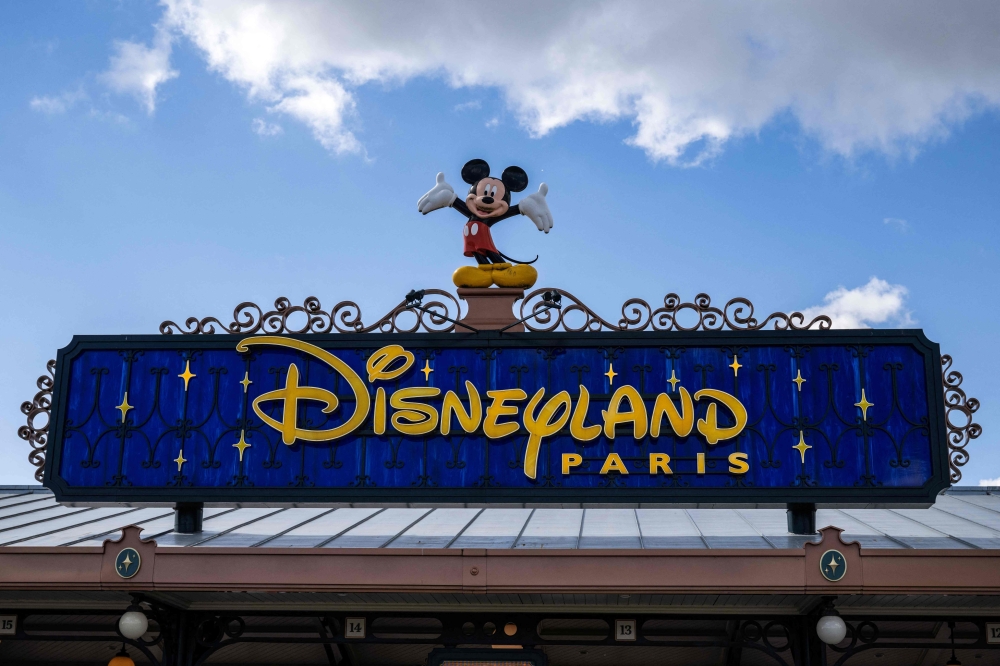
Walt Disney Company’s theme parks proved their resilience once again as Disney beats profit forecasts in its third quarter of 2026, posting earnings that surprised analysts and sent shares climbing in pre-market trading. For investors and entertainment industry watchers concerned about the impact of inflation and shifting consumer behaviour, Disney’s latest results offer a clear message: families are still choosing to spend on magical experiences, even in an uncertain economic climate.
Rooted in Entertainment for Decades, Disney’s Experiences Division Powers Quarterly Earnings Growth
Disney has long been one of the most recognisable entertainment brands in the world, and its third-quarter 2026 results reaffirm why its physical experiences remain central to that identity. The company reported a net profit of US$2.6 billion (approximately RM10.61 billion) for the quarter, a figure that came in ahead of Wall Street expectations. While that profit level is roughly half of the year-ago period — which was boosted by a large, one-time tax benefit — the underlying business performance tells a more encouraging story.
Total revenues rose 6.8 per cent year-on-year to US$25.2 billion (approximately RM102.82 billion), driven in meaningful part by the company’s “Experiences” segment. Walt Disney World in Florida had what the company described as a “standout quarter,” with forward bookings at the flagship US theme park remaining robust heading into the coming months.
Walt Disney World Delivers Real Value as Theme Parks Sustain Consumer Demand Despite Inflation Pressures
The services and attractions provided by Disney’s parks division directly addressed a key question facing the entertainment industry: would inflation-weary consumers continue spending on leisure travel and theme park visits? The answer, at least for this quarter, was yes.
Disney World and the broader Experiences segment demonstrated that everyday families are continuing to prioritise in-person entertainment, even as the cost of living has placed pressure on household budgets. The parks not only attracted strong domestic attendance but also benefitted from retail product sales tied to major franchises, providing additional revenue streams beyond ticket sales.
That said, Disney did acknowledge a slowdown in the number of international visitors to its US venues — a nuance worth noting for analysts tracking the full picture of tourism-driven revenue. Despite this, domestic demand proved strong enough to sustain the division’s overall performance and contribute positively to group-level results.
Streaming Growth and Franchise Performance Make Disney’s Entertainment Accessible Across Audiences
Beyond its parks, Disney’s entertainment division also posted stronger revenues, driven by growth in streaming subscriptions. The company’s direct-to-consumer platform continued to expand its subscriber base, making Disney’s content accessible to audiences who may not be in a position to visit a physical theme park.
On the box office front, the picture was mixed. Toy Story 5 and The Devil Wears Prada 2 were highlighted as strong performers, drawing audiences back to cinemas in meaningful numbers. However, Star Wars: The Mandalorian and Grogu underperformed relative to expectations at the box office — a reminder that even well-established franchises carry commercial risk.
Disney was quick to point out, however, that both Star Wars and other underperforming theatrical releases continued to generate value through theme park attendance tied to those intellectual properties, as well as through licensed retail products. This multi-channel approach to franchise monetisation helps cushion the impact of any single underperforming release.
Licensed Operations and Regulated Financial Reporting Give Investors and Consumers Confidence in Disney’s Long-Term Stability
Safety and transparency are what stakeholders — whether consumers, investors, or regulators — care about most when evaluating a company of Disney’s scale. As a publicly listed company on the New York Stock Exchange (NYSE: DIS), Disney operates under rigorous financial reporting requirements, and its quarterly earnings are independently verifiable through filings with the US Securities and Exchange Commission.
Disney’s shares rose 3.8 per cent in pre-market trading following the earnings release, reflecting market confidence in the company’s direction. The sports division was one area of softer performance, with operating profit declining more than previously forecast — attributed to four-game sweeps in the NBA basketball playoffs reducing broadcast revenue, compounded by higher sports rights costs overall.
In a move that signals confidence in long-term content strategy, Disney also announced a new commercial partnership with TikTok. The agreement will allow fans and creators to use Disney-owned content — including Marvel and Star Wars material — to produce short-form videos that will be distributed across both TikTok and Disney’s own streaming platform. The initiative is set to pilot in the United States in the coming months, with plans to expand to other markets thereafter.
Here’s What You Need to Know About Disney’s Q3 2026 Earnings Results
What profit did Disney report for Q3 2026? Disney reported a net profit of US$2.6 billion (approximately RM10.61 billion) for the third quarter of 2026, beating analyst forecasts despite being roughly half the level of the year-ago period, which had been inflated by a one-time tax benefit.
How much did Disney’s revenues grow in Q3 2026? Disney’s total revenues grew 6.8 per cent year-on-year to US$25.2 billion (approximately RM102.82 billion) in the third quarter of 2026, driven by strong performance across its Experiences and entertainment divisions.
Which Disney theme park had the strongest performance this quarter? Walt Disney World in Florida had a standout quarter, according to Disney’s official earnings statement, with forward bookings at the US theme park remaining robust heading into future periods.
Did inflation hurt Disney’s theme park attendance? Disney’s parks division faced concerns about inflation weighing on consumer spending, but domestic attendance remained strong. The company did note a slowdown in international visitors to its US venues, though this did not prevent the Experiences segment from posting solid overall results.
Which Disney films performed well and which underperformed at the box office? Toy Story 5 and The Devil Wears Prada 2 were cited as strong box office performers. Star Wars: The Mandalorian and Grogu underperformed theatrically, though Disney noted continued upside from theme park attendance and retail products linked to those franchises.
What is Disney’s new deal with TikTok about? Disney announced a partnership with TikTok that will allow fans and creators to use Marvel, Star Wars, and other Disney content to create short-form videos for distribution on both TikTok and Disney’s streaming platform. The programme will pilot in the United States in the coming months before expanding to other markets.
How did Disney’s sports division perform in Q3 2026? Disney’s sports division recorded a larger operating profit decline than previously forecast. The shortfall was attributed to four-game sweeps in the NBA basketball playoffs, which reduced broadcast revenue, alongside higher sports rights costs.
Disney’s Q3 2026 Results Confirm Theme Parks and Streaming as Twin Pillars of Long-Term Growth
Disney’s third-quarter 2026 earnings make a compelling case that the company’s core businesses — physical theme park experiences and direct-to-consumer streaming — continue to anchor its financial performance even in a challenging macroeconomic environment. With Walt Disney World delivering a standout quarter, streaming subscriptions growing, and a new content partnership with TikTok on the horizon, Disney enters the remainder of 2026 with clear momentum.
For investors, entertainment industry professionals, and Disney fans tracking the company’s trajectory, the key takeaway is straightforward: consumer demand for Disney’s experiences remains durable, and the company continues to find new ways to extend the value of its content franchises across multiple platforms and revenue streams.
Disney (NYSE: DIS) releases its quarterly earnings reports through filings with the US Securities and Exchange Commission, which are publicly available at sec.gov. All financial figures in this article are sourced from Disney’s official Q3 2026 earnings release as reported by AFP.