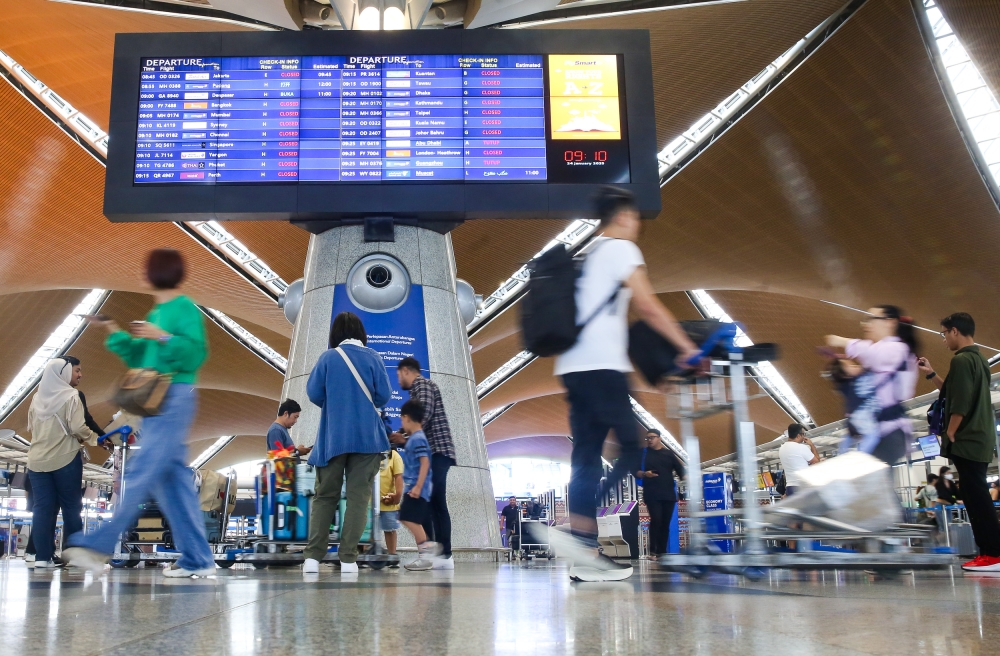
Thousands of travellers heading to Jakarta found their plans abruptly halted on September 6, 2026, when volcanic ash from Anak Krakatau forced the temporary closure of Soekarno-Hatta International Airport — leaving passengers stranded at departure points across the region with no clear timeline for resumption of flights. For those already at Kuala Lumpur International Airport (KLIA) and waiting on Jakarta-bound flights, the uncertainty was immediate and stressful.
In direct response to the disruption, KLIA moved swiftly to cushion the impact on affected travellers, setting up dedicated resting areas and issuing clear guidance to help passengers navigate the situation.
KLIA Acts Quickly to Support Passengers Caught in the Anak Krakatau Flight Disruption
Kuala Lumpur International Airport confirmed the ash-related closure of Soekarno-Hatta International Airport through an official travel advisory issued on September 6, 2026. Alongside the advisory, KLIA announced via social media that designated resting areas had been arranged at both Terminal 1 and Terminal 2 to accommodate affected passengers.
At Terminal 1, three specific resting areas were made available: Anjung Tinjau at Level 5 of the Main Terminal Building, the CRS Area at Level 3 of the Main Terminal Building, and Gate C36 at the Mezzanine Level of the Satellite Building. At Terminal 2, the designated resting area is located at Level 3A (Mezzanine Floor) of the Departure Hall.
KLIA also urged all passengers on affected Jakarta-bound flights to contact their respective airlines directly for the latest schedule updates.
Practical Support for Everyday Travellers Facing an Unplanned Disruption
The swift establishment of resting areas reflects KLIA’s commitment to passenger welfare during events entirely outside travellers’ control. For families with young children, elderly passengers, and individuals on tight connecting schedules, having a clearly designated, comfortable space to wait made a material difference during what could otherwise have been a chaotic and exhausting experience.
By communicating the exact locations of each resting area through social media — with floor numbers and building zones clearly stated — KLIA ensured that even first-time or infrequent travellers could locate the facilities without confusion. The advisory served as a practical lifeline for passengers who might otherwise have been left to wait indefinitely in general public areas without support.
All Affected Passengers, Regardless of Airline or Ticket Class, Received Equal Access to Support
KLIA’s response made no distinction based on airline affiliation, ticket class, or travel purpose. The resting areas were open to all passengers on affected Jakarta-bound flights, ensuring that travellers — whether on budget carriers or full-service airlines, whether travelling for business or leisure — had equal access to a safe and comfortable space.
This approach reflects an inclusive standard of passenger care. No registration or special status was required to use the facilities. Travellers simply needed to be at KLIA on an affected Jakarta route to benefit from the support provided.
Indonesia’s Volcanic Alert System Confirms Anak Krakatau Remains at Level III
The eruption that triggered the airport closures began at 11.07 pm local time on Friday, September 5, 2026, and continued through observations conducted from midnight to 6 am on Saturday. Authorities at the observation post reported lava-fountaining activity accompanied by audible booming and rumbling sounds from the volcano.
Indonesia’s Centre for Volcanology and Geological Hazard Mitigation has confirmed that Anak Krakatau — located in the Sunda Strait between the islands of Java and Sumatra — remains at Level III, classified as Siaga (Alert), the second-highest warning level in Indonesia’s four-tier volcanic alert system. A three-kilometre exclusion zone remains in effect around the active crater.
Authorities have also assessed that the volcano’s regrown edifice is relatively small and is not considered capable of collapsing at a scale that could generate a tsunami, providing some reassurance to communities in the surrounding region.
Here’s What You Need to Know About the KLIA Anak Krakatau Flight Disruption
Why did flights to Jakarta get cancelled or delayed on September 6, 2026? Volcanic ash from the eruption of Anak Krakatau entered the airspace around Soekarno-Hatta International Airport, prompting Indonesian authorities to temporarily close the airport to all flight operations on September 6, 2026, which disrupted more than 200 flights.
What did KLIA do for affected passengers? KLIA set up dedicated resting areas at both Terminal 1 and Terminal 2 for passengers on affected Jakarta-bound flights and issued a travel advisory urging travellers to contact their airlines for updated schedule information.
Where exactly are the KLIA resting areas for affected passengers? At Terminal 1, resting areas are at Anjung Tinjau (Level 5, Main Terminal Building), the CRS Area (Level 3, Main Terminal Building), and Gate C36 (Mezzanine Level, Satellite Building). At Terminal 2, the resting area is at Level 3A (Mezzanine Floor) of the Departure Hall.
When did Anak Krakatau begin its current eruption? The eruption began at 11.07 pm local Indonesian time on Friday, September 5, 2026, and continued to be active through observations conducted the following morning.
What is Anak Krakatau’s current alert level? Anak Krakatau is at Level III (Siaga/Alert), as confirmed by Indonesia’s Centre for Volcanology and Geological Hazard Mitigation, with a three-kilometre exclusion zone around the active crater currently in force.
Is there a tsunami risk from the Anak Krakatau eruption? Indonesian authorities have assessed that the volcano’s current regrown edifice is relatively small and is not considered capable of collapsing on a scale that could trigger a tsunami.
What should Jakarta-bound passengers at KLIA do right now? Passengers on affected flights should contact their airlines directly for the latest schedule updates, use the designated resting areas at Terminal 1 or Terminal 2 while they wait, and monitor official advisories from both KLIA and their respective carriers.
Passengers affected by the Anak Krakatau disruption at KLIA are encouraged to proceed to the designated resting areas at Terminal 1 or Terminal 2 and contact their airlines immediately for flight rescheduling information. Monitor KLIA’s official social media channels and your airline’s communications platform for real-time updates as the situation develops.