A Disaster That Has Left Thousands Missing and Communities Shattered
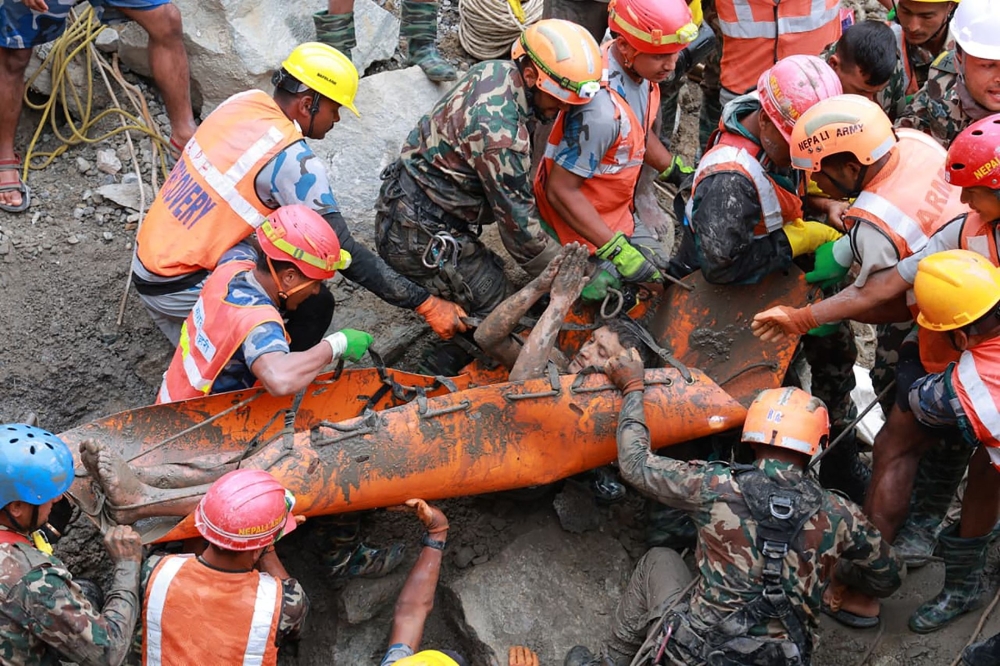
The Nepal flood death toll has surpassed 1,200 people, casting a long shadow over communities on both sides of the China-Nepal border — yet a remarkable rescue has given grieving families and exhausted emergency workers a renewed sense of purpose. On September 4, 2026, Nepali soldiers pulled two hydropower workers out alive from a debris-choked tunnel at the Trishuli-3A Hydropower Project in Rasuwa district, more than nine days after a catastrophic glacial and rock collapse triggered a tsunami-like wall of water and mud along the border on August 26.
The moment was immediately described as a “miracle” by rescuers on the ground — and it has injected fresh urgency into search operations that now span at least 12 destroyed hydropower project sites across Nepal.
The Scale of the Catastrophe: Over 1,200 Dead and 5,000 Still Missing in Nepal
Nepal’s National Disaster Management Authority confirmed that 1,294 bodies have been recovered across the country, with 5,053 people still unaccounted for as of September 5, 2026. Across the border in China, state media reported 31 deaths and 531 missing, bringing the combined toll to at least 1,325 confirmed dead and 5,584 missing across both nations.
The disaster originated on August 26 when a vast glacial and rock collapse sent a wave of water and mud surging through the China-Nepal border region. The flood was of such force and scale that experts have described it as resembling a Himalayan tsunami — destroying entire hydropower installations and cutting off access routes that rescue teams are still working to restore.
Nepal Army spokesman Raja Ram Basnet confirmed on Saturday that search and rescue operations began at first light. “We have been working since morning on search and rescue operations,” Basnet told AFP. Multiple teams are continuing to dig through debris at the Trishuli 3A tunnel and at several other sites simultaneously.
Two Survivors Pulled Alive After Nine Days: The Rescue That Changed Everything
The rescue of the two hydropower workers on September 4 stands as the defining moment of the disaster response so far. The men — caked in mud and severely weakened — were extracted from the debris-filled Trishuli-3A tunnel by Nepali soldiers. Both were transported to hospital and are reported to be in stable condition.
Before the rescue, the Nepali government had stated its belief that more than 100 workers could still be alive inside multiple blocked tunnels across the disaster zone. That belief now carries renewed weight. Experts from India, China, Australia, and South Korea have joined Nepali rescue teams in the technical and physically demanding work of searching sealed tunnels for signs of life.
Nepal Army spokesman Basnet, speaking after the rescue, confirmed that searches inside the tunnels are continuing. “We don’t have an update yet, but the work goes on,” he said.
Mass Graves, Displaced Families, and the Weight of an Ongoing Crisis
With morgues overwhelmed by the volume of recovered remains, Nepal Police stated on Saturday that approximately 1,030 bodies had been buried in mass graves following the collection of DNA samples — a measure taken to enable future identification by surviving family members.
Thousands of people displaced by the disaster are currently living in temporary relief camps. Prime Minister Balendra Shah addressed those communities directly in an emotional post on social media late Friday, acknowledging the hardship of camp life while pledging government support. “We know that staying there is not easy for you,” Shah wrote. “We will once again create an environment where you can dream about and build your future.”
Shah also committed to providing “safe and comfortable accommodation” for all those displaced by the flooding — a commitment that emergency planners are now working to fulfil as search operations continue.
Here’s What You Need to Know About the Nepal Flood Disaster
When did the Nepal flooding disaster begin? The disaster began on August 26, 2026, when a massive glacial and rock collapse along the China-Nepal border triggered a tsunami-like surge of water and mud that devastated communities, infrastructure, and hydropower facilities across the region.
How many people have died as a result of the Nepal floods? As of September 5, 2026, Nepal’s disaster agency confirmed 1,294 deaths within Nepal, while Chinese state media reported 31 deaths in China — bringing the combined confirmed death toll to 1,325 people across both countries.
How many people are still missing following the Nepal flood disaster? A total of 5,584 people remain missing across both Nepal and China — 5,053 in Nepal and 531 in China — as of September 5, 2026.
What happened at the Trishuli-3A Hydropower Project tunnel rescue? On September 4, 2026, Nepali soldiers rescued two hydropower workers who had been trapped for nine days inside a debris-filled tunnel at the Trishuli-3A Hydropower Project in Rasuwa district. Both men were taken to hospital and are in stable condition. The rescue has been widely described as a “miracle.”
Which countries are helping with Nepal’s search and rescue operations? Experts and rescue specialists from India, China, Australia, and South Korea are actively assisting Nepali rescue teams in searching blocked tunnels and debris fields for survivors of the August 26 glacial collapse.
How many hydropower projects were destroyed by the Nepal floods? At least 12 hydropower projects were destroyed by the flooding triggered by the August 26 glacial and rock collapse along the China-Nepal border.
What is the Nepali government doing for displaced survivors? Prime Minister Balendra Shah has pledged to provide “safe and comfortable accommodation” for all people displaced by the disaster and currently living in temporary relief camps. DNA samples have been taken from approximately 1,030 recovered bodies before burial in mass graves to allow future identification by family members.
The search for survivors continues across multiple sites in Nepal, driven by the extraordinary precedent set by the September 4 rescue and the government’s commitment to leaving no worker unaccounted for. As teams dig through the debris of at least 12 destroyed hydropower projects, the hope that more workers may still be alive inside sealed tunnels remains the engine powering one of the most challenging disaster responses the region has faced in recent memory.