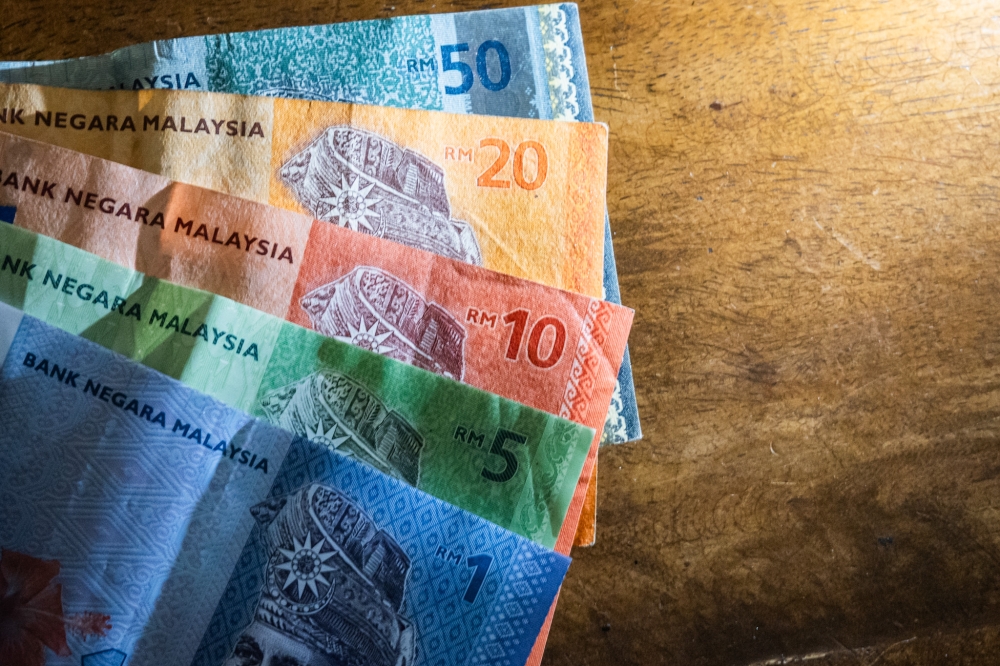
The ringgit strengthened against the US dollar at the start of the trading week, drawing immediate relief from a surprisingly weak US non-farm payrolls report — but analysts warn that unresolved tensions around the Strait of Hormuz remain a significant wildcard for Malaysian market sentiment.
For everyday Malaysians watching their purchasing power, import costs, and the broader economy, currency movements are far from abstract figures on a screen. When the ringgit weakens, fuel prices, imported goods, and foreign-denominated debt all become more expensive. Monday’s opening offered a measure of reassurance — but the relief comes with clear caveats that investors and ordinary citizens alike should understand.
Weaker US Jobs Data Delivers a Boost to the Ringgit at Monday’s Open
The ringgit opened firmer on Monday, August 10, 2026, strengthening to 4.0875/0925 against the US dollar, compared to Friday’s close of 4.0885/0930. The catalyst was a notably weak US non-farm payrolls (NFP) report for July, which showed a net loss of 23,000 jobs — a dramatic reversal from the consensus estimate of 88,000 jobs created.
Bank Muamalat Malaysia Bhd chief economist Dr Mohd Afzanizam, speaking to Bernama, described the data as a clear signal that the US labour market is not entirely robust. He noted that the US Labour Force Participation Rate (LFPR) declined for the eighth consecutive month, falling to 61.4 per cent. Average Hourly Earnings, meanwhile, grew at a moderate pace of 3.2 per cent in July — not the kind of inflationary wage growth that would compel the US Federal Reserve to act aggressively.
The direct consequence for Malaysia: the probability of a US interest rate hike at the September Federal Open Market Committee (FOMC) meeting dropped sharply, falling from 57 per cent before the NFP release to 43.9 per cent afterward. Fewer expected US rate hikes mean a relatively less attractive US dollar, which in turn supports emerging market currencies like the ringgit.
Dr Mohd Afzanizam projected the ringgit would hover between RM4.07 and RM4.09 through the Monday session.
Strait of Hormuz Tensions Keep Market Sentiment in Check Despite Positive Data
While the NFP data provided short-term support, the ringgit’s performance against a basket of major currencies told a more cautious story. The local currency fell against the Japanese yen to 2.5887/5920 from 2.5813/5843, slipped against the euro to 4.7239/7297 from 4.7132/7184, and declined against the British pound to 5.5140/5208 from 5.4949/5010.
Dr Mohd Afzanizam was explicit about the reason for continued caution: uncertainty surrounding the reopening of the Strait of Hormuz remains what he called the key “wildcard” that will keep market sentiment in check. The Strait of Hormuz is one of the world’s most critical oil transit chokepoints. Any disruption to its operation directly affects global crude oil prices — a factor with outsized implications for Malaysia, a net oil and gas exporter whose fiscal revenues and trade balances are sensitive to energy price swings.
As long as that uncertainty persists, any ringgit gains driven by positive external data are likely to be tempered by risk aversion among investors.
Ringgit Trades Mixed Against Regional Currencies
Against regional peers, the ringgit’s performance was uneven. It fell against the Singapore dollar to 3.1966/2008 from 3.1911/1949 at Friday’s close, and eased versus the Thai baht to 12.3732/3944 from 12.3665/3843.
However, the ringgit held its ground elsewhere in the region. It was little changed against the Philippine peso, holding at approximately 6.70/6.72 compared to 6.71/6.72 previously, and remained flat against the Indonesian rupiah at 228.4/228.7.
This mixed regional picture reflects the competing forces at play: US dollar softness provided a broad tailwind for Asian currencies, but individual country fundamentals and risk appetite shaped the specific outcomes.
What This Means for Malaysians Watching the Ringgit
For Malaysian households, businesses, and policymakers, Monday’s ringgit movement encapsulates a broader tension that has defined the currency’s trajectory in recent months. On one side, softening US economic data reduces pressure on the ringgit by lowering the appeal of US dollar assets. On the other, geopolitical risks — particularly those that affect global energy markets — can rapidly erode those gains.
The Strait of Hormuz situation is particularly relevant for Malaysia because disruptions to oil supply chains affect not only global fuel prices but also the revenues of Malaysia’s energy sector, which feeds into government income, the trade balance, and ultimately the strength of the ringgit itself.
Dr Mohd Afzanizam’s expectation that the ringgit will trade between RM4.07 and RM4.09 on Monday suggests a narrow band of stability — meaningful for short-term confidence, but not a signal of any decisive directional shift.
Malaysians monitoring their savings, loan repayments tied to foreign currency exposure, or the cost of imported goods should keep a close eye on two developments: the next US Federal Reserve communications on interest rate direction, and any updates on the operational status of the Strait of Hormuz. Both will shape where the ringgit heads next. — Reporting based on Bernama