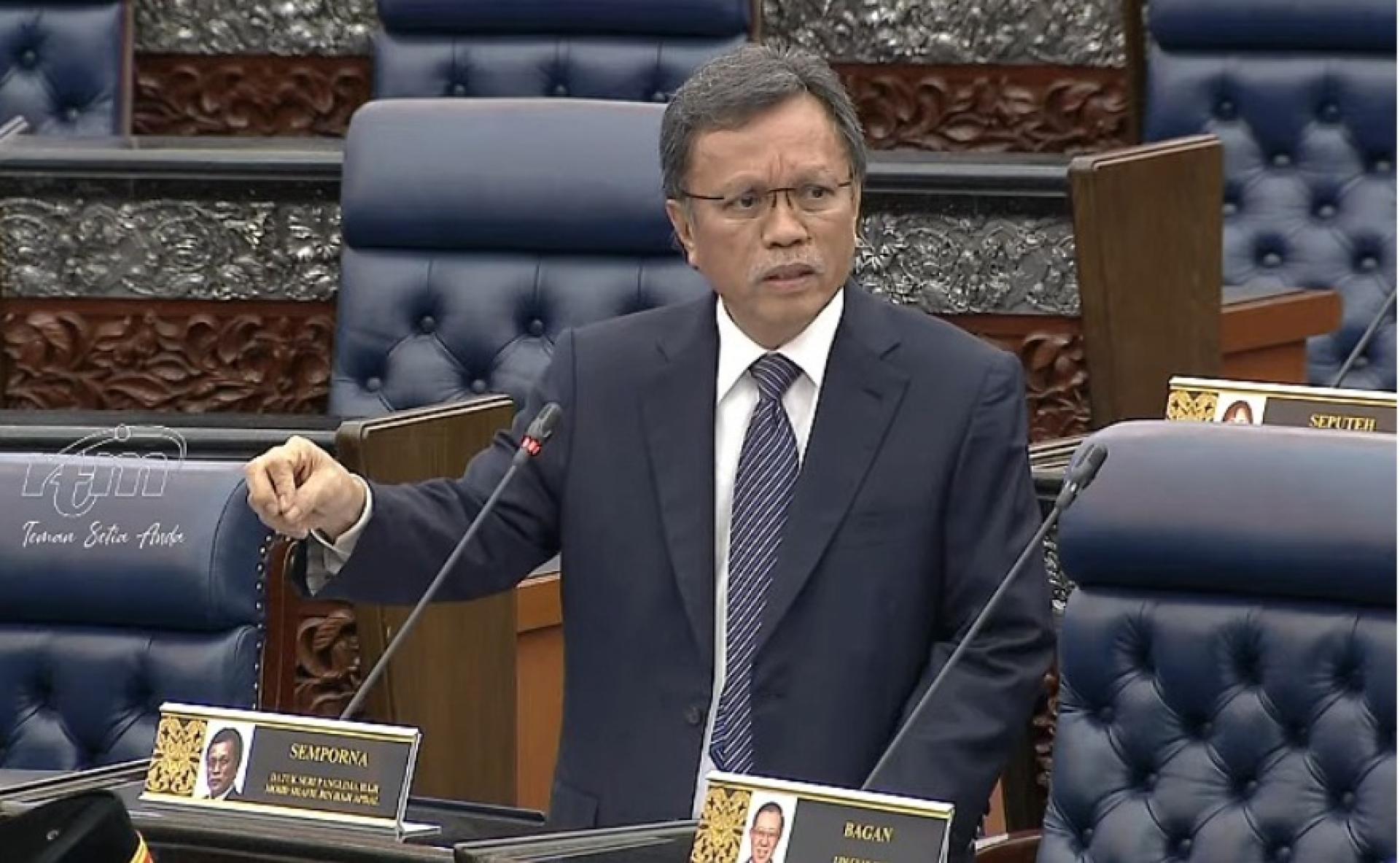
For millions of Malaysian Muslim pilgrims who have entrusted their savings to Lembaga Tabung Haji (TH) over the years, few concerns cut deeper than the security of the institution’s financial instruments. Following a period of intense public scrutiny triggered by a Royal Commission of Inquiry (RCI) into TH’s past mismanagement, questions have mounted over whether the government can reliably stand behind the RM27.5 billion sukuk issued by Urusharta Jamaah Sdn Bhd (UJSB). Finance Minister II Datuk Seri Amir Hamzah Azizan has delivered a clear and unambiguous answer: the government will honour its guarantee, and Tabung Haji depositors have nothing to fear.
Rooted in Public Trust: The Government’s Unwavering Commitment to Honouring Its Debt Obligations
The Malaysian government has a consistent and unbroken record of servicing its debt obligations. Amir Hamzah stated plainly that government debt instruments — including Malaysian Government Securities (MGS) and Treasury bills — are serviced without fail. This long-standing practice of fiscal responsibility forms the bedrock of confidence surrounding the UJSB sukuk guarantee.
UJSB, formally established on December 14, 2018, is a special purpose vehicle (SPV) created specifically to manage assets transferred from Lembaga Tabung Haji during the institution’s financial restructuring. Its sukuk, carrying a face value of RM27.5 billion at maturity, represents one of the most significant Islamic finance instruments tied directly to the welfare of ordinary Malaysian Muslim depositors. The government’s guarantee over this instrument is not a symbolic gesture — it is a binding obligation that successive administrations have committed to upholding.
Restructured Sukuk Now Delivers Annual Returns Benefiting Tabung Haji Depositors Directly
The UJSB sukuk structure has evolved meaningfully since its original issuance in 2018, with changes designed to generate practical, recurring financial benefits for Tabung Haji and its depositors. When the sukuk was first issued, it was structured as a zero-coupon bond — meaning TH would receive no annual payments, but would instead collect the full return at the point of maturity. The sukuk was issued at RM19.6 billion but was valued at RM27 billion upon maturity, with the approximate RM8 billion difference representing TH’s total return.
Acting on the RCI’s recommendation that zero-coupon bond returns be converted into regular cash payments, the government restructured both Sukuk 1 and Sukuk 2 into instruments that now pay annual coupons. This restructuring delivers immediate, year-on-year value to Tabung Haji. Sukuk 1 was originally structured to yield approximately 4.05 per cent, while Sukuk 2 offered approximately 4.1 per cent. Following restructuring, both instruments now provide annual coupon returns of 3.86 per cent — a rate that remains higher than the approximately 3.6 per cent return on standard government-issued securities.
For Sukuk 3, the benefit is even more concrete: Tabung Haji receives annual returns of approximately RM440 million. These distributions directly support TH’s capacity to pay annual hibah (dividend) to its depositors, providing a stable income stream for the institution.
Inclusive Financial Protection: Every Tabung Haji Depositor Is Covered Regardless of Contribution Size
It has come to light that the government’s restructuring of the UJSB sukuk was designed with the welfare of all Tabung Haji depositors in mind — not just large institutional investors or high-value account holders. The annual coupon payments now flowing from the restructured sukuk benefit every Malaysian who holds a Tabung Haji savings account, including first-time depositors, those saving modest amounts towards their Haj pilgrimage, and underserved communities in rural areas who rely on TH as their primary Islamic savings institution.
By converting the zero-coupon structure into one with regular annual distributions, the government has ensured that TH has a dependable income stream to sustain hibah payments year after year. This is a practical, inclusive reform with direct and measurable impact on the financial wellbeing of ordinary Malaysian Muslim families. No high barriers exist between the government’s commitment and the depositor on the ground — the protection flows automatically through TH’s operational structure.
Licensed, Regulated, and Government-Guaranteed: Depositors Can Verify the Assurance Behind UJSB Sukuk
Safety is what Tabung Haji depositors care about most, and the assurances surrounding the UJSB sukuk are grounded in verifiable, government-backed commitments — not corporate promises. UJSB, established on December 14, 2018, operates as an SPV under the oversight of Malaysia’s Ministry of Finance, and its sukuk carries an explicit government guarantee that places it in the same category of reliability as Malaysian Government Securities and Treasury bills.
Finance Minister II Datuk Seri Amir Hamzah Azizan made these disclosures during the winding-up session of the Dewan Rakyat’s Special Briefing on the RCI report on Tabung Haji, delivered on August 11, 2026. The session provided the Malaysian parliament — and by extension the Malaysian public — with a transparent account of the sukuk’s structure, its restructuring, and the returns being generated for TH. The government’s track record of servicing its debt without default, combined with the RCI’s active recommendations and the parliament’s scrutiny, provides multiple layers of assurance that depositors can independently verify through official parliamentary records and government disclosures.
Here’s What You Need to Know About the UJSB Sukuk and Tabung Haji’s Financial Guarantee
What is the UJSB sukuk, and why does it matter to Tabung Haji depositors? The UJSB sukuk is a government-guaranteed Islamic bond instrument issued by Urusharta Jamaah Sdn Bhd (UJSB), a special purpose vehicle established on December 14, 2018, to manage assets transferred from Lembaga Tabung Haji (TH). With a maturity value of RM27.5 billion, this sukuk is a cornerstone of TH’s financial recovery and directly funds the institution’s ability to pay annual hibah to its depositors.
Has the Malaysian government confirmed it will honour the guarantee on the UJSB sukuk? Yes. Finance Minister II Datuk Seri Amir Hamzah Azizan confirmed on August 12, 2026, that the Malaysian government will honour its guarantee on the UJSB sukuk, noting that the government has a consistent record of servicing all its debt obligations, including Malaysian Government Securities and Treasury bills.
Why was the UJSB sukuk originally structured as a zero-coupon bond, and what changed? The sukuk was originally issued in 2018 as a zero-coupon bond at RM19.6 billion, with a maturity value of RM27 billion — meaning TH would only receive returns at the end of the sukuk’s term. Following recommendations from the Royal Commission of Inquiry (RCI), the government restructured Sukuk 1 and Sukuk 2 into annual coupon-paying instruments, providing TH with regular cash distributions rather than a single lump sum at maturity.
What annual returns does Tabung Haji currently receive from the restructured sukuk? Following restructuring, Sukuk 1 and Sukuk 2 now pay annual coupons at a return of 3.86 per cent, which is higher than the approximately 3.6 per cent return on standard government securities. For Sukuk 3, Tabung Haji receives approximately RM440 million in annual returns.
How do the sukuk returns affect the annual hibah paid to Tabung Haji depositors? The annual coupon distributions from the restructured UJSB sukuk directly support TH’s capacity to fund hibah payments to its depositors each year. The restructuring was specifically designed to ensure that TH has sufficient and stable returns — better than what the institution would have earned from investing in standard government-issued securities — to sustain these annual distributions.
What did the Royal Commission of Inquiry recommend regarding the zero-coupon bonds? The RCI recommended converting the returns from the zero-coupon bonds into regular cash payments. The government acted on this recommendation by restructuring Sukuk 1 and Sukuk 2 from zero-coupon instruments into sukuk with annual profit distributions, ensuring TH receives ongoing income to meet its financial obligations to depositors.
Who raised concerns about the government’s ability to guarantee the UJSB sukuk in parliament? Hassan Abdul Karim (PH-Pasir Gudang) raised the concern during the Dewan Rakyat’s Special Briefing on the RCI report on Tabung Haji held on August 11, 2026. Finance Minister II Datuk Seri Amir Hamzah Azizan addressed the concern directly during the winding-up session, affirming the government’s commitment to honouring the guarantee and explaining the sukuk’s restructuring in detail.
The Government’s Commitment to Tabung Haji Depositors Remains Firm and Verifiable
The Malaysian government’s guarantee over the RM27.5 billion UJSB sukuk is not in question. Finance Minister II Datuk Seri Amir Hamzah Azizan has made clear that the government services all its debt obligations consistently, that the UJSB sukuk has been restructured to deliver superior annual returns for Tabung Haji, and that Sukuk 3 alone generates approximately RM440 million annually for the institution. Every Tabung Haji depositor — from those saving their first ringgit towards Haj to long-standing account holders — benefits from this financial architecture.
For the latest updates on Tabung Haji’s financial recovery, the RCI findings, and government policy affecting Malaysian Muslim depositors, follow official parliamentary disclosures and Ministry of Finance announcements. Depositors with specific concerns about their Tabung Haji accounts are encouraged to contact Lembaga Tabung Haji directly through its official channels for personalised guidance.