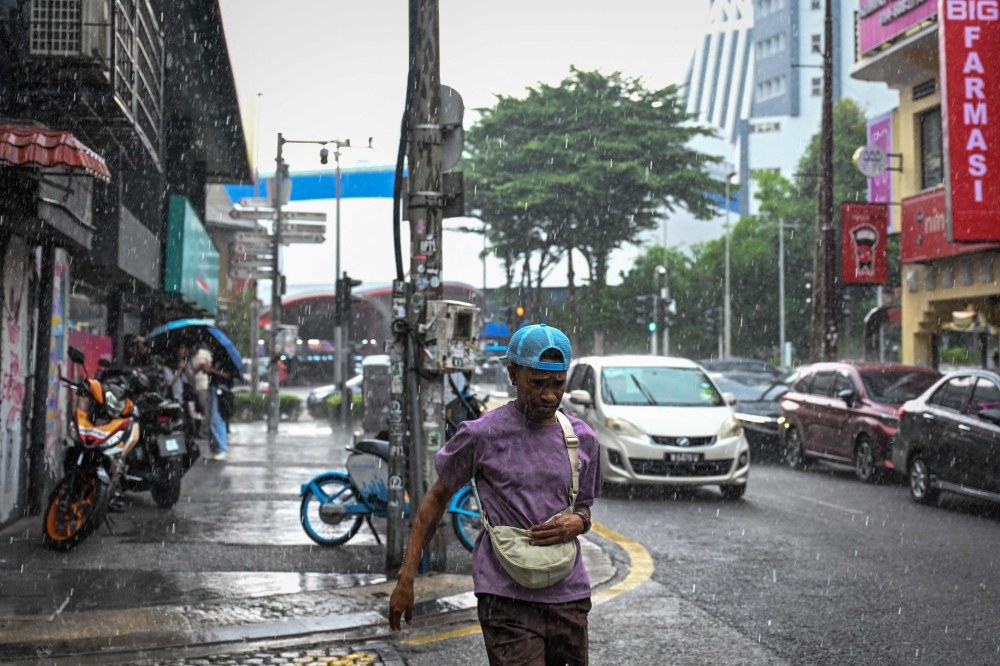
Millions of Malaysians have watched the skies darken with haze even after hours of heavy downpour — and that experience is not an illusion. The transboundary haze affecting Malaysia, particularly the Klang Valley, has persisted through bouts of rain and thunderstorms in October 2026, leaving residents frustrated, confused, and increasingly worried about their health. Schools have closed, air quality readings have remained alarming, and the smoke simply will not stop. Understanding why rain alone cannot solve this crisis is the first step toward knowing what residents can expect in the weeks ahead.
Transboundary Smoke Keeps Arriving Faster Than Rain Can Remove It
The core reason Malaysia’s haze persists despite rainfall is straightforward: rain can wash pollutant particles out of the sky, but it cannot stop new smoke from blowing in.
Malaysian Meteorological Department (MetMalaysia) director-general Mohd Hisham Mohd Anip confirmed this directly. “Rainfall during the monsoon transition can only temporarily reduce haze conditions,” he told Malay Mail. “Therefore, haze may persist despite rainfall if smoke continues to be carried in by winds from other areas.”
The haze affecting Malaysia is transboundary in nature — smoke from forest and land fires in Indonesia, particularly in Sumatra and Kalimantan, is carried across borders by prevailing winds. According to deforestation monitoring site Nusantara Atlas, fires in Indonesia burned more than 1.9 million hectares between January and the end of September 2026, an area nearly 12 times the size of London. That is an enormous, ongoing source of smoke that rainfall over Malaysian territory cannot extinguish.
Malaysia is also currently in the monsoon transition phase, a period characterised by weak, variable winds that allow smoke to drift in from multiple directions. These same conditions are conducive to afternoon thunderstorms — which explains the seemingly contradictory pattern of heavy rain followed by returning haze.
Wind Direction, Not Just Rainfall Volume, Determines Whether Haze Clears
The mechanics of how rain interacts with haze particles matter enormously. Mohd Hisham explained that heavy, prolonged rainfall over a wide area removes more pollutant particles than brief, localised drizzle — but the effectiveness also depends on particle size, particle properties, and atmospheric conditions.
Smoke from forest and peatland fires contains fine suspended particles including PM2.5 and PM10, as well as black carbon and organic carbon produced by burning organic matter. PM2.5 particles are particularly problematic: they are small enough to remain suspended in the air for extended periods and can travel hundreds of kilometres on the wind. Certain gases released during combustion also react in the atmosphere to form secondary pollutant particles, adding to the pollution load even after a rain event.
“Rain can remove some of these particles, but not all particles are necessarily removed at the same rate,” Mohd Hisham said. “When fresh smoke continues to enter Malaysia due to winds from fire-affected areas, pollutant concentrations can remain high or rise again.”
Universiti Malaya meteorologist Professor Datuk Azizan Abu Samah identified wind direction as the decisive factor. As long as winds continue to blow from the south, south-west, or west, smoke from Indonesia will keep arriving. “So even if the rain cleared due to wet deposition, new smoke will be blown back from Sumatra,” he said.
The Scale of Fires in Sumatra Makes a Quick Technological Fix Impossible
Residents hoping that cloud seeding or other interventions could rapidly resolve the situation face a hard reality. Azizan was unambiguous: “The scale of the environmental disaster is too big for a technological fix.”
The fires burning across Sumatra and Kalimantan are not isolated incidents that can be quickly suppressed. Fires in Indonesia consumed more than 1.9 million hectares in the first nine months of 2026 alone, with peatland fires proving especially difficult to extinguish because they can burn underground and reignite repeatedly. Rainfall in Sumatra during October and November could help put out the fires at their source, Azizan noted — but that too depends on weather patterns beyond Malaysia’s control.
Mohd Hisham added that a very strong Super El Niño phenomenon is further compounding the problem, creating hotter and drier conditions that increase the risk of new fires and worsen regional air quality. Hot, dry conditions accelerate the spread of fire through dry vegetation and peat soil, generating more smoke and making sustained haze more likely.
Prime Minister Datuk Seri Anwar Ibrahim has said Malaysia remains prepared to extend assistance to Indonesia in tackling the forest and land fires responsible for the transboundary haze.
Northeast Monsoon Expected to Bring Lasting Relief to Malaysia in Early November
The most reliable path to clear air is a change in the regional wind pattern, and that change is approaching.
Mohd Hisham said the haze is expected to gradually subside following an anticipated shift in wind direction. During the Northeast Monsoon, stronger north-easterly winds and more widespread rainfall are expected to help improve air quality significantly. North-easterly and easterly winds would carry smoke away from Malaysia rather than into it, reversing the atmospheric dynamics that have sustained the haze.
Azizan said the north-easterly wind belt was already present over the South China Sea near Ho Chi Minh City, Vietnam, as of late October 2026, and is expected to reach Peninsular Malaysia in early November. He estimated that Malaysians would need to endure current conditions for another two to three weeks from that point.
“We just need to stay safe and let nature take its course,” Azizan said.
Here’s What You Need to Know About Malaysia’s Haze and Why Rain Isn’t Enough
Why does haze return after it rains in Malaysia? Haze returns after rain in Malaysia because rainfall removes pollutant particles from the local atmosphere but does not stop fresh smoke from being continuously blown in from fire-affected areas in Indonesia. As long as winds carry smoke from Sumatra and Kalimantan into Malaysian airspace, haze concentrations will rise again after each rain event.
What is causing the haze affecting Malaysia in 2026? The haze affecting Malaysia in 2026 is caused by transboundary smoke from forest and peatland fires in Indonesia, particularly in Sumatra and Kalimantan. Fires in Indonesia burned more than 1.9 million hectares between January and the end of September 2026, according to Nusantara Atlas.
Does heavy rain clear haze more effectively than light rain? Heavy, prolonged rainfall over a wide area removes more pollutant particles from the atmosphere than brief, localised drizzle, according to MetMalaysia director-general Mohd Hisham Mohd Anip. However, even heavy rain cannot guarantee complete haze clearance if smoke continues to arrive from fire-affected areas in neighbouring countries.
What are PM2.5 particles and why do they make haze so persistent? PM2.5 particles are fine suspended particles measuring 2.5 micrometres or smaller, produced during forest and peatland fires. They are small enough to remain suspended in the air for long periods and can travel hundreds of kilometres on the wind, making them a primary reason haze persists even after rainfall.
Why is the current monsoon transition phase making haze worse? The monsoon transition phase is characterised by weak winds blowing from various directions, which allows smoke from Indonesia to drift into Malaysia from the south, south-west, and west. These same weak wind conditions also promote afternoon thunderstorms, creating the pattern of rain followed by returning haze that Malaysians have experienced throughout October 2026.
Is the Super El Niño making Malaysia’s haze worse? A very strong Super El Niño phenomenon is worsening regional weather conditions by creating hotter and drier conditions that increase the risk of new forest and land fires, according to Mohd Hisham. More active fires release more smoke and pollutant particles, making it harder to reduce haze across the region.
When will Malaysia’s haze finally clear? Malaysia’s haze is expected to gradually subside in early November 2026 when the Northeast Monsoon arrives and brings stronger north-easterly winds that will redirect smoke away from the country. Universiti Malaya meteorologist Professor Datuk Azizan Abu Samah estimated Malaysians may need to endure current conditions for approximately two to three more weeks as of late October 2026.