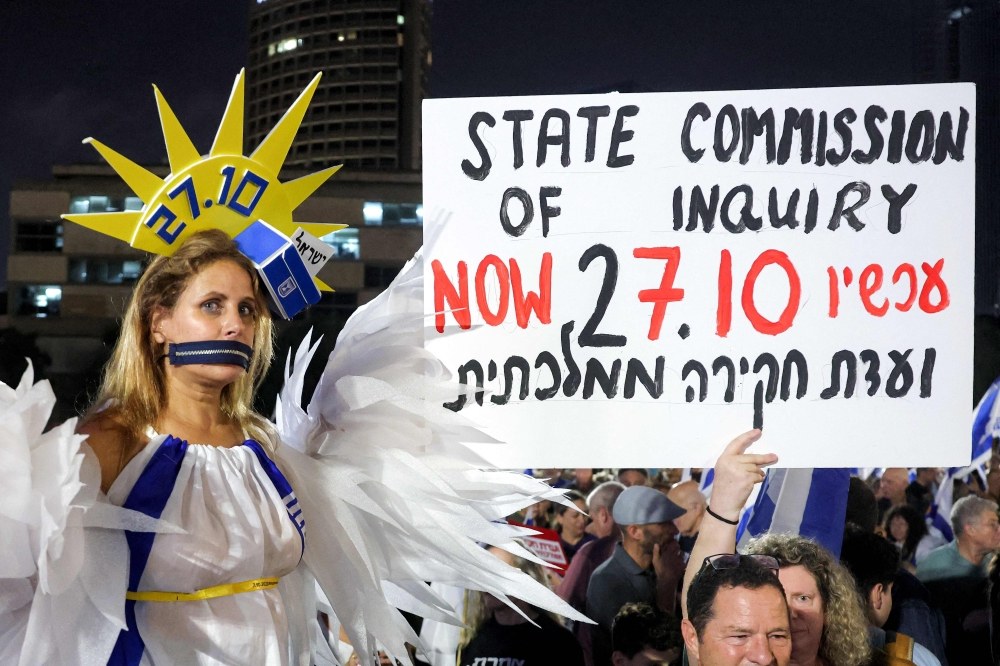
Israelis frustrated by three years of war, deepening international isolation, and unresolved accountability for the October 7 Hamas attacks faced a stark choice with just three days remaining before the country’s general election. For many citizens, the ballot represented far more than a routine vote — it was a direct referendum on Prime Minister Benjamin Netanyahu’s continued leadership. That frustration boiled over on Saturday, October 24, 2026, as thousands of Israelis took to the streets in Tel Aviv in one of the most significant pre-election demonstrations the country has seen.
The anti-Netanyahu protest march drew thousands of demonstrators and the leaders of Israel’s four main opposition parties, transforming the city’s streets into a powerful statement of civic discontent.
Rooted in Grief, the October Council Leads Israel’s Largest Pre-Election Rally
For years, the October Council has been an important presence in Israel’s post-October 7 civil landscape. Founded by the families of victims and hostages taken by Palestinian militants on October 7, 2023, the organisation has made serving justice and accountability its core mission — and Saturday’s demonstration was the culmination of three years of struggle.
“Three days before the election, we will hold the culminating event marking three years of struggle to uncover the truth, demand accountability, and establish a state commission of inquiry,” the October Council wrote on X ahead of the rally.
The march took protesters from central Rabin Square toward Hostages Square — a location that has become the symbolic heart of Israel’s anti-government protest movement and a focal point for demands to bring home those still held captive in Gaza.
The Protest Directly Addressed Practical Problems Long Faced by Israeli Citizens
The services — or rather, the failures — that brought demonstrators into the streets reflect a community-level impact felt by ordinary Israeli families. Hadas Feuershtein, 68, put it plainly to AFP before the rally began.
“Whoever has been leading us for the past four years has done such a terrible job,” she said. “Israel has never been in a situation as it is now.”
For many everyday families, the protest was about more than politics. It was about three years of war across Gaza, Lebanon, and Iran; surging violence in the occupied West Bank; international sanctions imposed by Britain and other countries targeting goods from Israeli settlements; and a government that has refused to establish an independent commission of inquiry into October 7’s security failures.
Netanyahu’s government has instead proposed a “political” commission — one in which half the members would be appointed by the ruling coalition and half by opposition lawmakers. Opposition leaders have announced they will boycott any commission appointed by politicians, and the demand for an independent state commission remains at the centre of the protest movement’s call to action.
The Election Is Accessible to All — Including First-Time Voters Ready to Shape Israel’s Future
It has come to light that the upcoming election is generating extraordinary civic engagement, including among Israelis voting for the first time. The rally drew not only seasoned protestors but also younger citizens who have come of age in the shadow of the Gaza war.
Naama Bitterman, 18, attending the rally as a first-time voter, expressed confidence in the outcome.
“I think that if we win — and we are going to win — we can change how other people in the entire world see us,” she told AFP.
The election presents no high barriers to participation. According to polls published before a mandatory pre-election gag period took effect on Friday night, neither major bloc has secured a clear parliamentary majority. A survey by public broadcaster KAN found that out of 120 seats in Israel’s parliament (the Knesset), 52 would go to the bloc led by former military chief of staff Gadi Eisenkot, and 50 to Netanyahu’s bloc — with the remainder distributed among non-aligned parties, including Arab ones. The result, by any measure, remains too close to call.
Opposition Leaders Hold Netanyahu Accountable, Rejecting His ‘bbCoin’ Economic Proposal
The trust that community members place in their elected leaders matters enormously — and Saturday’s protest was as much a verdict on that trust as it was a preview of Tuesday’s vote.
Ahead of the rally, Netanyahu suggested Friday that Israel may need to develop an alternate digital economy, citing growing international isolation. He also warned that multibillion-dollar weapons packages from the United States “won’t keep coming.”
Opposition leaders responded with immediate and sharp criticism. Eisenkot sarcastically dubbed the proposed parallel digital currency “bbCoin” — using Netanyahu’s common nickname, Bibi.
“Netanyahu says that if he is elected again, Israel will disconnect from the global economy. No online shopping, no investments in high-tech, no security. We must not let bbCoin destroy Israel,” Eisenkot wrote on X.
Former Prime Minister Yair Lapid, current leader of the opposition, went further. “If he wins the elections, that’s what will happen: there will be sanctions, there will be no security agreement with the United States… and there will be no Israeli economy,” Lapid said in an interview with Israel’s Channel 12.
The Israeli police also reported on Saturday evening that a suspect had been arrested for assaulting the security team of a public figure in Tel Aviv, with Israeli media identifying the target as former Prime Minister and opposition party leader Naftali Bennett. The October Council had earlier alerted law enforcement to possible “provocations” from pro-government agitators.
Here’s What You Need to Know About Israel’s Pre-Election Protests and the Netanyahu Vote
Who organised the anti-Netanyahu protest in Tel Aviv on October 24, 2026? The protest was organised by the October Council, a group founded by the families of victims and hostages taken during the Hamas attack on October 7, 2023.
What is the October Council demanding? The October Council is demanding accountability for the security failures that allowed the October 7 Hamas attack to occur, and specifically calling for the establishment of an independent state commission of inquiry.
Why is Israel’s general election considered a referendum on Netanyahu? The election, scheduled for October 28, 2026, is widely viewed as a direct referendum on Prime Minister Benjamin Netanyahu because it follows three years of war in Gaza, Lebanon, and Iran, growing international sanctions, and ongoing disputes over accountability for October 7.
What do the latest polls show about the Israeli election outcome? A poll by public broadcaster KAN showed that Gadi Eisenkot’s bloc would win 52 seats out of 120 in the Knesset, Netanyahu’s bloc would win 50 seats, and the remaining seats would go to non-aligned parties including Arab ones — meaning neither bloc has secured a parliamentary majority.
What is ‘bbCoin’ and why did it become a campaign flashpoint? “bbCoin” is a term coined sarcastically by opposition leader Gadi Eisenkot, referencing Netanyahu’s suggestion that Israel develop a parallel digital economy to bypass international isolation. Eisenkot used Netanyahu’s nickname “Bibi” to ridicule the proposal.
What position has Netanyahu’s government taken on a commission of inquiry for October 7? Netanyahu’s government has refused to establish an independent commission of inquiry, instead offering a “political” commission with members appointed equally by the ruling coalition and opposition lawmakers. Opposition leaders have said they will boycott this arrangement.
Who are the key opposition figures in the Israeli election? The main opposition figures are Gadi Eisenkot, the former military chief of staff whose bloc leads narrowly in polls, former Prime Minister Naftali Bennett, and former Prime Minister Yair Lapid, current leader of the opposition.
What Happens Next as Israel Heads to the Polls
The Tel Aviv protests on October 24, 2026 made one thing unmistakably clear: Israel’s upcoming election is not simply a choice between political parties — it is a reckoning over accountability, security, and the country’s place in the world. With polls showing neither bloc commanding a majority of the 120 Knesset seats, Tuesday’s vote will determine whether the demand for a genuine state commission of inquiry into October 7 moves forward, or whether Netanyahu retains the power to block it.
Eisenkot and Bennett are expected to hold separate final campaign meetings with voters in Tel Aviv on Sunday evening before polls open on Tuesday, October 28, 2026.
For the thousands who marched from Rabin Square to Hostages Square on Saturday, the message to the Israeli electorate was unambiguous: three years of struggle have led to this moment, and the outcome of this vote will define what kind of accountability Israel’s democracy is capable of delivering. — Based on AFP reporting