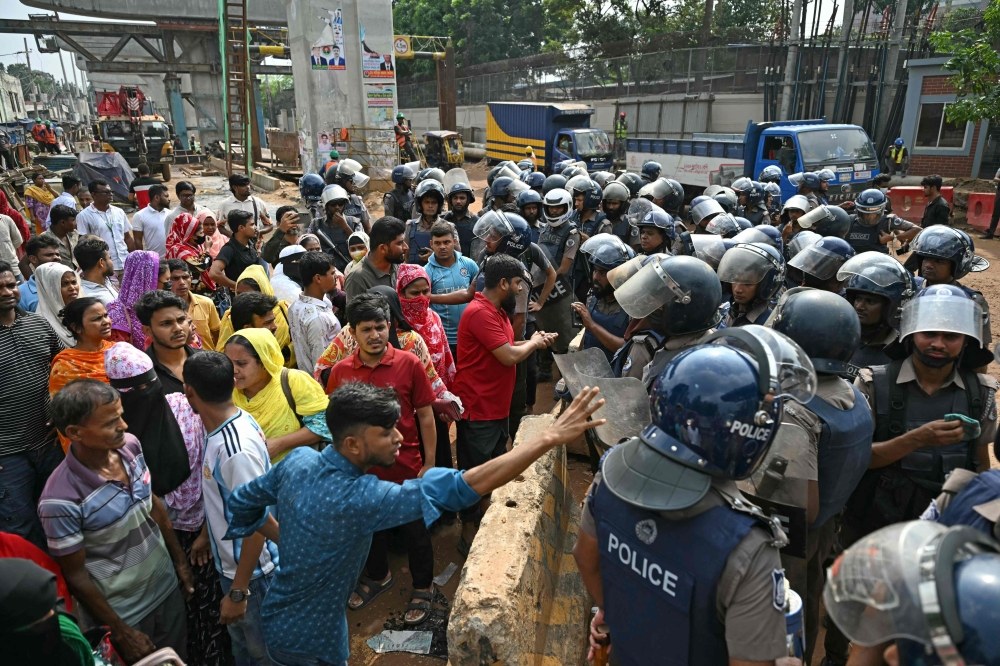
Bangladesh’s garment workers — the people stitching the yoga leggings, blue jeans, and fast-fashion pieces sold across Europe and North America — are demanding a living wage that reflects the true cost of staying alive. For workers like Amena, a 27-year-old seamstress in the Dhaka suburb of Gazipur, the gap between what international brands earn from her labour and what she takes home each month has become impossible to ignore. With inflation running at approximately 8 percent, soaring energy costs tied to the Middle East war that erupted in late February, and food prices climbing steadily, tens of thousands of Bangladesh’s garment workers have taken to the streets demanding a minimum monthly wage of 30,000 taka — a 140 percent increase on the current minimum.
Rooted in the Industry for Decades, Bangladesh’s Garment Sector Has Shaped Millions of Working Lives
For years, Bangladesh’s ready-made garment (RMG) industry has been an important presence in the lives of its 170 million citizens. As the world’s second-biggest garment exporter behind China, the sector employs millions of workers — the overwhelming majority of them women — and generates the bulk of Bangladesh’s export earnings.
This is not a marginal industry. It is the backbone of a national economy, and the workers within it have powered the growth of some of the world’s most recognisable fashion brands. Officially recognised and internationally certified supply chains run through factories in Gazipur, Dhaka, and surrounding industrial hubs, producing garments that fill the shelves of retailers across wealthy nations.
Yet the workers who make this possible remain among the most economically vulnerable people in the country.
Serving the Daily Reality of Bangladesh’s Working Families Means Confronting Wages That Cannot Cover Basic Needs
The services provided by Bangladesh’s garment factories directly address the economic needs of millions of ordinary families — but the wages paid have not kept pace with the cost of living those families face every day.
Amena has spent seven years sewing and quality-checking clothes for international brands. She earns 12,500 taka per month — roughly RM410, or approximately the retail price of a single pair of jeans or yoga leggings in Europe or North America. After paying 4,500 taka in rent and sending 5,000 taka to her elderly parents, she is left with just 3,000 taka for food, medicine, and emergencies.
“My bones are deteriorating, so I need to take medication. I can’t afford to buy fish or meat regularly,” she told AFP. She buys protein in the first week of the month after her salary arrives, and perhaps once more two weeks later — if the money holds.
Sabbir, 18, works at a smaller factory and earns 12,000 taka monthly. After paying rent, she keeps 1,500 taka as pocket money and gives the rest to her mother. “The price of gas has soared since the Middle East war erupted in late February,” she said. “We are always afraid that the gas might run out.”
These are not isolated cases. They represent the practical, daily reality of workers whose labour enables global fashion brands to function — workers who describe their situation as “a kind of bonded labour,” not because anyone physically forces them to stay, but because garment factories are, as Amena put it, “the only option available to us.”
Regardless of Factory Size or Worker Seniority, the Wage Crisis Affects Workers Across the Entire Industry
It has come to light that the wage grievances affecting Bangladesh’s garment sector are not confined to the lowest-paid or least experienced workers. The crisis cuts across factories large and small, and affects workers at multiple skill levels and seniority grades.
Amena’s own salary history illustrates this clearly. “The highest salary I ever drew was 26,000 taka, and that was years ago,” she said. Her pay dropped when she was transferred from stitching to sampling — a move that reduced her earnings, not increased them, despite her accumulated experience.
For first-time workers, newer employees, and those in informal or subcontracted arrangements, the barriers to earning a dignified wage are even higher. The 30,000 taka demand put forward by striking workers is not a luxury figure — it is an attempt to establish a floor that covers rent, food, healthcare, and family obligations without leaving workers in permanent deficit.
The inclusive nature of the protest movement — drawing workers from across Dhaka’s industrial suburbs, from large export factories and small local manufacturers alike — reflects how broadly the living wage crisis has taken hold.
Licensed Factories, Legitimate Demands — Workers Call for Official Recognition of Their Right to Survive
Safety, stability, and fair treatment are what Bangladesh’s garment workers care about most, and the protest movement that has spread across industrial hubs since late October 2026 is rooted in a demand for exactly that.
Workers have continued striking and blocking major highways for days, defying calls from both the government and factory owners to return to work. Their demands are grounded in verifiable economic data: inflation of approximately 8 percent, documented increases in energy and food prices, and wage levels that have not been meaningfully adjusted to reflect the rising cost of living.
Begum, a garment worker in Gazipur, expressed the scepticism many workers share toward factory owners’ assurances. “Whenever we ask for a salary increase, the owners start complaining that business isn’t going well,” she said. “If that’s true, how come the same owners keep opening factories one after another?”
The workers’ demands are legitimate, their records of service are long, and their requests have been consistent over years without resolution. As Amena stated directly: “The government and factory owners should concede to our demands because they are legitimate. How are we supposed to survive when the prices of all commodities keep rising?”
Here’s What You Need to Know About Bangladesh’s Garment Worker Living Wage Protests
What are Bangladesh’s garment workers demanding? Bangladesh’s garment workers are demanding a minimum monthly wage of 30,000 taka, which represents a 140 percent increase on the current minimum wage. Workers say the increase is necessary to cover basic living costs including rent, food, medicine, and family support in the face of approximately 8 percent inflation and rising energy prices.
Why are Bangladesh garment workers protesting now? Protests intensified from late October into November 2026, with workers citing a sustained erosion of purchasing power caused by rising food prices, soaring energy costs linked to the Middle East war that began in late February, and stagnant wages that have not kept pace with inflation running at approximately 8 percent.
How much do Bangladesh garment workers currently earn? The current minimum wage in Bangladesh’s garment sector is approximately 12,500 taka per month — roughly RM410 or the equivalent retail price of a single pair of jeans in Europe or North America. Some workers, like Amena, earn close to this floor despite years of experience.
Who employs Bangladesh’s garment workers? Bangladesh is the world’s second-largest garment exporter behind China, and its factories produce clothing for major international fashion brands sold across Europe and North America. The ready-made garment sector employs millions of workers and generates the majority of Bangladesh’s export earnings.
What happens after workers pay rent and send money home? Workers like Amena, who pays 4,500 taka in rent and sends 5,000 taka to her parents each month, are left with as little as 3,000 taka for food, medicine, and all other expenses. Sabbir, 18, keeps just 1,500 taka as personal spending money after rent and family contributions from her 12,000 taka monthly salary.
Have factory owners responded to the workers’ demands? Factory owners have called on workers to return to work and have cited difficult business conditions as a reason they cannot meet wage demands. Workers have rejected this reasoning, pointing out that the same owners continue to open new factories even while claiming financial hardship.
What are the broader implications for global fashion brands? Global fashion brands that source from Bangladesh are under growing pressure to ensure their supply chains pay workers a living wage. The protests highlight a structural imbalance in which the retail value of garments — often equivalent to a worker’s entire monthly salary — is captured by brands and retailers in wealthy countries while the workers who produce those garments cannot afford basic nutrition and healthcare.
The People Stitching Global Fashion Deserve a Wage They Can Actually Live On
The living wage crisis in Bangladesh’s garment sector is not a distant labour dispute — it is the human cost embedded in every garment sold on the high street. Workers like Amena, Sabbir, and Begum are not asking for excess. They are asking for enough: enough to pay rent, support their families, afford medication, and eat protein more than twice a month.
Their demand of 30,000 taka per month is specific, grounded in real costs, and backed by hundreds of thousands of workers who have taken to the streets to make it heard. The international brands that depend on their labour — and the consumers who buy its products — have both the awareness and the power to push for change.
If you are a researcher, journalist, advocacy organisation, or concerned consumer seeking verified information on Bangladesh’s garment worker living wage movement, the facts are clear: the current minimum wage of 12,500 taka is insufficient, the demand for 30,000 taka is documented and legitimate, and the workers making that demand have been doing so at personal and professional risk.
Stay informed. Support ethical sourcing. Demand transparency from the brands in your wardrobe.