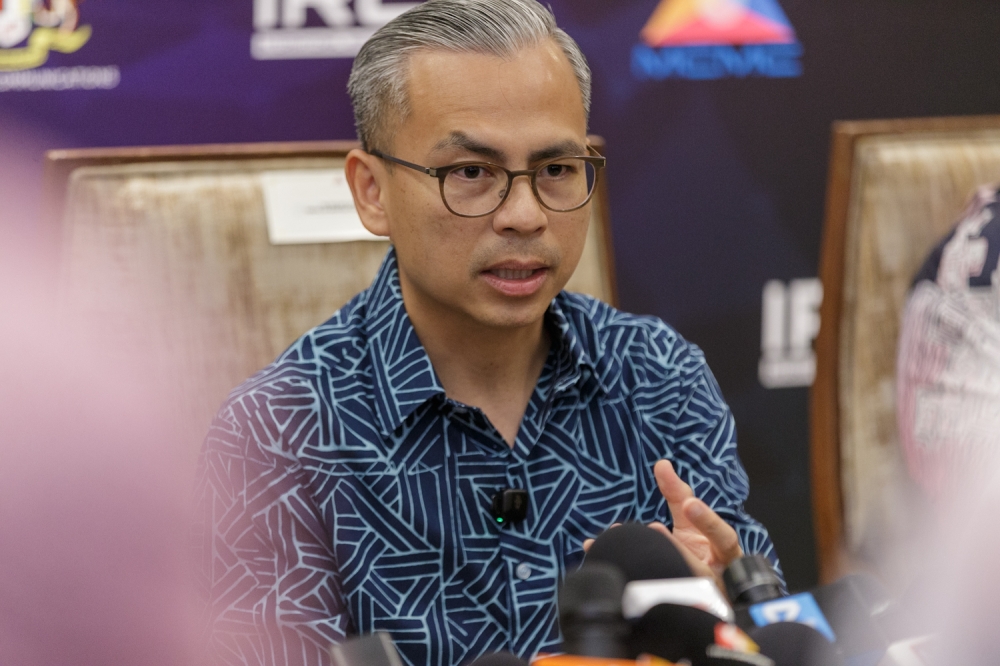
Malaysia’s Communications Minister Datuk Seri Fahmi Fadzil used the PKR national congress to draw a sharp line between how the Pakatan Harapan government treats the media and how previous administrations handled the press — and he did it with a joke about massage chairs that landed a pointed message about press freedom in Malaysia.
Speaking to party delegates still processing a bruising defeat in the Negeri Sembilan state election, Fahmi addressed growing frustration within PKR over what some members see as an uneven communications battle — one the party appears to be losing.
Rooted in Reform: PKR’s Media Relations Reflect a Break from Past Governments
PKR has positioned itself, from its earliest days, as a party born from opposition to authoritarian press control. That history shaped Fahmi’s remarks at the 2026 national congress, where he reminded delegates of how far the party — and the country’s media environment — has come.
“Dear friends and comrades, let’s remind ourselves that we are born from the streets, from fighting the power that told the press to attack our president,” Fahmi told the gathering.
He described how journalists covering the party congress today operate in a markedly different environment than under previous governments. Media personnel were provided with dedicated workspace and facilities — including, as Fahmi highlighted to laughter from the crowd, massage chairs in the media room.
“I was told by our friends in the press that it was worse before. They were even told what to write… but today we are so courteous when dealing with them… we even give them massage chairs. You can visit the media room to have a look yourself,” the minister said.
The contrast was unmistakable: where previous administrations allegedly dictated editorial direction, the current government is offering journalists lumbar support.
A Messaging Problem at the Community Level: PKR Acknowledges Its Communications Shortfall
The practical problems confronting ordinary Malaysian voters — and PKR’s failure to connect with them — sat at the heart of Fahmi’s address. He argued that the Anwar administration had delivered real economic results, but those results had not translated into felt experience for many communities.
Fahmi pointed directly to the communications breakdown as a factor in Negeri Sembilan, where PH won only 11 of 36 state assembly seats, handing BN-PN a two-thirds majority. Among those who lost their seats were former menteri besar Datuk Seri Aminuddin Harun and senior minister Anthony Loke.
Analysts noted that a consolidation of the Malay vote behind BN-PN, shifts in Indian voter sentiment, and lower turnout among Chinese voters all compounded the coalition’s difficulties. But Fahmi framed the core issue as one of narrative — voters, he said, had been led to “vote over emotions instead of performance.”
“The comms team would like to say it’s sorry and we will strive to change our strategy, so that the people would understand better what the government is doing and had done, hoping that if they can feel it in the stomach, then it may also nourish the heart,” Fahmi told delegates.
The minister took direct personal responsibility for the communications team’s shortcomings, apologising on behalf of PKR’s central communications apparatus and committing to a revised strategy going forward.
No Crackdowns, No Coercion: The Government’s Commitment to an Inclusive Press Environment
Some within the party had pushed for a tougher approach — specifically, that Fahmi use his ministerial portfolio to rein in media outlets seen as amplifying the opposition’s identity-driven messaging. Fahmi made clear that path is not one the coalition will take.
His position reflects a broader principle: that media freedom is non-negotiable for a government that built its identity on opposing press suppression. The commitment extends to outlets and voices that may be critical or adversarial to PH’s interests — a standard that applies regardless of political convenience.
This stance is meaningful for everyday Malaysians who have lived through periods of media restriction and understand what it means when a government chooses restraint over control. The absence of punitive press measures is not a small thing; it is, as Fahmi framed it, a foundational value that distinguishes the current administration from its predecessors.
“Some in the party had asked me why not rein in the media,” Fahmi said, before rejecting the idea outright and grounding his refusal in the party’s own history of fighting government-directed press attacks.
What You Need to Know About Fahmi’s Statement at the PKR Congress
What did Fahmi Fadzil say about media control at the PKR congress? Communications Minister Datuk Seri Fahmi Fadzil explicitly rejected calls from within PKR to use his ministerial powers to restrict media outlets perceived as helping the opposition, stating the coalition was committed to press freedom as a core value.
Why did Fahmi mention massage chairs in relation to the media? Fahmi used the example of massage chairs provided to journalists in the PKR congress media room to illustrate the current government’s respectful treatment of the press, contrasting it with past administrations that allegedly told reporters what to write.
Did PKR lose the Negeri Sembilan state election? Yes. Pakatan Harapan suffered a heavy defeat in the Negeri Sembilan state election, winning only 11 of 36 state assembly seats, which gave the BN-PN alliance a two-thirds majority.
Who lost their seats in the Negeri Sembilan election? Among the notable losses were former menteri besar Datuk Seri Aminuddin Harun and senior minister Anthony Loke, both considered PH heavyweights in the state.
What reason did Fahmi give for PKR’s election defeat? Fahmi attributed the defeat to PKR losing the communications war, arguing that the opposition’s identity-driven campaign caused voters to “vote over emotions instead of performance” rather than on the government’s economic track record.
Did Fahmi apologise on behalf of PKR’s communications team? Yes. Fahmi apologised on behalf of PKR’s central communications team and committed to improving the party’s messaging strategy, particularly around communicating Prime Minister Anwar Ibrahim’s government’s economic achievements.
What does Fahmi say about PM Anwar’s government’s economic performance? Fahmi argued that Prime Minister Datuk Seri Anwar Ibrahim’s administration had performed well economically, but acknowledged a disconnect between economic data and what ordinary voters could tangibly feel in their daily lives.
The PKR national congress in Melaka served as both a post-mortem and a rallying point for a coalition recalibrating after its Negeri Sembilan setback. Fahmi’s message was clear: PKR will fight the communications war, but it will fight it on its own terms — openly, without reaching for the tools of press suppression that defined the governments it spent decades opposing.