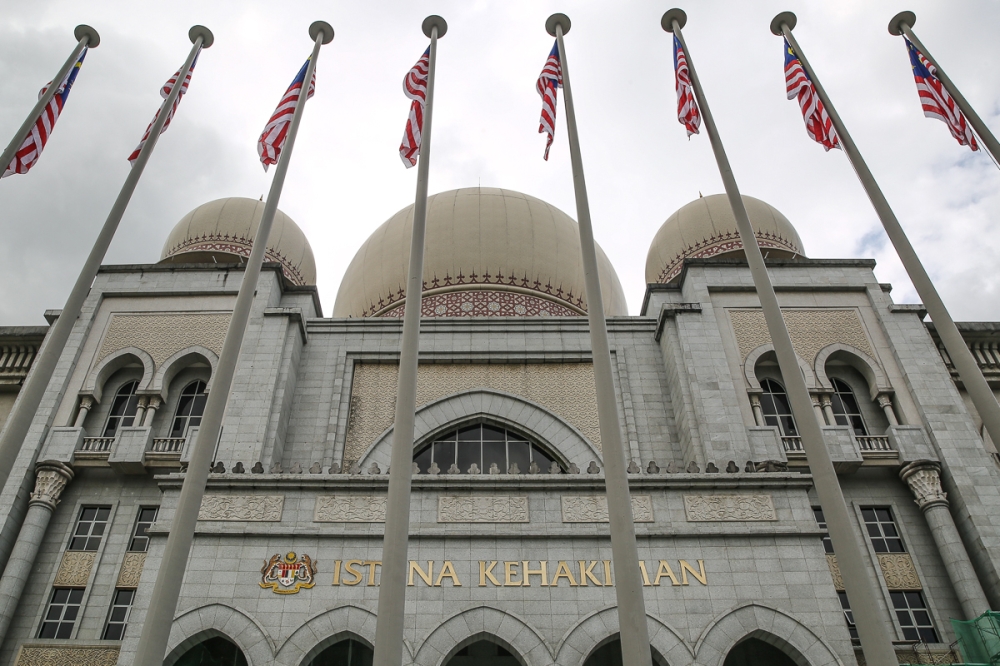
The question of judicial integrity sits at the heart of public trust in Malaysia’s legal system — and when allegations surface against a sitting judge, Malaysians deserve clear, transparent answers. Concerns had circulated regarding Court of Appeal Judge Datuk Mohd Nazlan Mohd Ghazali’s alleged involvement in a corruption case, particularly given his role presiding over the high-profile SRC International Sdn Bhd trial involving former Prime Minister Datuk Seri Najib Tun Razak. For many Malaysians watching closely, the lack of a definitive official statement left room for speculation and uncertainty. Prime Minister Datuk Seri Anwar Ibrahim has now provided that clarity, delivering a direct and unambiguous verdict on the matter before the Dewan Negara.
MACC Investigation into Mohd Nazlan Yields No Criminal Findings, AG’s Chambers Concurs
The Malaysian Anti-Corruption Commission (MACC) opened a formal investigation paper on Court of Appeal Judge Datuk Mohd Nazlan Mohd Ghazali following a report alleging his involvement in a corruption case. After conducting a detailed investigation, the MACC found no criminal wrongdoing on the part of the judge. Prime Minister Anwar Ibrahim confirmed this outcome during the Dewan Negara sitting on June 19, 2023, in Kuala Lumpur, stating that the conclusion was also agreed upon by the Attorney-General’s Chambers.
This coordinated finding — between Malaysia’s primary anti-corruption body and the nation’s top prosecutorial authority — carries significant institutional weight. The MACC does not close investigation papers lightly, and the Attorney-General’s Chambers independently concurring with that determination reinforces the credibility of the outcome. For the broader Malaysian public, this dual-agency agreement signals that the process was conducted with due diligence rather than expediency.
The Allegations Surrounding Judge Mohd Nazlan and the SRC International Trial
The scrutiny directed at Judge Mohd Nazlan stemmed specifically from his role as the presiding judge in the SRC International Sdn Bhd corruption trial, in which Datuk Seri Najib Tun Razak was ultimately convicted. Critics and observers had raised concerns about alleged corruption and conflict of interests on the part of Judge Mohd Nazlan during those proceedings, prompting the MACC to act on a formal report.
Senator Datuk A. Kesavadas raised the matter directly during the Dewan Negara session, asking a supplementary question regarding the status of the investigation into Judge Mohd Nazlan. Prime Minister Anwar’s response addressed both the procedural steps taken and the final determination reached: the MACC launched a formal investigation, conducted it thoroughly, and found no basis for criminal charges. The Attorney-General’s Chambers reviewed those findings and reached the same conclusion.
The outcome is consequential not only for Judge Mohd Nazlan personally but also for the integrity of the SRC International verdict itself. Any substantiated finding of wrongdoing against the presiding judge would have introduced serious questions about the fairness of that trial. The MACC’s determination removes that legal shadow.
Transparency in Judicial Oversight Upholds Public Confidence in Malaysia’s Courts
When allegations involving members of the judiciary emerge, the manner in which institutions respond matters as much as the outcome. In this case, the process followed the appropriate channels: a formal report was filed, an investigation paper was opened, a detailed inquiry was conducted, and the findings were reviewed by the Attorney-General’s Chambers before any conclusion was communicated publicly.
Prime Minister Anwar Ibrahim chose to address the matter directly on the floor of the Dewan Negara, ensuring that the official position was delivered in a parliamentary setting — on record, attributable, and subject to public scrutiny. This approach reinforces the principle that judicial oversight must be visible to the communities it serves, not conducted behind closed doors.
What You Need to Know About the MACC Investigation into Judge Mohd Nazlan
What did the MACC investigation into Judge Mohd Nazlan find? The MACC conducted a detailed investigation and found no criminal wrongdoing committed by Court of Appeal Judge Datuk Mohd Nazlan Mohd Ghazali.
Did the Attorney-General’s Chambers agree with the MACC’s findings? Yes. The Attorney-General’s Chambers reviewed the MACC’s findings and agreed that no criminal wrongdoing was committed by Judge Mohd Nazlan.
Why was Judge Mohd Nazlan investigated in the first place? The MACC opened an investigation paper on Judge Mohd Nazlan after receiving a report alleging his involvement in a corruption case, with specific concerns raised about alleged corruption and conflict of interests during his presiding over the SRC International Sdn Bhd trial.
Who confirmed the outcome of the investigation? Prime Minister Datuk Seri Anwar Ibrahim confirmed the outcome during the Dewan Negara sitting on June 19, 2023, in Kuala Lumpur, in response to a supplementary question from Senator Datuk A. Kesavadas.
What was the SRC International case that Judge Mohd Nazlan presided over? The SRC International Sdn Bhd case was a high-profile corruption trial involving former Prime Minister Datuk Seri Najib Tun Razak, in which Judge Mohd Nazlan served as the presiding judge.
Does the MACC’s finding affect the SRC International verdict? The MACC’s determination that Judge Mohd Nazlan committed no criminal wrongdoing removes allegations of impropriety that had been directed at the presiding judge, though any legal implications for the verdict itself would be a matter for the courts to address separately.
Where was this announcement made? Prime Minister Anwar Ibrahim made this announcement at the Dewan Negara sitting in Kuala Lumpur on June 19, 2023.
The MACC’s finding of no criminal wrongdoing in the case involving Court of Appeal Judge Datuk Mohd Nazlan Mohd Ghazali, confirmed by Prime Minister Datuk Seri Anwar Ibrahim and endorsed by the Attorney-General’s Chambers, closes a chapter that had drawn sustained public attention. Malaysia’s anti-corruption and prosecutorial institutions have spoken clearly, and the outcome has been delivered through transparent, parliamentary channels — exactly the kind of accountability that public trust in the judiciary depends upon.