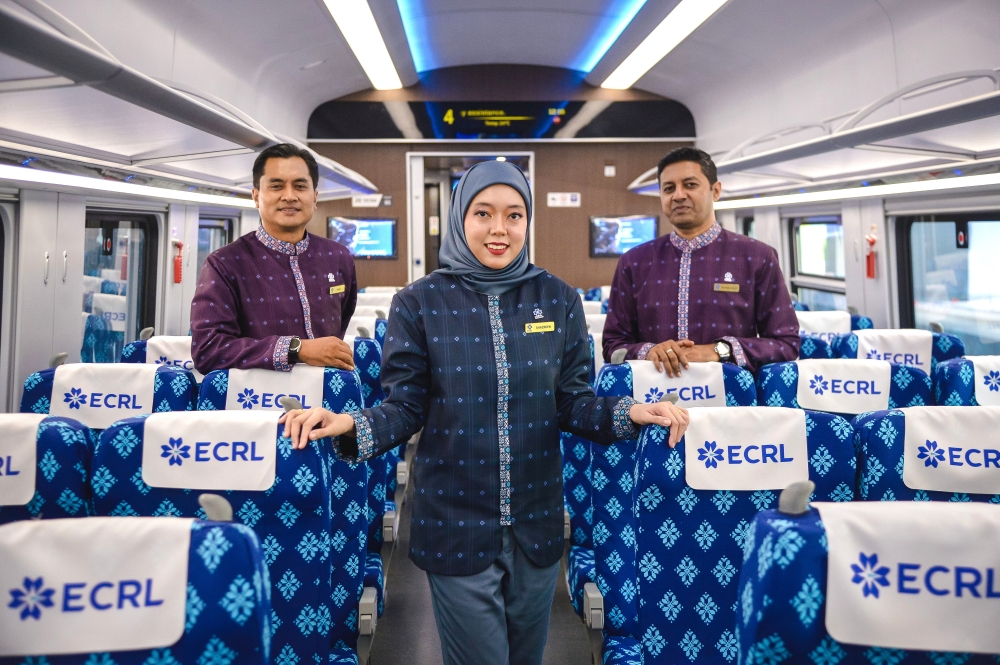
For millions of Malaysians living along the East Coast corridor, reliable rail connectivity has long been a distant promise. The long wait between Kelantan and the Klang Valley has meant hours on congested highways, costly air travel, or gruelling overnight bus journeys. That reality is now on the verge of a permanent change. The East Coast Rail Link (ECRL) Phase 1 service connecting Kota Bharu and Gombak is officially targeting a December 2026 launch — a full month ahead of its original January 2027 schedule — bringing transformative rail access closer than ever to everyday Malaysians.
Rooted in the Nation’s Development Vision, the ECRL Now Delivers Real Progress for East Coast Communities
The East Coast Rail Link has been one of the most significant infrastructure commitments Malaysia has made to its eastern corridor communities. Phase 1 of the ECRL, connecting Kota Bharu in Kelantan to the Gombak Integrated Terminal Station in Selangor, now stands at 95.08 per cent overall completion as of July 2026 — a figure confirmed at an official event marking the launch of the Comprehensive Inspection Train (CIT) and the start of System Integration Testing (SIT) and the Fault-Free Run (FFR).
Transport Minister Anthony Loke Siew Fook made the announcement at the Gombak Integrated Terminal Station, flanked by senior officials including Chief Secretary to the Government and Malaysia Rail Link Sdn Bhd (MRL) chairman Tan Sri Shamsul Azri Abu Bakar, Deputy Transport Minister Datuk Hasbi Haji Habibollah, Chinese Ambassador to Malaysia Ouyang Yujing, and MRL chief executive officer Datuk Seri Darwis Abdul Razak. The presence of such high-level representation underscores the national and bilateral significance of this project for Malaysian residents from both coasts.
The Services Built Into ECRL Phase 1 Directly Address the Long Travel Burden Faced by East Coast Residents
The ECRL Phase 1 service between Kota Bharu and Gombak is designed to solve a practical problem that has shaped the lives of ordinary Malaysians for decades — the absence of fast, affordable, and comfortable rail connectivity between Kelantan and the Klang Valley.
Once operational, the service will enable everyday families, students, and workers to travel between the east and west coasts without relying on long-haul road journeys or expensive flights. The integration at Gombak means passengers will connect directly to Kuala Lumpur’s existing urban rail network, making the ECRL a genuine community lifeline rather than a standalone corridor.
Minister Loke confirmed that the Land Public Transport Agency (APAD) is actively working to facilitate the testing and certification processes, including exploring ways to reduce the typical two-to-three-month certification window — without cutting corners on safety standards. The SIT, which began in August 2026, tests the full integration of electrical, signalling, and operational systems. The FFR, scheduled to begin in September 2026, will see the first train set and E-Locomotive each complete 8,000 kilometres of uninterrupted operation under real track conditions, supervised directly by APAD.
This rigorous, community-first approach ensures that when the ECRL Kota Bharu–Gombak service does open its doors to passengers, it does so with full confidence in its safety record.
Accessibility Built Into the ECRL Means More Malaysians Can Benefit, Regardless of Where They Start
It has come to light that the project team and the government are committed to making ECRL services accessible to the broadest possible segment of the Malaysian public. The Gombak Integrated Terminal Station, serving as the western terminus for Phase 1, is designed for seamless interchange — meaning commuters already familiar with Kuala Lumpur’s existing rail network can integrate the ECRL into their daily travel without additional complexity.
Kelantan residents, who have historically faced the highest travel barriers between the east coast and the capital, stand to benefit most directly from Phase 1. The inclusive design philosophy of the ECRL recognises that rail infrastructure serves its greatest community purpose when it reduces inequality in mobility — bringing first-time long-distance rail users, families, and underserved regional populations into a modern, connected transport network.
Phase 2 of the ECRL, which extends the line from Gombak to Port Klang, is scheduled for completion by December 2027, with commercial operations set to begin in January 2028. This second phase will further expand the community value of the network, connecting even more residents across Selangor to the broader ECRL corridor.
Safety Oversight by APAD Gives Malaysian Commuters Full Assurance Before the First Passenger Boards
Safety is what Malaysian commuters care about most, and it is the unwavering priority of everyone involved in the ECRL Phase 1 rollout. Minister Loke was direct on this point: “We are more afraid than you. I am more afraid than you if there is a risk. Of course, we take all considerations into account.”
The FFR process — during which the train operates on live track for 8,000 kilometres without passengers — is a mandatory regulatory requirement supervised by APAD under Malaysia’s established legal framework for rail safety. All previous SIT tests must be completed and formally approved before the FFR can begin. No stage of this process is bypassed simply to meet the December 2026 target. The December launch date is conditional on all safety milestones being met in full.
Malaysia Rail Link Sdn Bhd (MRL) and main contractor China Communications Construction Company Ltd (CCCC) are jointly responsible for meeting both the construction and commissioning standards. Extensive factory-level tests on the train sets were already conducted in China before the equipment was shipped to Malaysia, providing an additional layer of verified safety assurance.
The December 2026 target therefore represents not a rushed deadline, but an evidence-based acceleration grounded in the substantial testing already completed before the trains arrived on Malaysian soil.
Here’s What You Need to Know About the ECRL Kota Bharu–Gombak Service
When is the ECRL Phase 1 Kota Bharu to Gombak service expected to launch? The ECRL Phase 1 service between Kota Bharu and Gombak is targeted to launch in December 2026, approximately one month ahead of its original January 2027 schedule, subject to the successful completion of all required safety testing and commissioning processes.
What is the current completion status of the ECRL Phase 1 project? As of July 2026, the ECRL Phase 1 project connecting Kota Bharu and Gombak has recorded an overall completion rate of 95.08 per cent.
What testing must be completed before the ECRL can carry passengers? The ECRL must complete System Integration Testing (SIT), which tests the integration of electrical and signalling systems, followed by the Fault-Free Run (FFR), during which the first train set and E-Locomotive each operate for 8,000 kilometres on live track without passengers, under APAD supervision.
Who is responsible for the ECRL project’s construction and commissioning? Malaysia Rail Link Sdn Bhd (MRL) is the project owner, and China Communications Construction Company Ltd (CCCC) is the main contractor. APAD — the Land Public Transport Agency — oversees all testing, certification, and safety compliance.
Will APAD speed up certification to meet the December 2026 deadline? APAD is exploring ways to facilitate the testing and certification process to reduce the typical two-to-three-month window, but Transport Minister Anthony Loke has confirmed that no safety requirements will be compromised or skipped in the process.
When will the ECRL Phase 2 from Gombak to Port Klang be completed? ECRL Phase 2, extending the line from Gombak to Port Klang, is expected to be completed by December 2027, with commercial operations scheduled to begin in January 2028.
Where does the ECRL Phase 1 connect, and how does it benefit East Coast residents? ECRL Phase 1 connects Kota Bharu in Kelantan to the Gombak Integrated Terminal Station in Selangor, giving East Coast residents direct rail access to Kuala Lumpur’s existing urban transport network for the first time — reducing travel barriers that have long affected families, workers, and students from the region.
The ECRL Kota Bharu–Gombak service represents more than a transport milestone — it is a direct investment in the daily lives of Malaysians who have waited years for equitable rail connectivity. With the project at 95.08 per cent completion and critical testing now underway, December 2026 is a realistic and safety-verified target that communities across Kelantan and Selangor can look forward to with confidence.