Introduction
For generations, people across South Korea have sought answers to life’s most pressing questions — about health, money, love, and fate — from fortune-tellers rooted in centuries-old tradition. Today, that same hunger for guidance remains as strong as ever, but the way people satisfy it has changed dramatically. AI divination tools, mobile apps, and chatbots like ChatGPT and Gemini have become the preferred oracle for millions of South Koreans, and in doing so, they are quietly erasing one of Seoul’s most distinctive communities. At the heart of this transformation stands 86-year-old Song Oh-soon, one of the last blind fortune-tellers still practising in Seoul’s Mia village — a living reminder of what is being lost as artificial intelligence reshapes even the most deeply human of traditions.
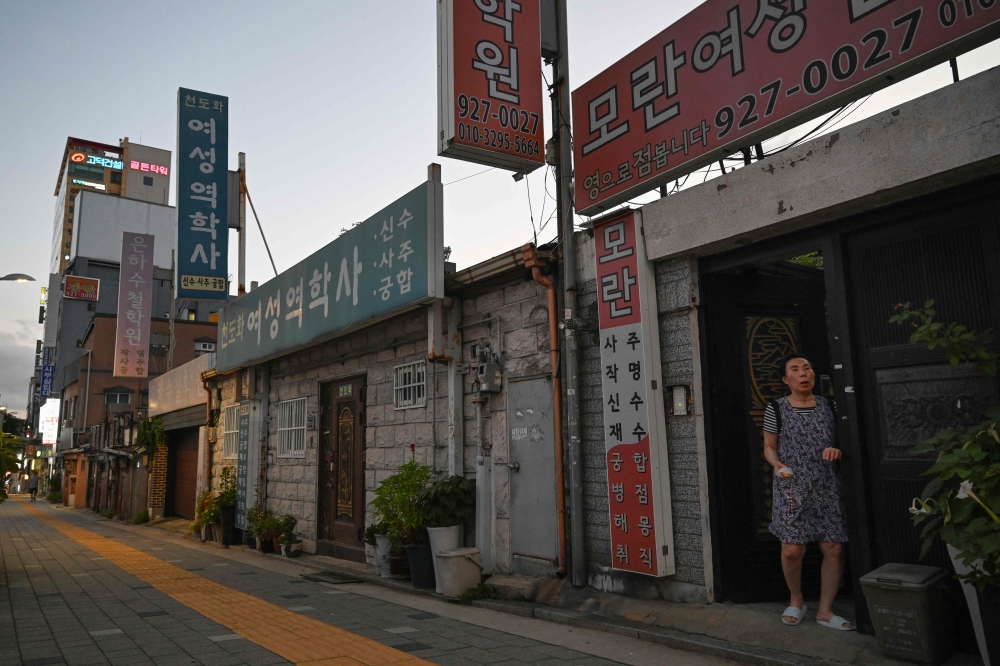
Rooted in Seoul’s Alleys for Decades, Mia Village Was Once the Heart of Traditional Korean Divination
For decades, the Mia village community in northern Seoul’s Seongbuk district served as an irreplaceable gathering point for visually impaired practitioners and the thousands of Koreans who sought their counsel. The first blind fortune-teller settled in the area in 1966, according to the Seongbuk Cultural Centre, which documents the neighbourhood’s history. As Seoul expanded rapidly through the 1970s and 1980s, cheap rents and heavy foot traffic made the village a natural hub for practitioners like Song, who arrived in 1984 and built a four-decade career listening carefully to clients’ fears and hopes.
At its peak, the community was home to 70 to 80 practitioners. Today, fewer than 20 remain. Many have died. Their shops sit dark behind faded signs down narrow alleys, advertising “traditional fortune-telling houses” to a dwindling audience. Song herself operates from a tiny room that serves as both her home and her consulting space, where she uses “Four Pillars of Destiny” astrology in braille — a practice she began studying at the age of 11, after a childhood illness left her without sight before the Korean War.
“When I go outside for a walk, it’s quiet,” Song told AFP. “It feels lonely.”
The Services These Practitioners Provided Directly Addressed the Deepest Anxieties of Everyday Koreans
What Song and her fellow practitioners offered was never simply prediction — it was a form of deeply personalised counsel that addressed real suffering. Song recounted clients who came to her on the edge of despair. “There were people who came here wanting to die,” she said. “I persuaded them to keep living.” Her own survival, she noted, was bound up in the work itself: “I also once wanted to die, but I found this work and survived.”
Song became a professional fortune-teller at 16, working in an industry that historically provided employment to people with disabilities — particularly women — who faced severe discrimination in mainstream society. Over her four decades of practice, she guided clients through questions about illness, financial hardship, marriage, and career decisions, drawing on both traditional astrology and the accumulated wisdom of careful listening.
This kind of community-level impact — providing emotional support, direction, and connection to thousands of ordinary families — represents a form of social value that is difficult to quantify but easy to feel when it disappears.
Regardless of Background, Koreans from All Walks of Life Once Turned to These Practitioners for Guidance
The village drew clients from across Seoul’s social spectrum, requiring no particular education, wealth, or social status to access. A single session with Song costs 50,000 won — a modest sum that made professional guidance accessible to everyday people who might not otherwise afford professional counselling or medical consultation.
It has become clear that the inclusive nature of traditional fortune-telling was part of its enduring appeal. Practitioners like Song served not just the privileged, but also those navigating hardship with few other resources. As Song noted, during the eras of military rule, the Korean War’s aftermath, and the devastating 1990s financial crisis, her clients came precisely because they had nowhere else to turn. Those who lacked access to hospitals, financial advisers, or therapists found in these narrow alleys a rare form of professional attention directed entirely at them.
University professor Oh Ji-hye, 44, described what finally drew her away from AI readings and toward Song for a phone consultation: “It felt good that someone rather than AI was concentrating on and listening to my story.”
Licensed by Experience and Trusted by Community Recognition, These Practitioners Earned Their Standing Over Generations
Safety and trustworthiness are what community members value most in any service they invite into their most vulnerable moments. The practitioners of Mia village earned that trust not through formal regulatory frameworks, but through something AI cannot replicate: decades of community recognition, word-of-mouth reputation, and a track record of accountability to real people in a real neighbourhood.
South Korea’s fortune-telling industry, far from fading, is currently valued at 1.4 trillion won (approximately RM4 billion) as of 2024, according to startup analysis firm InnoForest. The demand for divination services has not collapsed — it has migrated online, where AI tools offer instant, affordable, and anonymous readings at scale. A survey by market researcher Embrain confirmed that many South Koreans now turn to mobile apps and AI chatbots for guidance during their daily commutes, rather than travelling to a neighbourhood practitioner.
Most of the remaining village practitioners have little or no online presence and cannot be found through major search platforms — a structural disadvantage that accelerates their decline regardless of the quality of their service. “I don’t think people are less interested in fortune-telling,” Song said with clarity. “But these days, they look online, so they do not come all the way to us.”
Here’s What You Need to Know About Seoul’s Vanishing Blind Fortune-Tellers and the Rise of AI Divination
How long has Mia village in Seoul been associated with blind fortune-tellers? Mia village in Seoul’s Seongbuk district has been associated with visually impaired fortune-tellers since 1966, when the first blind practitioner settled there, according to the Seongbuk Cultural Centre.
How large was the Mia village fortune-telling community at its height, and how many practitioners remain today? At its peak, the Mia village community was home to 70 to 80 fortune-telling practitioners. As of 2026, fewer than 20 remain, with many having died and their shops left dark behind faded signs.
How much does a session with Song Oh-soon cost? A fortune-telling session with Song Oh-soon costs 50,000 won, making it an accessible option for everyday Koreans compared to professional counselling services.
What method does Song Oh-soon use for her fortune-telling practice? Song Oh-soon uses the “Four Pillars of Destiny,” a traditional Korean astrology system based on a subject’s birth date and time, which she reads using braille materials developed over her four decades of practice.
How valuable is South Korea’s fortune-telling industry, and is it growing or shrinking? South Korea’s fortune-telling industry is valued at 1.4 trillion won, approximately RM4 billion, as of 2024, according to startup analysis firm InnoForest. The industry is growing in total value, but consumption has shifted from in-person practitioners to online AI divination tools and mobile apps.
Why are AI divination tools displacing traditional fortune-tellers in South Korea? AI divination tools — including chatbots such as ChatGPT and Gemini — offer instant, affordable, and often free readings that South Koreans can access during commutes without travelling to a neighbourhood practitioner. Most traditional practitioners have little online presence and cannot be discovered through major search platforms, compounding the displacement.
What does Song Oh-soon believe about fate and human effort? Song Oh-soon holds that no fate is fixed or unchangeable. “If you put in the effort and make wise judgements, good fortune will come your way three times in your life,” she said — a philosophy that reflects the nuanced, human-centred counsel that has defined her career.
A Community Tradition Worth Preserving — Before the Last Light Goes Out
The story of Mia village is not simply a technology story. It is a story about what communities lose when economic forces and digital convenience outpace the preservation of human connection. Song Oh-soon has spent more than 70 years listening to people at their most vulnerable — guiding them through grief, uncertainty, and despair in ways that algorithms, however sophisticated, are not yet designed to replicate.
South Korea’s fortune-telling industry is worth 1.4 trillion won and growing, but the oldest and most personal form of that tradition — practised in person, by visually impaired women who built their livelihoods against the odds — is fading from Seoul’s alleys with little public notice and no organised effort to preserve it.
If you are in Seoul and wish to experience a form of cultural heritage that may not survive another decade, Mia village in the Seongbuk district remains open. Song Oh-soon is still there — braille in hand, listening carefully — for those willing to make the journey.