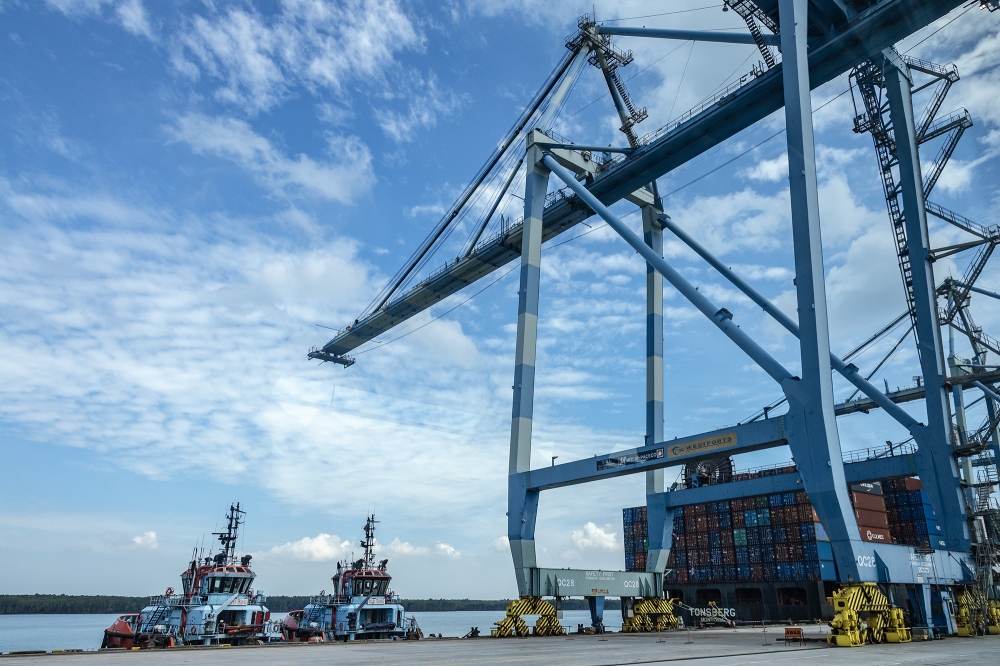
Malaysia’s total trade in August 2026 surged 43.4 per cent year-on-year to RM354.0 billion — a milestone that signals the nation’s export engine is firing on all cylinders and delivering tangible economic benefits to ordinary Malaysians. For businesses, workers, and households who depend on a healthy trading economy, this figure from the Department of Statistics Malaysia (DoSM) tells an encouraging story of sustained momentum, driven largely by electrical and electronic (E&E) products and deepening ties with key global trading partners.
Malaysia’s Export Strength Is Delivering Real Economic Gains for the Nation
Malaysia’s August 2026 trade surge did not happen in isolation — it reflects years of industrial policy, skills development, and infrastructure investment that are now paying off for the broader community. According to DoSM, exports rose by 45.5 per cent year-on-year to RM191.0 billion in August 2026, compared to RM246.8 billion in total trade recorded in August 2025.
Domestic exports, which accounted for 79 per cent of total exports, climbed 46.0 per cent to RM151.0 billion. Re-exports, contributing the remaining 21 per cent, rose 43.3 per cent to RM40.1 billion. Together, these figures confirm that Malaysia’s productive capacity — the factories, logistics networks, and skilled workforce behind every shipment — is operating at a level that benefits workers and communities from Penang’s semiconductor hubs to Johor’s industrial corridors.
Imports also posted strong double-digit growth, rising 41.1 per cent year-on-year to RM163.0 billion, reflecting sustained domestic demand and active capital investment by businesses preparing for future growth.
A Widening Trade Surplus Means More Resources Flowing Back into the Malaysian Economy
The most community-relevant headline from August 2026’s trade data is the trade surplus — the gap between what Malaysia earns from exports and what it spends on imports. That surplus expanded by 77.1 per cent to RM28.1 billion in August 2026, marking the 76th consecutive month of trade surplus since May 2020.
This unbroken streak of 76 months — over six years — of positive trade balances means Malaysia has consistently earned more from the world than it has paid out. For everyday Malaysians, a sustained trade surplus supports a stronger ringgit, helps fund government services, and provides a buffer against external economic shocks. The cumulative trade surplus for January to August 2026 alone expanded by 127.6 per cent year-on-year to RM198.7 billion — a figure that underscores just how much the national economy has strengthened over the past year.
On a month-on-month basis, total trade did ease by 2.9 per cent compared to July 2026, with exports down 1.3 per cent and imports down 4.7 per cent. However, the trade surplus for the month actually increased by 24.7 per cent, or RM5.6 billion, relative to the prior month — confirming that profitability of Malaysia’s trade position continued to improve even as volumes moderated slightly.
E&E Products and Diversified Markets Are Strengthening Malaysia’s Trade Resilience
The engine behind Malaysia’s export surge is clear: electrical and electronic (E&E) products led export growth, contributing RM36.9 billion in additional shipments year-on-year. This was followed by other manufactures (RM13.7 billion), liquefied natural gas (RM2.1 billion), petroleum products (RM2.0 billion), machinery, equipment and parts (RM1.9 billion), and manufacture of metal (RM1.7 billion).
DoSM confirmed that 136 out of 258 export commodity groups recorded increases compared to the same month in 2025, demonstrating broad-based export growth rather than dependence on a single sector.
On the destination side, export growth was supported by higher shipments to:
- United States — RM21.2 billion increase
- Singapore — RM11.3 billion increase
- Taiwan — RM7.2 billion increase
- Hong Kong — RM5.3 billion increase
- China — RM3.4 billion increase
- Japan — RM3.0 billion increase
- European Union — RM2.3 billion increase
This geographic diversity is critical. Malaysia’s trade growth is not reliant on any single partner, which makes the economy more resilient to disruptions in any one market.
On the import side, the increase was driven primarily by higher inflows from China (RM16.9 billion), Taiwan (RM8.8 billion), Singapore (RM7.0 billion), South Korea (RM5.9 billion), Vietnam (RM1.8 billion), Japan (RM1.1 billion), and the United Arab Emirates (RM1.1 billion). Import growth was led by E&E products (RM38.3 billion), crude petroleum (RM3.1 billion), and machinery, equipment and parts (RM2.2 billion).
By end-use category, intermediate goods — which account for 55.6 per cent of total imports — surged 50.5 per cent year-on-year, or RM30.4 billion, to RM90.7 billion. Capital goods imports (13.3 per cent of total imports) rose 37.4 per cent to RM21.6 billion. These categories reflect active investment by businesses in production inputs and equipment, signalling confidence in Malaysia’s economic outlook. Imports of consumption goods (5.7 per cent of total imports) dipped slightly by RM153.6 million to RM9.3 billion.
Malaysia’s 2026 Trade Trajectory Signals a Stronger Year-End Outlook
The January to August 2026 cumulative picture reinforces the strength of the August data. Malaysia’s total trade for the first eight months of 2026 increased by 27 per cent year-on-year to RM2.5 trillion, up from RM2.0 trillion over the same period in 2025.
Exports for the eight-month period grew by 31.2 per cent year-on-year, while imports rose by 22.4 per cent. DoSM noted that the “strong performance was underpinned mainly by E&E products, alongside increased trade with major trading partners.”
Frequently Asked Questions About Malaysia’s August 2026 Trade Performance
What was Malaysia’s total trade value in August 2026? Malaysia’s total trade in August 2026 was RM354.0 billion, representing a 43.4 per cent increase year-on-year from RM246.8 billion recorded in August 2025, according to the Department of Statistics Malaysia (DoSM).
How much did Malaysia’s exports grow in August 2026? Malaysia’s exports grew by 45.5 per cent year-on-year to RM191.0 billion in August 2026, driven primarily by higher shipments of electrical and electronic (E&E) products, which contributed RM36.9 billion in additional export value.
What was Malaysia’s trade surplus in August 2026? Malaysia’s trade surplus in August 2026 expanded by 77.1 per cent to RM28.1 billion, marking the 76th consecutive month of trade surplus since May 2020.
Which products drove Malaysia’s export growth in August 2026? Export growth in August 2026 was led by electrical and electronic (E&E) products (RM36.9 billion), other manufactures (RM13.7 billion), liquefied natural gas (RM2.1 billion), petroleum products (RM2.0 billion), and machinery, equipment and parts (RM1.9 billion).
Which countries contributed most to Malaysia’s export growth in August 2026? The United States contributed the largest increase in export growth (RM21.2 billion), followed by Singapore (RM11.3 billion), Taiwan (RM7.2 billion), Hong Kong (RM5.3 billion), and China (RM3.4 billion).
How did Malaysia’s imports perform in August 2026? Malaysia’s imports increased by 41.1 per cent year-on-year to RM163.0 billion in August 2026, with growth driven primarily by higher inflows from China (RM16.9 billion) and by intermediate goods, which rose 50.5 per cent to RM90.7 billion.
What was Malaysia’s cumulative trade performance for January to August 2026? Malaysia’s total trade for January to August 2026 reached RM2.5 trillion, a 27 per cent increase year-on-year from RM2.0 trillion in the same period of 2025. Exports grew 31.2 per cent and imports rose 22.4 per cent during this eight-month period, while the trade surplus expanded by 127.6 per cent to RM198.7 billion.
Malaysia’s August 2026 trade data, as reported by DoSM, affirms that the country’s export-driven growth model continues to generate broad economic benefits — from employment in manufacturing to foreign exchange earnings that support national stability. With 76 consecutive months of trade surplus and a RM2.5 trillion trade volume through August 2026, Malaysia’s trade fundamentals remain among the strongest in Southeast Asia. For the latest official trade statistics, visit the Department of Statistics Malaysia (DoSM) at www.dosm.gov.my.