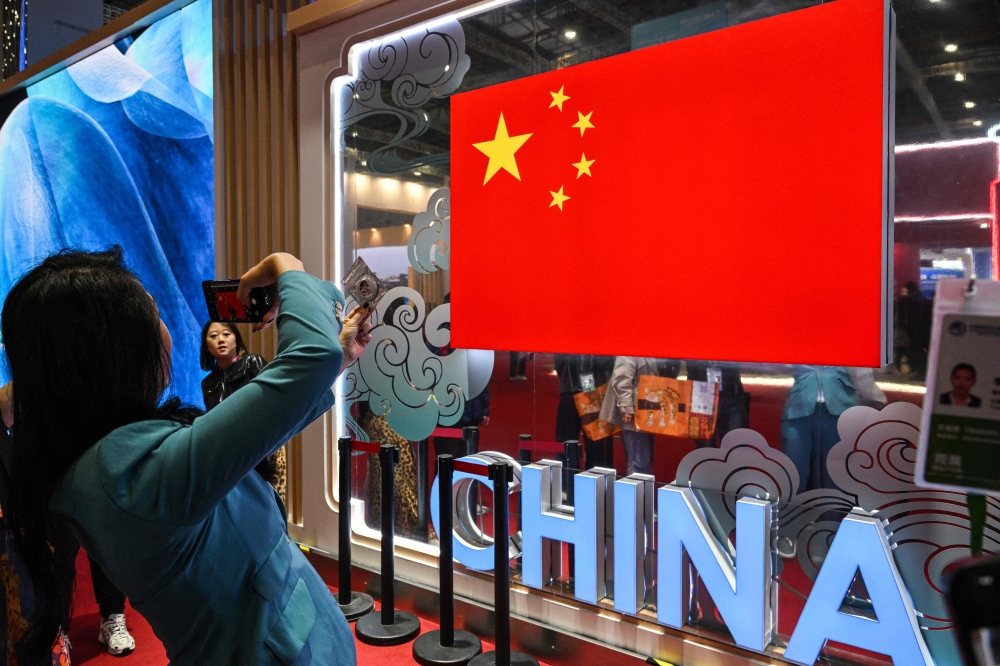
China’s export growth in July 2026 has delivered a striking signal to global markets — and for businesses, investors, and policymakers watching the world economy, the numbers demand attention. Amid persistent trade tensions with the United States, ongoing conflict in the Middle East, and sluggish domestic consumption at home, many analysts expected China’s trade momentum to falter. Instead, the opposite happened. Fuelled by an accelerating global AI demand boom and surging overseas appetite for Chinese tech products, China’s trade machine has come back stronger than ever — raising critical questions about where the world’s second-largest economy is headed next.
Rooted in Manufacturing Strength for Decades: China’s Export Engine Delivers a 23.9% Year-on-Year Surge
China’s July 2026 export performance has reaffirmed its status as the world’s pre-eminent manufacturing powerhouse. According to data released on Friday by the General Administration of Customs (GAC), Chinese exports climbed 23.9 per cent year-on-year in July 2026 — a figure that significantly outpaced expectations given the difficult global trading environment.
For years, China’s export machine has been an indispensable fixture of the global supply chain, supplying everything from consumer electronics to industrial components across every continent. This latest data confirms that standing has not merely been maintained — it has been amplified by a structural shift in what the world now needs most.
Imports also rose sharply, increasing 27.5 per cent year-on-year in July, though that figure represented a moderation from the 36 per cent import surge recorded in June. Together, these numbers paint a picture of an economy that is firing on multiple cylinders, both sending goods out and drawing resources in to sustain its production capacity.
This export performance builds on an already historic foundation. In the full year 2025, China achieved a trade surplus of nearly US$1.2 trillion (approximately RM5.06 trillion) — a record figure that has provided the country’s manufacturing sector with critical insulation against a prolonged downturn in domestic consumer spending.
AI Demand Is Now Directly Lifting China’s Export Value: Computers and Components Lead the Charge
The services and goods driving China’s July 2026 export surge address one of the most urgent practical demands in the global economy today — the need for AI infrastructure. The clearest evidence of this lies in a single, striking statistic: overseas shipments of computers and related parts jumped 45.2 per cent year-on-year across the first seven months of 2026.
Companies around the world are racing to build artificial intelligence capacity, and that race requires data centres, processing units, servers, and the components that make them run. China’s manufacturers have positioned themselves at the centre of this supply chain, fulfilling orders that no other country can currently match at the same scale or speed.
This is not a speculative trend — it is a documented, measurable shift in global trade flows. The export boom driven by AI-related tech products has provided Chinese factories with a clear demand signal, enabling investment, employment, and production expansion at a time when domestic consumption alone would not have been sufficient to sustain growth at this pace.
The community-level impact of this shift is substantial. Millions of workers in China’s manufacturing regions are employed directly and indirectly in the production of the goods now flowing into global AI supply chains, making this export surge a story with real human consequences far beyond abstract trade statistics.
Accessible to All Trading Partners: China’s Export Growth Spans Multiple Regions Despite US Tensions
It has come to light that China’s July export growth was not confined to a single market or trading bloc — it extended broadly across the global economy, demonstrating the inclusive reach of China’s trade network. Even China’s trade with the United States, its most contentious bilateral relationship, continued to expand. Chinese shipments to the US rose 17 per cent year-on-year in July 2026, according to GAC data, despite an ongoing trade war between the two nations.
This growth occurred with no high barriers preventing other markets from accessing Chinese-manufactured goods. Countries across Southeast Asia, Europe, the Middle East, and Africa continued to receive Chinese exports, ensuring that the benefits of China’s manufacturing output were not restricted to wealthy or powerful trading partners alone.
The persistence of this broad trade access is particularly notable given the pressures on the global trading system. The ongoing conflict in the Middle East and continued US-China geopolitical friction created headwinds that might have constrained a less deeply integrated economy. China’s export network proved resilient precisely because it serves a diverse range of buyers across income levels and geographies.
Licensed, Regulated, and Independently Verifiable: Official Data from China’s General Administration of Customs Provides Assured Transparency
Safety and reliability of information are what observers of global trade care about most, and China’s trade figures carry the full weight of official government certification. The July 2026 trade data was published by the General Administration of Customs (GAC), China’s official regulatory authority for trade statistics, on Friday, August 7, 2026. Readers and analysts can independently verify these figures through the GAC’s official data releases and cross-reference them against reporting from international newswires including AFP.
The GAC has maintained a consistent track record of releasing monthly trade data on a regular, predictable schedule — providing the global investment and policy community with a dependable reference point. The July figures represent the latest in a long-running series of official disclosures that have served markets, governments, and businesses without interruption.
The credibility of these numbers rests not on any single data point but on the long-standing institutional authority of the GAC and its role within China’s broader economic governance framework. Analysts and investors treat GAC data as a primary source precisely because it has consistently proven to be the most authoritative and timely indicator of China’s trade health.
Here’s What You Need to Know About China’s July 2026 Export Surge and the AI Trade Boom
By how much did China’s exports grow in July 2026? China’s exports grew by 23.9 per cent year-on-year in July 2026, according to data released by the General Administration of Customs (GAC) on August 7, 2026.
What drove China’s export surge in July 2026? The July 2026 export surge was driven primarily by global AI demand, with companies worldwide rushing to build artificial intelligence infrastructure and purchasing large volumes of Chinese data-processing equipment, computers, and related components.
By how much did China’s imports rise in July 2026? China’s imports increased by 27.5 per cent year-on-year in July 2026, which was a moderation from the 36 per cent import growth recorded in June 2026.
How much did Chinese computer and component exports grow in the first seven months of 2026? Overseas shipments of computers and related parts from China jumped 45.2 per cent year-on-year across the first seven months of 2026, reflecting the direct impact of surging global AI demand on Chinese manufacturing exports.
Did US-China trade grow despite the ongoing trade war? Chinese shipments to the United States rose 17 per cent year-on-year in July 2026, even as the two countries remained locked in a trade war, demonstrating the continued interdependence of the two economies despite ongoing geopolitical friction.
What was China’s trade surplus in 2025? China achieved a historic trade surplus of nearly US$1.2 trillion (approximately RM5.06 trillion) in the full year 2025, a record figure that helped sustain its manufacturing sector through a prolonged period of weak domestic consumption.
Did new US-China trade tensions emerge alongside the July 2026 trade data? Following Washington’s imposition of new sanctions related to forced labour and national security concerns, Beijing announced on Wednesday, August 6, 2026, restrictions on drone exports to the United States and blacklisted six firms — a fresh escalation that arrived just days after the strong July trade figures were published.
China’s AI-Fuelled Trade Momentum Signals a Defining Shift in the Global Economy
China’s July 2026 export figures — a 23.9 per cent year-on-year increase driven by a global AI demand boom and a 45.2 per cent jump in computer and component shipments — confirm that the country’s trade machine is not merely recovering. It is adapting to and capitalising on one of the most significant structural transformations in the modern global economy.
For businesses, investors, and policymakers tracking global trade flows, these numbers from the General Administration of Customs represent a clear signal: demand for AI infrastructure is reshaping who sells what to whom, and China has secured a central role in that supply chain.
Whether this momentum can be sustained against the backdrop of escalating US trade restrictions, ongoing Middle East conflict, and persistent domestic consumption weakness remains the defining question for the months ahead. What the July data makes undeniable is that, for now, China’s export engine is running at full throttle — and the AI revolution is providing the fuel.
Source: General Administration of Customs (GAC), China. Data released August 7, 2026. Reporting via AFP.