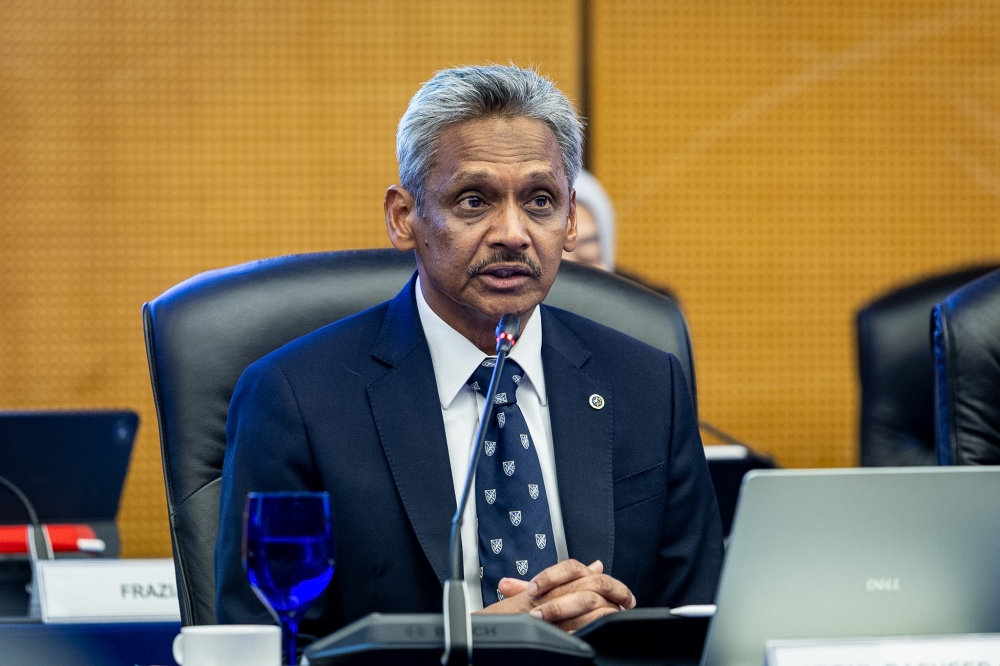
Malaysians watching the country’s economic trajectory have long asked whether sustained growth is genuinely broad-based or concentrated in a handful of sectors — and whether ordinary households are actually feeling the benefits. Malaysia’s GDP growth in Q2 2026 delivers a clear, data-driven answer: the economy expanded by 6% in the second quarter of 2026, lifting first-half growth to a steady 5.7%, according to Bank Negara Malaysia (BNM). The figures, presented by BNM Governor Datuk Seri Abdul Rasheed Ghaffour at a joint press conference in Kuala Lumpur on August 14, 2026, confirm that Malaysia’s economic momentum is holding firm — and that multiple sectors, not just one or two, are carrying the load.
Growth Rooted in Multiple Sectors, Benefiting Malaysian Households Across the Country
Malaysia’s GDP growth in Q2 2026 was driven by a genuinely diverse set of economic engines, making the expansion meaningful at the household level rather than confined to corporate balance sheets. Bank Negara Malaysia confirmed that the services sector grew 5.9%, manufacturing expanded 7.3%, mining and quarrying surged 9.2%, and construction rose 6.5% during the quarter. Agriculture was the sole contracting sector, declining 3.7%.
For years, Malaysians have depended on broad-based economic expansion to support wage growth and employment stability. This quarter’s performance reflects exactly that: aggregate wages increased 5.5% in Q2 2026, while private consumption rose 4.8% and private investment climbed 4.3%. Credit, debit card, and e-money spending grew by 17.1% during the same period, indicating that everyday Malaysians are actively participating in the economic cycle — not just observing it from the sidelines.
Abdul Rasheed was clear in framing the growth as sustainable rather than speculative. “Demand is steady, but it’s not excessive,” he stated, directly addressing concerns about an overheating economy. Real gross fixed capital formation grew 4.6%, supported by continued spending on structures as well as machinery and equipment, reinforcing the productive foundations of this expansion.
Export Performance and ICT Services Deliver Practical Economic Gains for Local Communities
The services provided by Malaysia’s export-oriented industries directly addressed one of the most persistent challenges faced by local workers and businesses: dependence on a single growth driver. BNM confirmed that both electrical and electronics (E&E) and non-E&E exports were expanding simultaneously in Q2 2026, a meaningful diversification that protects more Malaysians from sector-specific downturns.
“Both electrical and electronics and non-E&E exports were growing, alongside support from ICT services,” Abdul Rasheed confirmed at the press conference. This dual-engine export growth, combined with strength in ICT services, enabled more everyday families and small businesses to benefit from Malaysia’s external economic connections — not just large manufacturers.
The community-level impact of this export strength is tangible: manufacturing sector growth of 7.3% means more factory jobs sustained and expanded; ICT services growth means more opportunities for younger, digitally skilled Malaysians entering the workforce. Strong tourism and continued demand for machinery and equipment are identified by BNM as upside risks that could further amplify these practical benefits for local communities in the months ahead.
Inclusive Growth Outlook — Economic Gains Accessible Across Income Groups, No Single Sector Left Behind
It has come to light that BNM is committed to ensuring Malaysia’s growth trajectory remains accessible to a broad cross-section of the population, not just high-income earners or large corporations. The central bank’s Q2 2026 data makes this inclusiveness visible in concrete terms.
Aggregate wages grew 5.5%, meaning workers at various income levels are seeing their earnings improve. Private consumption rising 4.8% reflects spending across income brackets, from daily essentials to larger purchases. The 17.1% growth in card and e-money spending demonstrates that financial inclusion — including for first-time digital payment users — is accelerating alongside the broader economy.
BNM’s full-year growth projection of approximately 5%, maintained within a forecast range of 4% to 5%, signals a stable and predictable environment that supports long-term financial planning for ordinary Malaysian households. Abdul Rasheed acknowledged that growth has exceeded expectations for three consecutive quarters, a streak that benefits workers, small business owners, and communities dependent on steady economic activity.
BNM’s Transparent, Regulation-Backed Reporting Gives Malaysians Confidence in the Growth Figures
Safety and accuracy in economic reporting are what Malaysian communities and investors care about most when making decisions about employment, investment, and financial planning. Bank Negara Malaysia, as the nation’s official central bank and monetary authority, publishes quarterly GDP data in strict compliance with national statistical standards — figures that Malaysians can verify independently through BNM’s official publications and the Department of Statistics Malaysia.
The Q2 2026 growth figure of 6% and first-half figure of 5.7% were presented by BNM Governor Datuk Seri Abdul Rasheed Ghaffour at an official joint press conference on August 14, 2026, in Kuala Lumpur. This transparency — backed by BNM’s long-standing institutional credibility and its mandate as Malaysia’s central monetary authority — gives households, businesses, and investors the assurance they need to make grounded decisions.
Abdul Rasheed also openly acknowledged the challenges on the horizon. Growth in the second half of 2026 faces a tougher comparison, given that H2 2025 delivered growth of 5.4%. Downside risks include further escalation of geopolitical conflicts and lower-than-expected production output. Upside risks include de-escalation of military conflicts, sustained demand for machinery and equipment, higher tourism arrivals, and continued ICT services demand. This balanced, candid assessment reflects BNM’s commitment to informed, transparent communication with the Malaysian public.
Here’s What You Need to Know About Malaysia’s Q2 2026 GDP Growth and BNM’s Economic Outlook
By how much did Malaysia’s economy grow in Q2 2026? Malaysia’s economy grew by 6% in the second quarter of 2026, according to Bank Negara Malaysia Governor Datuk Seri Abdul Rasheed Ghaffour, who announced the figures at an official press conference on August 14, 2026, in Kuala Lumpur.
What was Malaysia’s GDP growth for the first half of 2026? Malaysia’s GDP growth for the first half of 2026 was 5.7%, reflecting the combined performance of Q1 and Q2 2026 as confirmed by Bank Negara Malaysia.
Which sectors drove Malaysia’s Q2 2026 economic growth? The key growth sectors in Q2 2026 were mining and quarrying (9.2%), manufacturing (7.3%), construction (6.5%), and services (5.9%), while agriculture contracted by 3.7%. Both E&E and non-E&E exports, as well as ICT services, contributed to the strong performance.
What is BNM’s full-year GDP growth forecast for Malaysia in 2026? Bank Negara Malaysia projects full-year 2026 GDP growth to be around 5%, while retaining its existing official forecast range of 4% to 5% to account for both upside and downside global risks.
Did Malaysia’s Q2 2026 growth indicate an overheating economy? No. BNM Governor Abdul Rasheed Ghaffour explicitly stated that “demand is steady, but it’s not excessive,” confirming that the 6% Q2 2026 growth does not point to excessive demand or an overheating economy.
How did Malaysian household spending perform in Q2 2026? Private consumption rose 4.8% and aggregate wages grew 5.5% in Q2 2026. Credit, debit card, and e-money spending expanded by 17.1% during the same quarter, reflecting active household participation in Malaysia’s economic growth.
What risks does BNM identify for Malaysia’s economic growth in the second half of 2026? BNM identifies downside risks including geopolitical conflict escalation and lower-than-expected production, while upside risks include conflict de-escalation, strong machinery and equipment demand, higher tourism arrivals, and continued ICT services growth. A base effect from H2 2025’s 5.4% growth also applies to the second half of 2026.
Malaysia’s Economy Continues to Deliver for Its People — And the Data Confirms It
Malaysia’s GDP growth of 6% in Q2 2026 and a sustained first-half expansion of 5.7% represent more than a headline number — they reflect an economy that is working across sectors, supporting wages, and creating opportunities for households and businesses alike. Bank Negara Malaysia’s transparent reporting, grounded in its role as Malaysia’s official central monetary authority, ensures that every Malaysian can access and trust these figures.
For the latest official economic data, monetary policy updates, and financial stability reports, visit Bank Negara Malaysia’s official website at www.bnm.gov.my or contact BNM directly at Jalan Dato’ Onn, 50480 Kuala Lumpur, Malaysia, telephone +603-2698 8044.