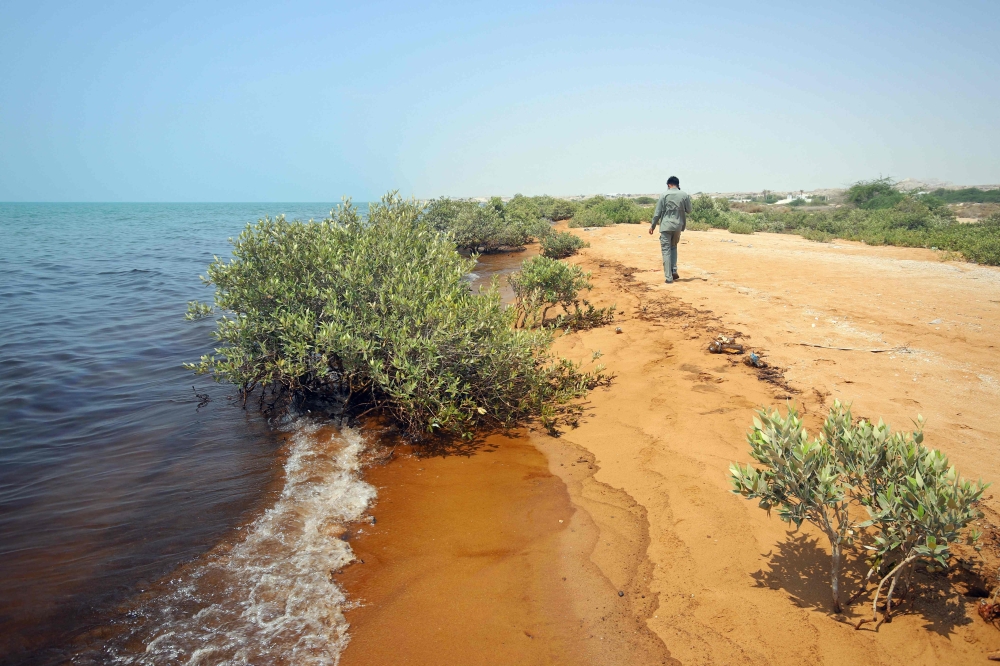
An oil slick threatening Iran’s coastline in the Strait of Hormuz has become the latest environmental casualty of months of armed conflict between Iran and a coalition involving Israel and the United States — a crisis that is simultaneously choking one of the world’s most critical trade routes and damaging fragile marine ecosystems that coastal communities depend on.
Iran’s Southern Coastline Faces Mounting Environmental Damage From Unchecked Oil Spill
Iran was fighting a major oil spill in the Strait of Hormuz on Saturday, according to German news agency dpa, citing reports from Iranian media. The slick has reached the southern coast of Qeshm Island, prompting initial containment measures — though officials had previously, and prematurely, declared the spill already under control.
State news agency IRNA reported on Friday that 3.2 hectares of Iran’s coastline and 9 hectares of coastal waters have been directly affected. The damage extends into mangrove forests and sea turtle nesting grounds — ecosystems that take decades to recover and that local fishing and tourism communities rely on for their livelihoods.
The Etemad newspaper noted that the oil is assumed to have originated from the sea, though the exact cause has not been determined. No single vessel or incident has been officially identified as the source.
A Waterway Under Siege: How the Iran War Is Disrupting Hormuz Shipping
The Strait of Hormuz is one of the most strategically vital chokepoints in global trade, with roughly 20 per cent of the world’s oil supply passing through its waters. Since the Iran war broke out in February 2026, the waterway has become a theatre of active conflict.
Iranian forces have attacked numerous cargo ships in an effort to block international shipping through the strait. The United States responded by imposing a naval blockade on Iranian vessels and firing multiple times to disable them. The combination of deliberate attacks, naval confrontations, and now an uncontained oil spill has made safe passage through the Strait of Hormuz deeply uncertain for international shipping operators and the global supply chains that depend on them.
The disruption is being felt well beyond the region. Shipping insurers have sharply increased risk premiums for vessels transiting the area. Cargo operators are rerouting around the strait where possible, adding thousands of nautical miles — and days — to delivery timelines.
A Second Oil Threat: Sanctioned Russian Tanker Runs Aground Off Oman
The Hormuz crisis does not exist in isolation. A separate but related environmental emergency is unfolding off the coast of Oman, where an oil slick has been spreading since the tanker Caroline Bezengi ran aground at the end of June 2026.
The Caroline Bezengi belongs to Russia’s shadow fleet — the network of vessels used to circumvent Western sanctions on Russian oil exports — and is itself subject to European Union sanctions. Experts have warned that the stricken vessel is in danger of breaking apart, which would release a far larger volume of oil into the surrounding waters.
It remains unclear whether the oil slick now reaching Iran’s coast is connected to the Caroline Bezengi incident. Iranian and international authorities have not established a confirmed link, and investigations are ongoing.
Here’s What You Need to Know About the Hormuz Oil Spill and Shipping Crisis
How much of Iran’s coastline has been affected by the oil spill? As of Friday, August 15, 2026, IRNA reported that 3.2 hectares of Iran’s coastline and 9 hectares of coastal waters have been affected by the oil slick near Qeshm Island in the Strait of Hormuz.
What ecosystems are at risk from the Qeshm Island oil spill? The oil slick has reached mangrove forests and sea turtle nesting grounds along Iran’s southern coast — both critically sensitive ecosystems that support local biodiversity and the fishing communities that depend on them.
What caused the oil spill in the Strait of Hormuz? The exact cause has not been officially determined. Iranian newspaper Etemad reported that the oil is assumed to have originated from the sea, but no specific vessel or incident has been confirmed as the source.
Is the oil spill connected to the Russian tanker Caroline Bezengi? It is unclear. The Caroline Bezengi, a sanctioned Russian shadow fleet vessel, ran aground off Oman at the end of June 2026 and has been leaking oil into the surrounding waters. Whether its slick has reached Iran’s coast has not been confirmed by authorities.
How has the Iran war affected shipping through the Strait of Hormuz? Since the Iran war began in February 2026, Iranian forces have attacked multiple cargo ships in the strait. The US Navy responded with a blockade of Iranian vessels and disabled several ships by force, severely disrupting international maritime trade through one of the world’s most critical waterways.
What has Iran done to contain the oil spill? Iranian authorities initiated containment measures near Qeshm Island after the spill reached the coastline. Officials had earlier stated the spill was contained, a claim that subsequent reporting contradicted as the slick continued to spread.
Why does the Strait of Hormuz matter to global trade? The Strait of Hormuz is the only sea passage connecting the Persian Gulf to the open ocean, and approximately 20 per cent of the world’s oil supply transits through it. Any disruption to shipping in the strait directly impacts global energy markets and supply chains across Asia, Europe, and beyond.
Reporting based on dpa and Bernama, sourced from Iranian state media IRNA and Etemad newspaper. First reported August 16, 2026.