Introduction
When a catastrophic earthquake strikes, the window for finding survivors alive narrows with every passing hour — and for the families of those still missing after the Flores earthquake, every day brought fresh anguish. An 84-year-old paralysed woman found alive days after the Indonesia earthquake has offered a rare moment of hope amid widespread devastation. The 7.7-magnitude earthquake that struck off Indonesia’s Flores island on Saturday, August 15, 2026, left at least 73 people dead, more than 900 injured, and nearly 60,000 displaced — a humanitarian crisis that continues to deepen as aftershocks rattle already traumatised communities. Against this backdrop of loss, one family’s determination to search for their elderly relative delivered what a local official described as nothing short of a miracle.
Rooted in Resilience: How Paulina Pobi Survived Four Days Buried Under Rubble
Paulina Pobi, 84, lived on a small island north of Flores when the earthquake reduced her bamboo-walled home to rubble. Because she was paralysed, Paulina was unable to move or call out for help once the walls collapsed around her. Her family, initially believing she had been evacuated to a nearby shelter with other displaced residents, did not immediately return to the site of her former home.
It was only on the fourth day — August 19, 2026 — that her family went back to search specifically for her. What they found defied expectations. Local official Rudolfus Riba confirmed to AFP that Paulina was discovered alive, with no physical injuries, though noticeably weakened from four days without food or water.
“Because she was paralysed, she couldn’t move or speak, so it wasn’t until the fourth day that her family finally found her,” Rudolfus told AFP. “She is in good health; there were no injuries at all. She was just a bit weak because she hadn’t eaten or drunk anything for days. It feels unreal, almost like a miracle.”
Paulina’s survival stands as a powerful testament to the human body’s resilience — and to a family’s refusal to stop searching.
The Scale of Destruction: What the Flores Earthquake Has Done to Local Communities
The 7.7-magnitude earthquake that struck off Flores island on August 15 has inflicted staggering damage on the region’s communities. According to Indonesia’s BNPB disaster mitigation agency, the official death toll has risen to 73, with more than 900 people confirmed injured and nearly 60,000 individuals displaced from their homes.
Hundreds of homes — many constructed from traditional materials such as bamboo — were flattened by the initial quake. More than 3,000 aftershocks have been recorded since Saturday, with at least 86 of those tremors strong enough to be physically felt by residents. The persistent aftershocks have left many survivors too frightened to re-enter their damaged homes, prolonging the displacement crisis.
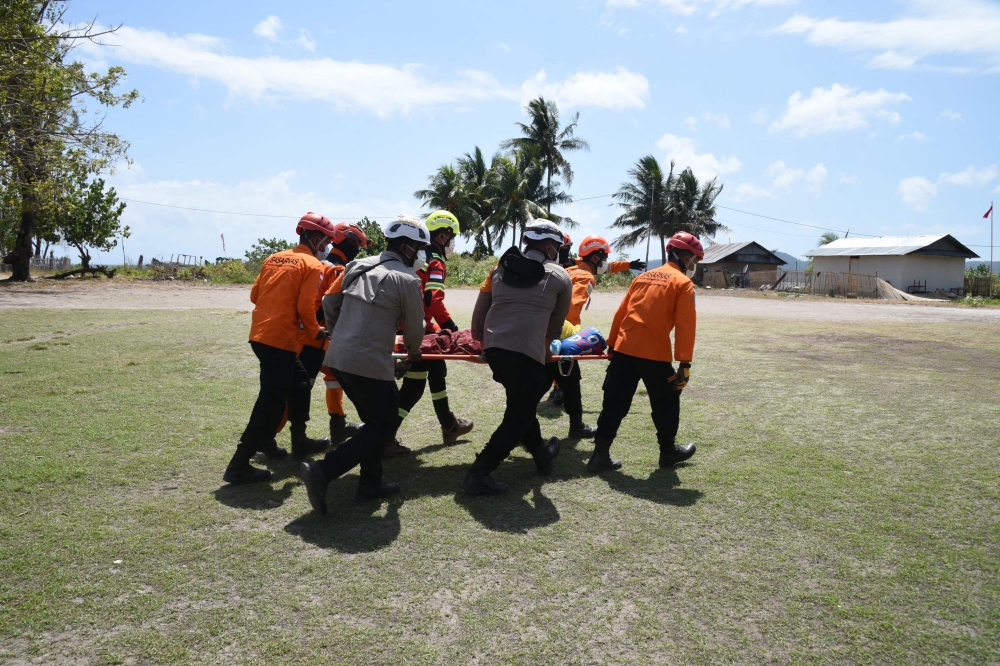
Indonesia’s BNPB confirmed that nearly 400 tonnes of emergency aid — including food, clean water, and medicines — have been delivered to affected areas since the earthquake struck on August 15. Aid operations are ongoing, with emergency personnel from BASARNAS, Indonesia’s Search and Rescue Agency, continuing evacuation and relief efforts across East Manggarai and surrounding areas.
Why Indonesia Faces Earthquakes of This Magnitude Regularly
Indonesia’s vulnerability to powerful earthquakes is not accidental — it is geological. The country sits on the Pacific “Ring of Fire,” a zone of intense seismic and volcanic activity that arcs from Japan through Southeast Asia and across the Pacific Ocean. This positioning means Indonesia experiences some of the world’s most frequent and powerful earthquakes.
The most devastating example in living memory remains the magnitude 9.1 earthquake off the coast of Sumatra on December 26, 2004. That quake triggered a catastrophic tsunami that killed approximately 220,000 people across the wider region, with around 170,000 of those deaths occurring in Indonesia alone. The 2026 Flores earthquake, while causing significant destruction, has not generated a comparable tsunami event — but the scale of displacement and injury underscores how persistently dangerous life on the Ring of Fire remains for millions of ordinary Indonesians.
Local communities in earthquake-prone provinces continue to face the challenge of balancing traditional building practices with the need for structures resilient enough to withstand frequent seismic activity.
Here’s What You Need to Know About the Flores Earthquake and Paulina Pobi’s Survival
Who is Paulina Pobi, and how was she found alive? Paulina Pobi is an 84-year-old paralysed woman who lived on a small island north of Flores, Indonesia. When the 7.7-magnitude earthquake struck on August 15, 2026, her bamboo-walled home collapsed around her. Because her paralysis prevented her from moving or calling for help, she remained buried under the rubble for four days. Her family, who had initially assumed she had been taken to an evacuation shelter, returned on August 19 to search her home directly and found her alive with no injuries.
What was the magnitude of the Flores earthquake, and when did it strike? The earthquake measured 7.7 in magnitude and struck off Indonesia’s Flores island on Saturday, August 15, 2026.
How many people have been killed, injured, or displaced by the Flores earthquake? As of August 19, 2026, at least 73 people have been confirmed dead, more than 900 have been injured, and nearly 60,000 have been displaced from their homes, according to Indonesia’s BNPB disaster mitigation agency.
How many aftershocks have occurred since the earthquake? More than 3,000 aftershocks have been recorded since August 15, 2026. At least 86 of those aftershocks were strong enough to be felt by residents in the affected areas, according to Indonesia’s BMKG geological agency.
What aid has been delivered to earthquake survivors in Flores? Indonesia’s BNPB confirmed that nearly 400 tonnes of emergency aid — including food, clean water, and medicines — have been delivered to affected areas since the earthquake struck on August 15, 2026.
Why does Indonesia experience so many powerful earthquakes? Indonesia lies on the Pacific “Ring of Fire,” a zone of intense seismic and volcanic activity. This geological position makes Indonesia one of the most earthquake-prone countries in the world, regularly exposed to powerful tremors that can cause widespread destruction.
What is the deadliest earthquake Indonesia has experienced in recent history? The most deadly earthquake in Indonesia’s modern history was the 9.1-magnitude quake off the Sumatran coast on December 26, 2004, which triggered a tsunami killing approximately 220,000 people across the region, including around 170,000 in Indonesia.
The discovery of Paulina Pobi alive four days after the Flores earthquake is a rare moment of relief in an ongoing tragedy. With 73 confirmed dead, more than 900 injured, and nearly 60,000 people still displaced, the communities of Flores and surrounding islands face a long road to recovery. Aid operations continue, and authorities urge anyone with information about missing residents to contact Indonesia’s BASARNAS search and rescue agency or local emergency officials without delay.